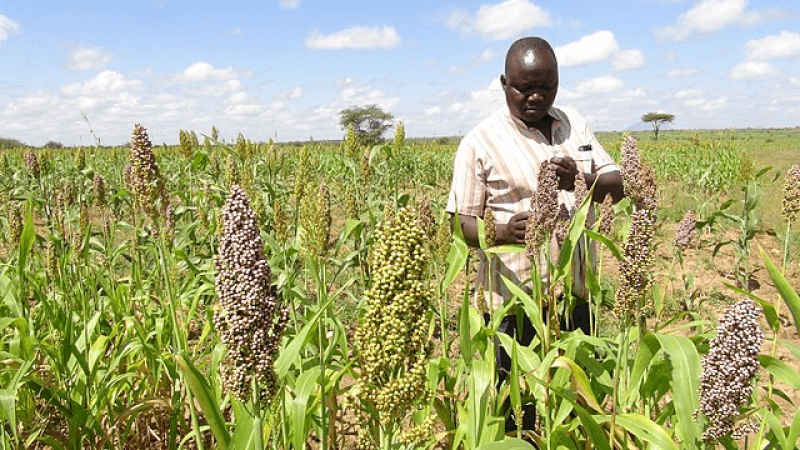
African countries turn toward home-engineered gene edited crops to ensure regional acceptance

Credit: Hannahlongole via CC-BY-SA-4.0

Molecular biologist Steven Runo once thought that his team would make history as the first to plant gene-edited seeds in African soil. The competition turned out to be stiffer than he’d anticipated.

A research group working on maize “beat us by two or three months”, says Runo, who works at Kenyatta University in Nairobi and whose gene-editing project focuses on sorghum. “But that’s good — African countries will see that this is actually possible.”

The friendly rivalry is a sign of progress. Researchers have long hoped that the relative ease and low cost of CRISPR gene-editing systems would make it possible for scientists in low- and middle-income countries to produce crops with traits tailored to the needs of local farmers — rather than relying on seeds developed in foreign countries. Now scientists are overseeing at least a dozen efforts to develop such gene-edited crops.

Follow the latest news and policy debates on sustainable agriculture, biomedicine, and other ‘disruptive’ innovations. Subscribe to our newsletter.

Runo says the farmers he has spoken to feel more comfortable with crops developed by a local researcher than with seeds developed abroad. “This is not a multinational company. The people using the technology are people you have grown up with,” he says. “The narrative is very different.”


This is an excerpt. Read the original post here

{{ reviewsTotal }}{{ options.labels.singularReviewCountLabel }}
{{ reviewsTotal }}{{ options.labels.pluralReviewCountLabel }}
{{ options.labels.newReviewButton }}
{{ userData.canReview.message }}

Related Articles

Infographic: Global regulatory and health research agencies on whether glyphosate causes cancer

Infographic: Global regulatory and health research agencies on whether glyphosate causes cancer

Does glyphosate—the world's most heavily-used herbicide—pose serious harm to humans? Is it carcinogenic? Those issues are of both legal and ...

Most Popular

Screenshot-2026-05-01-at-1.29.41-PM
Viewpoint: What happens when whole grains meet modern food manufacturing? Labels don’t tell the whole story.
Screenshot-2026-04-12-135256
Bixonimania: The fake disease scam that AI swallowed whole

Sorry. No data so far.

glp menu logo outlined

Get news on human & agricultural genetics and biotechnology delivered to your inbox.