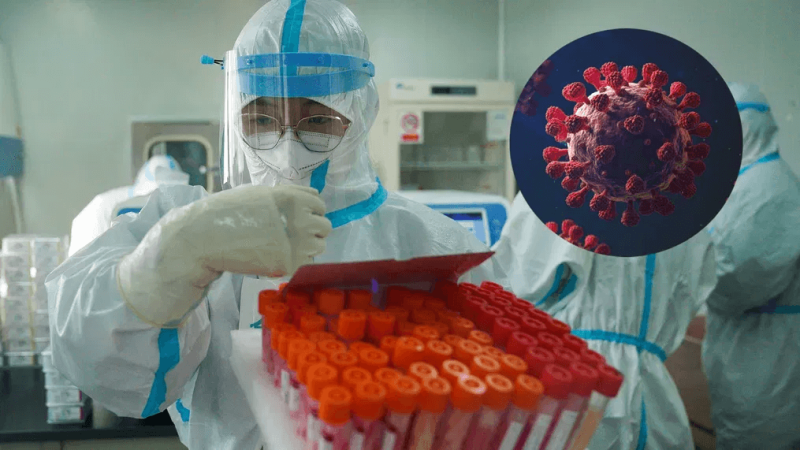
Are Chinese scientists going rogue on latest COVID research? Experimental strain found 100% lethal in ‘humanized’ mice

fc dd d ab f b da wqfewefwewefewf

In a chilling study from Beijing, Chinese scientists created a mutant COVID-19 strain, GX_P2V, with a 100% lethality rate in “humanized” mice.

Similar to GX/2017 found in Malaysian pangolins, the virus has raised serious concerns about potential human spillover risks.

Follow the latest news and policy debates on sustainable agriculture, biomedicine, and other ‘disruptive’ innovations. Subscribe to our newsletter.

The mutated strain, GX_P2V, exhibited an alarming speed in attacking the brains of mice engineered to reflect human genetic makeup. Within eight days, all infected mice succumbed to the virus, showcasing a surprisingly rapid death rate.

Researchers noted that GX_P2V had penetrated various organs, including the lungs, bones, eyes, tracheas, and brains.

The severity of brain infections proved fatal, causing a distinctive set of symptoms, such as rapid weight loss, a hunched posture, sluggish movement, and eerily eyes turning completely white the day before death.

While the study raises concerns about a potential spillover risk into the human population, it fails to provide clear insights into how the virus might affect humans.

Critics, including Francois Balloux from the University College London’s Genetics Institute, express apprehensions about the research, deeming it “terrible” and “scientifically totally pointless.”

Importantly, the 2024 study appears unrelated to the Wuhan Institute of Virology, a focal point in lab leak theories surrounding the pandemic.


This is an excerpt. Read the full article here

{{ reviewsTotal }}{{ options.labels.singularReviewCountLabel }}
{{ reviewsTotal }}{{ options.labels.pluralReviewCountLabel }}
{{ options.labels.newReviewButton }}
{{ userData.canReview.message }}

Related Articles

Infographic: Global regulatory and health research agencies on whether glyphosate causes cancer

Infographic: Global regulatory and health research agencies on whether glyphosate causes cancer

Does glyphosate—the world's most heavily-used herbicide—pose serious harm to humans? Is it carcinogenic? Those issues are of both legal and ...

Most Popular

Screenshot-2026-05-01-at-1.29.41-PM
Viewpoint: What happens when whole grains meet modern food manufacturing? Labels don’t tell the whole story.
Farmers can talk to plants
Farmers are a major source of misinformation—about farming
Screenshot-2026-04-12-135256
Bixonimania: The fake disease scam that AI swallowed whole
ChatGPT-Image-Apr-13-2026-02_20_22-PM
Viewpoint: Misinformation infodemic? Why assessing evidence is so challenging 
bigstock opioids on chalkboard with rol
GLP podcast: 'Safe injection sites': enabling drug addiction or saving lives?
ChatGPT-Image-Mar-27-2026-11_47_30-AM-2
FDA’s expedited drug reviews are hailed in some quarters but other approval practices are problematic
S
As vaccine rejectionism spreads, measles may be taking a more dangerous turn

Sorry. No data so far.

glp menu logo outlined

Get news on human & agricultural genetics and biotechnology delivered to your inbox.