‘We will publish anything!’ — Here’s how predatory journal mills work

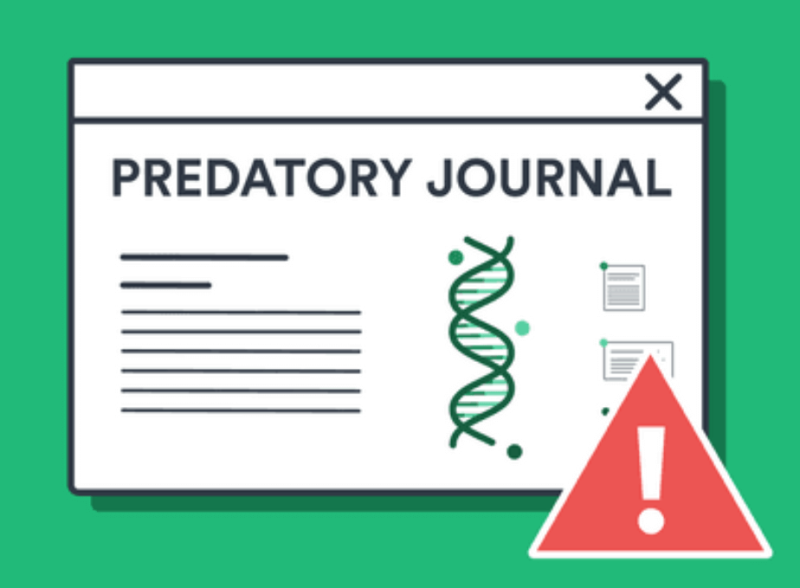
screenshot pm
Credit: Paperpile

You may have heard the name “predatory journal” before. Academic journals publish the findings and opinions of academics. Scientific journals, in particular, release the results of scientific studies in the form of papers which, we are told, are reviewed prior to publication by peers—fellow scientists in the field who are supposed to scrutinize the manuscript and ensure that bad science doesn’t get a pass. A predatory journal only pretends to do so. It exists solely to make money. It’s like a parasite on the back of the scientific endeavour. What it publishes, then, is of questionable quality.

Follow the latest news and policy debates on sustainable agriculture, biomedicine, and other ‘disruptive’ innovations. Subscribe to our newsletter.

Take-home message:

  • A predatory journal looks like a genuine academic journal, but it will publish any paper with little to no peer review in exchange for the paper’s authors paying a fee
  • Paying to get a paper published is not, however, a sign that a journal is predatory, as this is common practice among legitimate open access journals, whose content is free to be read by anyone
  • Some of the signs that a journal is predatory is that its website caters more to authors than to readers, it often sends out invitation emails with flowery language, and its scope is much broader than would be expected, publishing papers on nuclear physics, geography and nursing, for example


This is an excerpt. Read the full article here

{{ reviewsTotal }}{{ options.labels.singularReviewCountLabel }}
{{ reviewsTotal }}{{ options.labels.pluralReviewCountLabel }}
{{ options.labels.newReviewButton }}
{{ userData.canReview.message }}

Related Articles

Infographic: Global regulatory and health research agencies on whether glyphosate causes cancer

Infographic: Global regulatory and health research agencies on whether glyphosate causes cancer

Does glyphosate—the world's most heavily-used herbicide—pose serious harm to humans? Is it carcinogenic? Those issues are of both legal and ...

Most Popular

Screenshot-2026-04-20-at-2.26.27-PM
Viewpoint — Food-fear world: The latest activist scientists campaign: Cancer-causing additives
Screenshot-2026-03-13-at-12.14.04-PM
The FDA wants to make many popular prescription drugs OTC—a great idea. Here’s why it’s unlikely to happen
Screenshot-2026-05-04-at-12.54.32-PM
How Utah became the country’s supplement capital  — and a haven for unregulated, ineffective and fake products
Screenshot-2026-04-30-at-2.19.37-PM
5 myths about summer dehydration that could damage your health — or even kill you
Screenshot-2026-05-01-at-11.56.24-AM
‘Science moves forward when people are willing to think differently’: Memories of DNA maverick Craig Venter
Screenshot-2026-04-03-at-11.15.51-AM
Paraben panic: How a flawed study, media hype, and chemophobia convinced the public of the danger of one of the safest classes of preservatives
Screenshot-PM-24
Viewpoint: The herbicide glyphosate isn’t perfect. Banning it would be far worse.
ChatGPT-Image-May-1-2026-02_20_13-PM
How RFK, Jr.’s false vaccine claims are holding up $600 million to fight diseases in poor countries
ChatGPT-Image-Mar-27-2026-11_27_05-AM
The myths of “process”: What science says about the “dangers’ of synthetic products and ultra-processed foods
viva-la-vida-watermelons
Misinformation and climate change are endangering summer watermelons
glp menu logo outlined

Get news on human & agricultural genetics and biotechnology delivered to your inbox.