Only 9% of plastic waste is recycled. Here’s how plastic-eating mealworms can munch on shopping bags, yogurt cups, and packing peanuts

screenshot pm
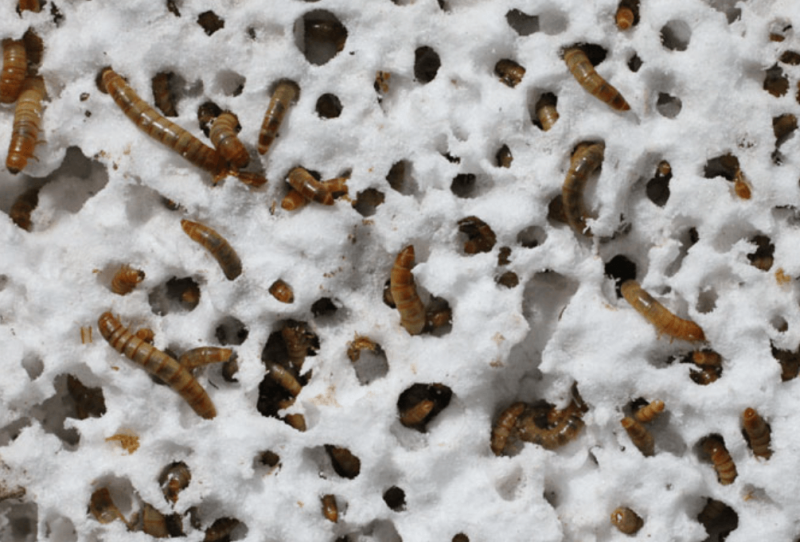
Plastic-eating mealworms munch away on polystyrene foam. Credit: Yu Yang

Plastic is everywhere it shouldn’t be. Globally, only 9% of plastic waste is properly recycled, and there is potential for almost 69 million tons of plastic to end up in the ocean or soil this year.

Researchers around the world are looking to insects as a promising, though partial, solution. They’re scrutinizing plastic-eating microbes in at least 11 species of insects, including superworms, and the larvae of wax moths and dark mealworms… The startup Plasticentropy, for example, has identified wax caterpillar enzymes dubbed Demetra and Ceres that can dissolve thin layers of plastic in hours.

Follow the latest news and policy debates on sustainable agriculture, biomedicine, and other ‘disruptive’ innovations. Subscribe to our newsletter.

Yellow mealworms can devour some of the most widely used plastics, including polystyrene (packing peanuts), polyethylene terephthalate (shopping bags), polypropylene (yogurt cups), polyvinyl chloride (cable insulation), and even rubber, according to Wei-min Wu, a retired [Stanford] mealworm research engineer who is not affiliated with the Delaware project.

The Ocean Conservancy’s [Associate Director Anja Brandon] has become skeptical that plastics re-engineered by tiny insects will ever make a significant dent in the global plastics pollution problem. Instead, she is pushing for tougher regulations that would force plastics manufacturers to pay for the costs of getting rid of their products. That’s the best way, she says, to drive down global plastics use.


This is an excerpt. Read the full article here

{{ reviewsTotal }}{{ options.labels.singularReviewCountLabel }}
{{ reviewsTotal }}{{ options.labels.pluralReviewCountLabel }}
{{ options.labels.newReviewButton }}
{{ userData.canReview.message }}

Related Articles

Infographic: Global regulatory and health research agencies on whether glyphosate causes cancer

Infographic: Global regulatory and health research agencies on whether glyphosate causes cancer

Does glyphosate—the world's most heavily-used herbicide—pose serious harm to humans? Is it carcinogenic? Those issues are of both legal and ...

Most Popular

Screenshot-2026-04-13-at-1.39.26-PM
Viewpoint: ‘Safer for children?’ Stonyfield yogurt under fire for deceptive organic marketing
Screenshot-2026-04-22-at-10.46.29-AM
Viewpoint: How to counter science disinformation? Science journalist offers 12 practical tips
ChatGPT-Image-May-7-2026-12_16_37-PM-2
Viewpoint: Are cancer rates ‘skyrocketing’ as RFK, Jr. and MAHA claim? The evidence says mostly the opposite
Picture1-14
When superbugs threaten vulnerable children: Can AI help solve antibiotic resistance?
Screenshot-2026-04-23-at-11.00.36-AM
Regulators' dilemma: Thalidomide, Metformin, and the cost of getting drug approvals wrong
ChatGPT-Image-May-12-2026-08_39_41-PM
GLP podcast: Big Pharma, Big Ag, Big Food—health harming industries or life-saving innovators?
Picture1-1
Cooling the planet with balloons: Could a geoengineering gamble slow global warming?
png-pill-omega-Supp-fish-oil
Millions take omega-3 fish oil for brain health. New research suggests it may do the opposite.
glp menu logo outlined

Get news on human & agricultural genetics and biotechnology delivered to your inbox.