Video: Devastating Witches’ Broom disease is wiping out cassava crops across South Asia. Here’s how CRISPR nanotechnology could help contain the spread

el lado invisible de la ciencia protegiendo los cultivos mediante de la nanotecnologia alianza bioversity international ciat
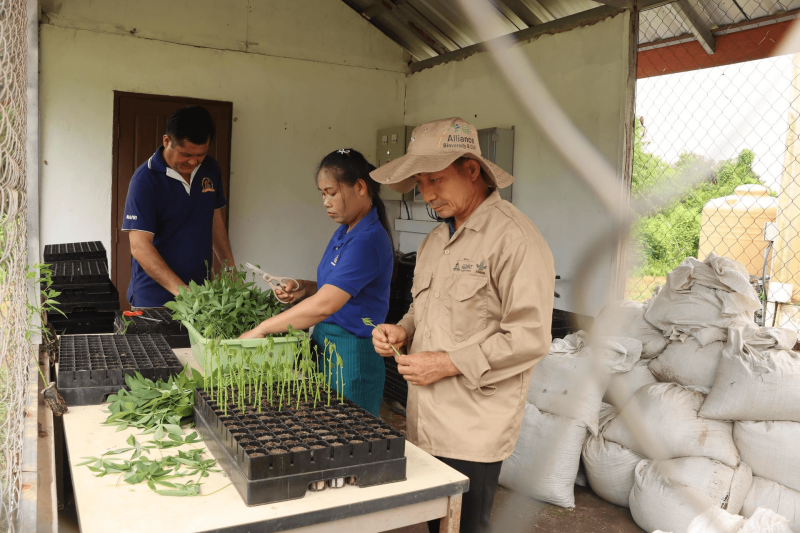
Nanopore technology is enabling agricultural extension officers to better track Cassava Witches' Broom Disease. Photo: Alie Galeon

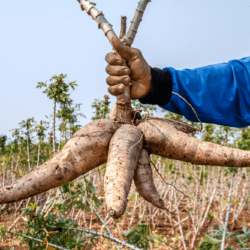
In Southeast Asia, most smallholder farmers rely on cassava: its starch-rich roots form the basis of an industry that supports millions of producers. In the past decade, however, Cassava Witches’ Broom disease has stunted plants, reducing harvests to levels that barely permit affected farmers to eke out a living.

…

In a recent breakthrough, Alliance [Biodiversity & CIAT] researchers compared DNA from healthy and diseased plant samples to reveal the underlying culprit behind the disease: the fungus genus Ceratobasidium. With these findings, published in Scientific Reports, plant pathologists in Laos, Cambodia, Vietnam and Thailand are better able to track and stop the spread of Witches’ Broom disease.

Mis- and disinformation are distorting science and public policy. Subscribe to our Daily and Weekly Digests for incisive coverage of ‘disruptive’ innovations in AI, agricultural biotechnology, food, chemicals, nuclear energy, vaccines, and other disruptive innovations.

This was possible with the latest in scientific innovation: nanotechnology, a field that encompasses a world imperceptible to the human eye, and empowers researchers to understand structures at a molecular level.

Since 2017, the Alliance has actively incorporated nanotechnology into its research, specifically through Oxford Nanopore DNA/RNA sequencing technology. This advanced tool provides insight into the most minute mysteries of plant life, accurately identifying pathogens such as viruses, bacteria and fungi that affect crops.


Related Articles

Infographic: Global regulatory and health research agencies on whether glyphosate causes cancer

Infographic: Global regulatory and health research agencies on whether glyphosate causes cancer

Does glyphosate—the world's most heavily-used herbicide—pose serious harm to humans? Is it carcinogenic? Those issues are of both legal and ...

Most Popular

ChatGPT-Image-Mar-10-2026-01_39_01-PM
Viewpoint—“Miracle molecule” debunked: Why acemannan supplements don’t work
AI Doctor with a Digital Neural Head
Utah becomes first state to empower AI to bypass doctors and prescribe certain drugs
Screenshot-2026-10-07-at-2.00.02-PM
9 wellness myths busted
Screenshot-2026-09-22-at-12.26.15-PM
‘Forever chemical’ concerns: Separating hysteria from reasonable concern in the debate over PFAS danger
Screenshot 2026-07-29 at 10.40
The COVID vaccine turbo cancer scare is back. Science still proves it’s wrong.
Radioactive-Americana-Collage-2
The kooky logic behind the raft of spurious cancer claims from Harvard’s T.H. Chan School of Public Health
glp menu logo outlined

Get news on human & agricultural genetics and biotechnology delivered to your inbox.