Just this week Kennedy added to his long list of off-kilter medical speculations, this time focusing on himself as a test case. According to a May 8 New York Times report, RFK Jr. suffered a bout of short-term memory loss and “mental fogginess” in 2010. The same physicians who treated his uncle, Senator Edward M. Kennedy, the previous year diagnosed him with a brain tumor and recommended surgery.
Kennedy apparently found this diagnosis unconvincing and settled on a different explanation from another physician, the Times reported. He described in a deposition given in a divorce proceeding how “The doctor believed that the abnormality seen on his scans ‘was caused by a worm that got into my brain and ate a portion of it and then died.’”
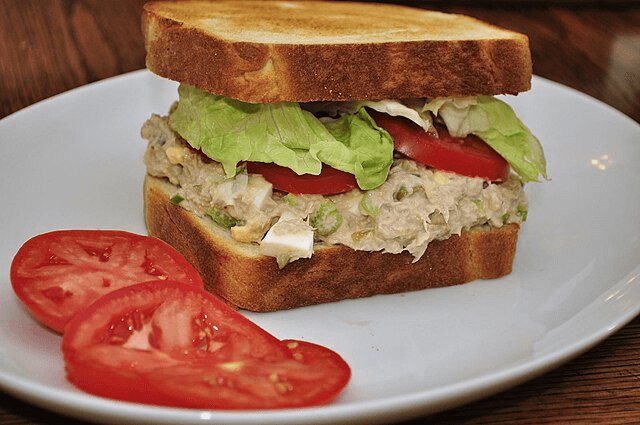
For good measure, Kennedy added that he suffered mercury poisoning around the same time, owing to his seafood-heavy diet. “I loved tuna fish sandwiches. I ate them all the time,” he said.
‘A dead worm in his brain’
Just like his earlier claims, both of these recent revelations are almost certainly baseless.
Nobody can speak to Kennedy’s medical history with confidence except his doctors, of course. But his history of bizarre health claims calls for some skepticism. Experts have reacted to the brain-worm anecdote with just that, noting that it doesn’t square with what we know about the parasitic infection he claimed to suffer, a condition called neurocysticercosis.
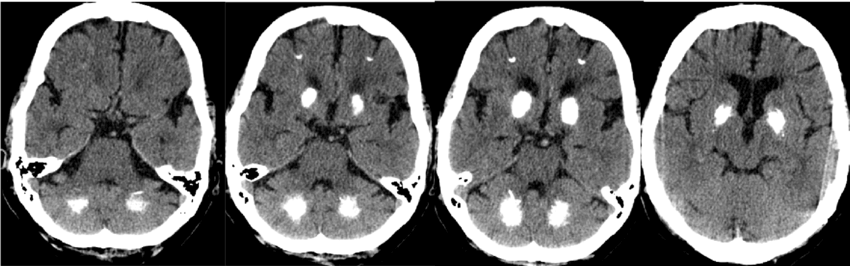
The first red flag, according to infectious disease expert Dr. Peter Hotez, was Kennedy’s assertion that the worm ate part of his brain. “Yeah, the worms are not feeding [on] the brain,” Hotez told CNN. “The worms get nutrients from the body, but they are not eating the brain tissue.” Kennedy also never reported experiencing seizures, a common symptom that occurs when the worm dies and calcifies in the brain. Upwards of 70 percent of patients with such an infection experience recurring seizures.
Moreover, it’s unlikely that a living parasite would have shown up on an MRI or CT scan used to diagnose neurocysticercosis. It’s even less probable that Kennedy would ever come down with the condition, which is most common in agricultural settings where people interact with swine. As a multi-millionaire residing in a Cape Cod mansion, RFK Jr. hardly fits the profile.
 Viewpoint — Lysenkoism 2.0: RFK, Jr. is more dangerous than the 1930s Soviet scientist Trofim Lysenko, whose crackpot views killed millions of people and set back Russian science for decades
 Viewpoint: Here’s the wacky formula used by Environmental Working Group to stoke unwarranted fears about safe chemicals



Mercury myth revisited
Kennedy’s self-diagnosed mercury poisoning from “tuna fish sandwiches” is even more far-fetched.
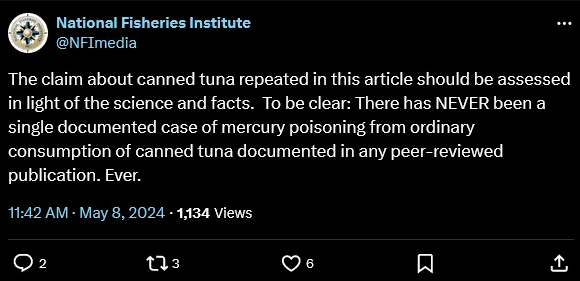
He offers no medical diagnosis or lab test to back up the claim, and there almost certainly isn’t any. As a seafood trade association pointed out in response to the story, there has never been a case of seafood poisoning from tuna consumption documented in any reputable source.
Mercury is a naturally occurring element generated by volcanic eruptions, weathering of rocks, undersea vents and forest fires. While human activities release some of the metal into the environment, most of it is (and always has been) unrelated to anthropogenic sources. The fish we eat, tuna included, do accumulate small amounts of mercury over time, though not nearly enough to cause any harm to human health.
Indeed, recent research has shown that pregnant women (a population much more sensitive to mercury than grown men) who eat more than 100 ounces of seafood per week give birth to children who experience significant benefits in neurocognitive development. The IQ gains in these studies ranged from 4.8 to 9.5 points when children and their mothers consumed the highest quantities of seafood. Contrary to Kennedy’s depressing navel-gazing, his tuna-laden diet boosted his intake of essential nutrients and likely improved his cognitive health as a result.
A familiar lesson
The takeaway from Kennedy’s latest bout of fear mongering will be familiar to Firebreak readers: tort lawyers are an untrustworthy source of information about medicine, public health, pollution or food safety. Their job is to scare the wits out of unsuspecting juries and collect giant, unearned settlements from industries whose only crime is producing products that make life better. If you have questions about any of these topics, it’s best not to seek answers from the guy who thinks invertebrates ate some of his brain matter.
David Zaruk is the editor of Firebreak, and also writes under the pen-name The Risk Monger. David is a retired professor, environmental-health risk analyst, science communicator, promoter of evidence-based policy and philosophical theorist on activists and the media. Find David on X @Zaruk