Question the shared evolution of all living beings? Here are 32 animals that share some human qualities

Question the shared evolution of all living beings? Here are 32 animals that have some human qualities
Credit: Midjourney/ Heenan

Humans often think we are unique, with abilities and behaviors far more complex than our distant animal cousins. But in fact, many creatures, from tiny insects to our closest living relatives, exhibit a surprising repertoire of behaviors that can seem eerily human. From elephants mourning their dead to bees that get pessimistic when faced with setbacks, here are some of the most human-like behaviors demonstrated by other members of the animal kingdom.

Follow the latest news and policy debates on sustainable agriculture, biomedicine, and other ‘disruptive’ innovations. Subscribe to our newsletter.

A 2018 study found that chimpanzees not only share the same five major personality traits with humans — conscientiousness, openness, agreeableness, extraversion and neuroticism — but that these traits could be linked to life span. Scientists found that more agreeable male chimpanzees formed stronger social bonds and tended to live longer.

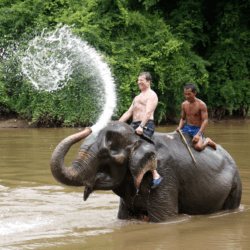
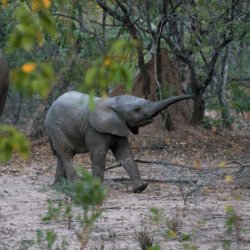
With their huge brains, high intelligence, strong social bonds and empathetic behavior, Asian elephants (Elephas maximus) display many human-like traits, including facial recognition. In 2006, researchers found that, like humans, elephants recognize themselves in a mirror, and in 2015, a separate research team found that elephants have incredible long-term memories.
Like humans, magpies, a member of the crow or corvid family, can make and use tools to feed their young and mimic human voices. Another study also found evidence that European magpies (Pica pica) recognize themselves in a mirror.

This is an excerpt. Read the full article here

{{ reviewsTotal }}{{ options.labels.singularReviewCountLabel }}
{{ reviewsTotal }}{{ options.labels.pluralReviewCountLabel }}
{{ options.labels.noReviewsLabel }}
{{ options.labels.newReviewButton }}
{{ userData.canReview.message }}

Related Articles

Infographic: Global regulatory and health research agencies on whether glyphosate causes cancer

Infographic: Global regulatory and health research agencies on whether glyphosate causes cancer

Does glyphosate—the world's most heavily-used herbicide—pose serious harm to humans? Is it carcinogenic? Those issues are of both legal and ...

Most Popular

ChatGPT-Image-Mar-10-2026-01_39_01-PM
Viewpoint—“Miracle molecule” debunked: Why acemannan supplements don’t work
Screenshot 2026-07-22 at 1.38
Viewpoint: Are the U.S. and Europe headed towards a repudiation of agricultural biotechnology red tape?
png-terrace-Farm-asia
Europe’s tentative embrace of agricultural gene editing could revolutionize food production and health in Asia
ChatGPT-Image-May-26-2026-11_51_01-AM
Viewpoint: RFK, Jr.’s depressingly misguided (and litigator-funded) crusade against antidepressants
Screenshot-2026-07-27-at-3.23.14-PM
Prioritizing AI, robotics, and nuclear energy: Trump administration is guiding research funding away from independent universities to private companies
Screenshot 2026-07-27 at 6.15
No test, no tennis: Women’s Tennis Association becomes first major female sports league to require genetic sex testing
ChatGPT-Image-Jul-26-2026-05_58_17-PM
Louisiana and Texas bring RFK,Jr.- MAHA-backed restrictions on dyes and other ‘controversial’ ingredients to eight states
ChatGPT-Image-Jul-26-2026-05_35_53-PM
FDA takes up peptide therapies as hype outpaces science
Screenshot-2026-07-09-at-1.09.25-PM
Anti-vaccine myths rattle health care
Screenshot 2026-07-28 at 3.22
Hidden hunger: Climate change is speeding up the decline of important nutrients in our food
organic scaled
Facts & Fallacies podcast: Organic food cuts pesticide exposure? A response to Dr. Rhonda Patrick
ChatGPT-Image-Jul-10-2026-09_42_12-AM-1
Peptides, patient autonomy, and the limits of medical freedom
ChatGPT-Image-Jun-25-2026-12_23_17-PM
No, Bill Gates did not secretly engineer ticks to promote veganism
glp menu logo outlined

Get news on human & agricultural genetics and biotechnology delivered to your inbox.