A company called Genus PLC, which specializes in assisted reproduction of “genetically superior” pigs and cattle, has begun buying patents on synthetic embryos. This year it started funding Jiang’s lab to support his effort, locking up a commercial option to any discoveries he might make.
Zoos are interested too. With many endangered animals, assisted reproduction is difficult. And with recently extinct ones, it’s impossible. All that remains is some tissue in a freezer. But this technology could, theoretically, blow life back into these specimens—turning them into embryos, which could be brought to term in a surrogate of a sister species.
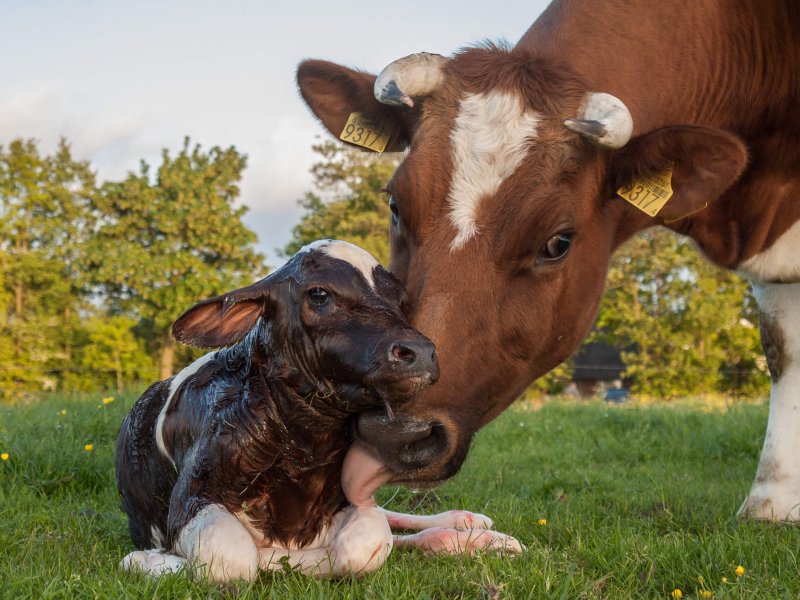
But there’s an even bigger—and stranger—reason to pay attention to Jiang’s effort to make a calf: several labs are creating super-realistic synthetic human embryos as well. It’s an ethically charged arena, particularly given recent changes in US abortion laws. Although these human embryoids are considered nonviable—mere “models” that are fair-game for research—all that could all change quickly if the Florida project succeeds.
“If it can work in an animal, it can work in a human,” says Pinzón-Arteaga, who is now working at Harvard Medical School. “And that’s the Black Mirror episode.”

…
This summer, research leaders were alarmed by a media frenzy around reports of super-realistic models of human embryos that had been created in labs in the UK and Israel—some of which seemed to be nearly perfect mimics. To quell speculation, in June the International Society for Stem Cell Research, a powerful science and lobbying group, put out a statement declaring that the models “are not embryos” and “cannot and will not develop to the equivalent of postnatal stage humans.”