In quest to help small-plot farmers, ‘precision agriculture’ may become as important as genetic modification

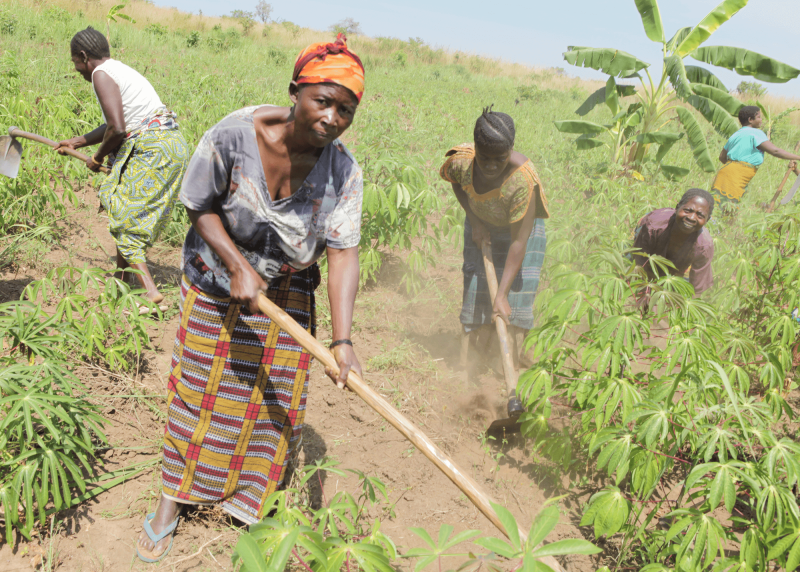
Congolese family cultivating its field on the outskirts of the town of Kalemie, Katanga province. 
Credit: MONUSCO and Myriam Asmani via CC-BY-SA-2.0
Congolese family cultivating its field on the outskirts of the town of Kalemie, Katanga province. Credit: MONUSCO and Myriam Asmani via CC-BY-SA-2.0
Genetically modified crops and biotechnology have substantially benefitted farmers in recent decades, however, the next agricultural revolution will be driven by the accelerated application of smart, digital and precision agricultural technologies.

The use of such technologies helps address the information asymmetries and deficiencies facing farmers, particularly smallholders. This can improve agricultural productivity and reduce costs, while mitigating the environmental impact of farming activities.

The latest UN DESA Frontier Technology Issues paper studies a select set of technologies with potential for creating high economic value for smallholder farmers in developing countries.

Follow the latest news and policy debates on sustainable agriculture, biomedicine, and other ‘disruptive’ innovations. Subscribe to our newsletter.

The benefits offered by smart, digital and precision technologies are significant, but their uptake by smallholder farmers in rural areas of developing countries has generally been limited. To accelerate the adoption of these technologies, UN DESA calls for greater investment in promoting digital literacy in rural areas; a rethinking of the current model of agricultural extension services; a renewed effort to make digital platforms more user-friendly for smallholder farmers; and significant expansion of rural infrastructure to promote agricultural e-commerce.
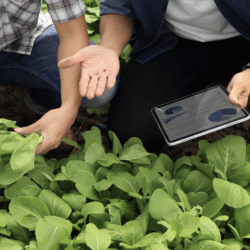
Read the full Frontier Technology Issues paper: https://www.un.org/development/desa/dpad/publication/frontier-technology-issues-frontier-technologies-for-smallholder-farmers-addressing-information-asymmetries-and-deficiencies/

The full series is available from https://www.bit.ly/UNDESAfrontiertech

Read the original post here

{{ reviewsTotal }}{{ options.labels.singularReviewCountLabel }}
{{ reviewsTotal }}{{ options.labels.pluralReviewCountLabel }}
{{ options.labels.newReviewButton }}
{{ userData.canReview.message }}

Related Articles

Infographic: Global regulatory and health research agencies on whether glyphosate causes cancer

Infographic: Global regulatory and health research agencies on whether glyphosate causes cancer

Does glyphosate—the world's most heavily-used herbicide—pose serious harm to humans? Is it carcinogenic? Those issues are of both legal and ...

Most Popular

d-b
Blocked arteries, kidney stones, nausea, constipation, fatigue: Long list of health problems caused by too much vitamin D 
circular-bioeconomy-should-focus-on-sustainable-wellbeing
GLP podcast: What's wrong with 'doomsday' environmentalism? It's false.
Screenshot-PM-24
Viewpoint: The herbicide glyphosate isn’t perfect. Banning it would be far worse.
Screenshot 2026-02-25 at 11.20
Why the herbicide glyphosate is key to sustainable agriculture
ChatGPT-Image-Feb-16-2026-01_04_32-PM
Raw milk myth wake-up call
screen shot at pm
Word games: How Moderna is selling its newest vaccine without using the “v” word
ChatGPT-Image-Apr-22-2026-11_06_18-AM
Wellness influencer nonsense: No, nicotine does not boost cognition and productivity, but it can damage your health 
ChatGPT-Image-Apr-28-2026-12_46_14-PM-2
Kennedy has quietly stopped touting problematic raw milk. Health concerns aren’t why
png-pill-omega-Supp-fish-oil
Fish oil supplements for brain injuries probably don’t work 
ChatGPT-Image-Feb-16-2026-01_57_31-PM
Viewpoint: ‘Science-as-Satan’ unites the MAHA—MAGA movements. Is a breakup in the works?
ChatGPT-Image-Mar-11-2026-11_58_46-AM
The Trump administration has run out more than 4,000 National Institutes of Health employees. Here are the consequences
glp menu logo outlined

Get news on human & agricultural genetics and biotechnology delivered to your inbox.