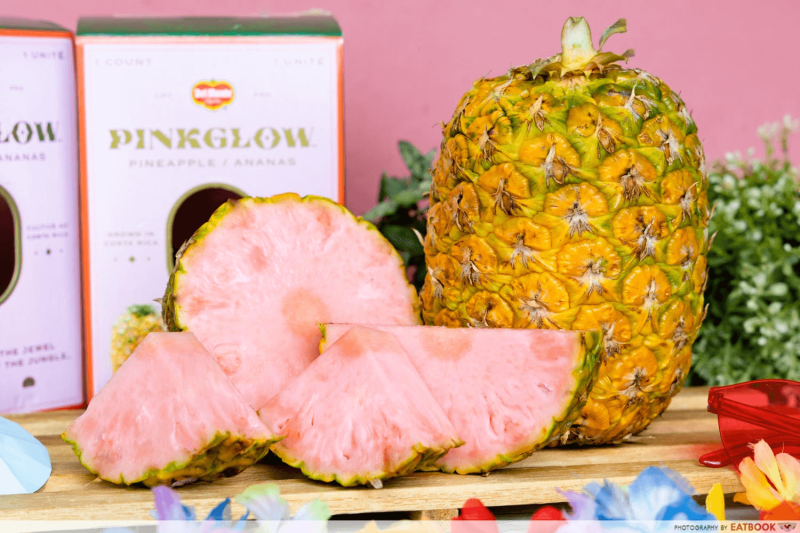
Pink pineapples? Tobacco and tangerine genes help make this juicy fruit more antioxidant-packed

pinkglow-pineapples-CS-Fresh

At a time when orange cauliflower and white strawberries are now common sights in American grocery stores, a non-yellow pineapple doesn’t seem all that out of place. Still, I wondered: Why now with the flashy presentation? And why pink?

Mis- and disinformation are distorting science and public policy. Subscribe to our Daily and Weekly Digests for incisive coverage of ‘disruptive’ innovations in AI, agricultural biotechnology, food, chemicals, nuclear energy, vaccines, and other disruptive innovations.

Pineapples happen to naturally convert a reddish-pink pigment called lycopene, which is high in antioxidants, into the yellow pigment beta-carotene. (Lycopene is what gives tomatoes and watermelon their color.) Preventing this process, then, could yield pink flesh and higher antioxidants. The company set its dedicated pineapple research team to the task of figuring out how to do it.

The team landed on a set of three modifications to the pineapple genome. They inserted DNA from a tangerine to get it to express more lycopene. They added “silencing” RNA molecules to mute the pineapple’s own lycopene-converting enzymes, which also helped reduce its acidity. (RNA silencing is the same technique used to make non-browning GMO Arctic apples.) Finally, Del Monte added a gene from tobacco that confers resistance to certain herbicides, though representatives for the company say this was simply so its scientists could confirm that the other genetic changes had taken effect—not because Del Monte plans to use those herbicides in production.

This is an excerpt. Read the original post here

Related Articles

Infographic: Global regulatory and health research agencies on whether glyphosate causes cancer

Infographic: Global regulatory and health research agencies on whether glyphosate causes cancer

Does glyphosate—the world's most heavily-used herbicide—pose serious harm to humans? Is it carcinogenic? Those issues are of both legal and ...

Most Popular

ChatGPT-Image-Mar-10-2026-01_39_01-PM
Viewpoint—“Miracle molecule” debunked: Why acemannan supplements don’t work
ChatGPT-Image-Sep-10-2026-10_36_07-AM
Viewpoint: Even lousy scientific articles can shield authors when they hype dubious health claims and products
Screenshot-2026-10-01-at-10.52.08-AM
Non-browning CRISPR gene-edited bananas move one step closer to British markets
ChatGPT-Image-Sep-23-2026-02_36_39-PM
Viewpoint: After firing the entire National Science Board, Trump reshapes funding initiatives. Here’s the good and the bad.
generated-1790707585414
Facts & Fallacies podcast: America's health care system is broken. A doctor explains how to fix it
ChatGPT-Image-Sep-21-2026-03_15_09-PM
Viewpoint: Chipotle-inspired lesson: 10,000 sick customers suggest that processed foods can be safer than fresh ones
Screenshot-2026-09-22-at-10.54.12-AM
‘They misunderstand science’: Research attempting to tie autism to changes in the gut microbiome comes under fire
ChatGPT-Image-Sep-21-2026-11_21_39-AM
Viewpoint: Food cults: Online ‘nutrition communities’ can pose unique dangers
glp menu logo outlined

Get news on human & agricultural genetics and biotechnology delivered to your inbox.