Let them eat… mold? CRISPR gene-edited mushroom derivative used to ferment soy sauce can enhance nutrition and flavor of meat-free proteins

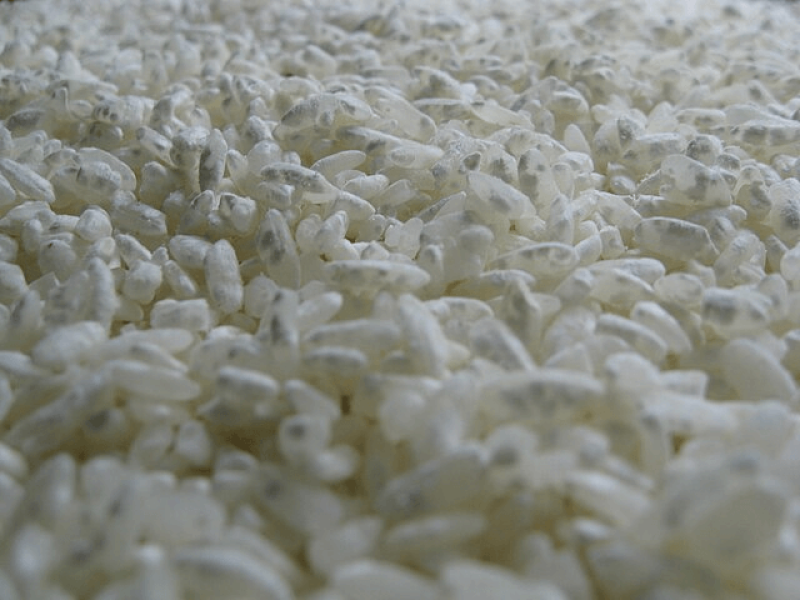
Aspergillus oryzae growing on rice. Credit: Forrest O. via Flickr and CC-BY-SA-2.0

Scientists have discovered how to make meat alternatives with fungi… The fungus tested is called koji mold and has a long history in East Asia, where it’s used to ferment starches into sake, soy sauce and miso.

The researchers studied a multicellular fungus called Aspergillus oryzae, also known as koji mold [used for sake and soy sauce], then developed a gene-editing system using a CRISPR-Cas9 toolkit that can make consistent and reproducible changes to the koji mold genome. They then modified the mold to create a food source.

Hill-Maini said the team focused on boosting the mold’s production of heme – an iron-based molecule found mostly in animal tissue that gives meat its color and distinctive flavor. They then worked on creating more ergothioneine – an antioxidant only found in fungi and that is associated with cardiovascular health benefits.

Follow the latest news and policy debates on sustainable agriculture, biomedicine, and other ‘disruptive’ innovations. Subscribe to our newsletter.
[Berkeley Lab chef-turned-bioengineer Vayu] Hill-Maini said, “We think that there’s a lot of room to explore texture by varying the fiber-like morphology of the cells. So, we might be able to program the structure of the fibers to be longer, which would give a more meat-like experience. And then we can think about boosting lipid composition for mouth feel and further nutrition.”

This is an excerpt. Read the original post here

{{ reviewsTotal }}{{ options.labels.singularReviewCountLabel }}
{{ reviewsTotal }}{{ options.labels.pluralReviewCountLabel }}
{{ options.labels.newReviewButton }}
{{ userData.canReview.message }}

Related Articles

Infographic: Global regulatory and health research agencies on whether glyphosate causes cancer

Infographic: Global regulatory and health research agencies on whether glyphosate causes cancer

Does glyphosate—the world's most heavily-used herbicide—pose serious harm to humans? Is it carcinogenic? Those issues are of both legal and ...

Most Popular

ChatGPT-Image-May-7-2026-12_16_37-PM-2
Viewpoint: Are cancer rates ‘skyrocketing’ as RFK, Jr. and MAHA claims? The evidence says mostly the opposite
Screenshot-2026-04-13-at-1.39.26-PM
Viewpoint: ‘Safer for children?’ Stonyfield yogurt under fire for deceptive organic marketing
Screenshot-2026-04-22-at-10.46.29-AM
Viewpoint: How to counter science disinformation? Science journalist offers 12 practical tips
png-pill-omega-Supp-fish-oil
Millions take omega-3 fish oil for brain health. New research suggests it may do the opposite.

Sorry. No data so far.

glp menu logo outlined

Get news on human & agricultural genetics and biotechnology delivered to your inbox.