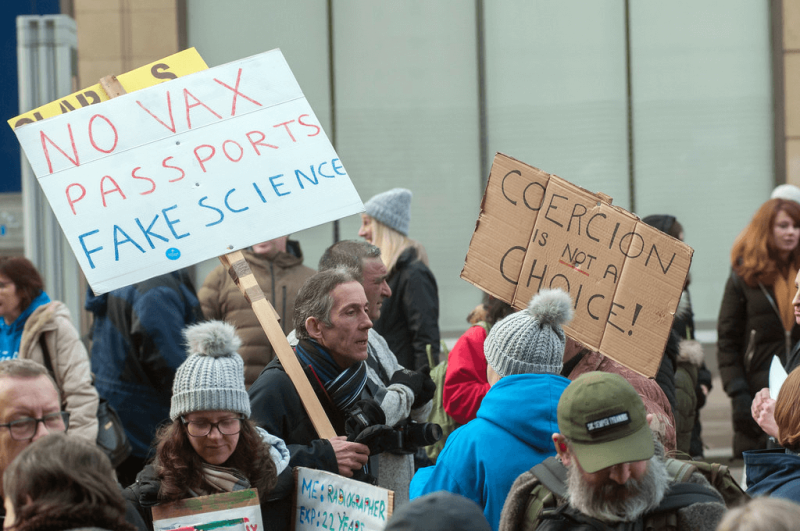
Every day around the world, scientists are being abused and harassed online. They are being attacked on social media and by e-mail, telephone, letter and in person. And their reputations are being smeared with baseless accusations of misconduct. Sometimes, this escalates to real-world confrontations and attacks.
Such threats to scientists aren’t new; those researching climate change and gun control, for example, have endured abuse for decades. However, since the start of the COVID-19 pandemic, there has been an unprecedented escalation in the intensity and frequency of attacks, and the range of targets, say researchers.
Researchers say that the surge in abuse is showing no signs of slowing down, even as the pandemic itself slips from the headlines. “All the data that we do have points to it increasing rather than decreasing; it’s certainly getting quite prolific,” says Lyndal Byford, director of news and partnerships at the Australian Science Media Centre in Adelaide. “I’m hearing a lot from universities and research organizations that they’re seeing it as an increasing problem.”

However, universities and research institutions are often slow to respond to this fast-moving threat, and the support they offer can frequently fall short, say many researchers who have experienced harassment. “Too often, we’re off on our own, not getting the backing of the institutions,” says [Baylor College of Medicine pediatrician and virologist Peter] Hotez.