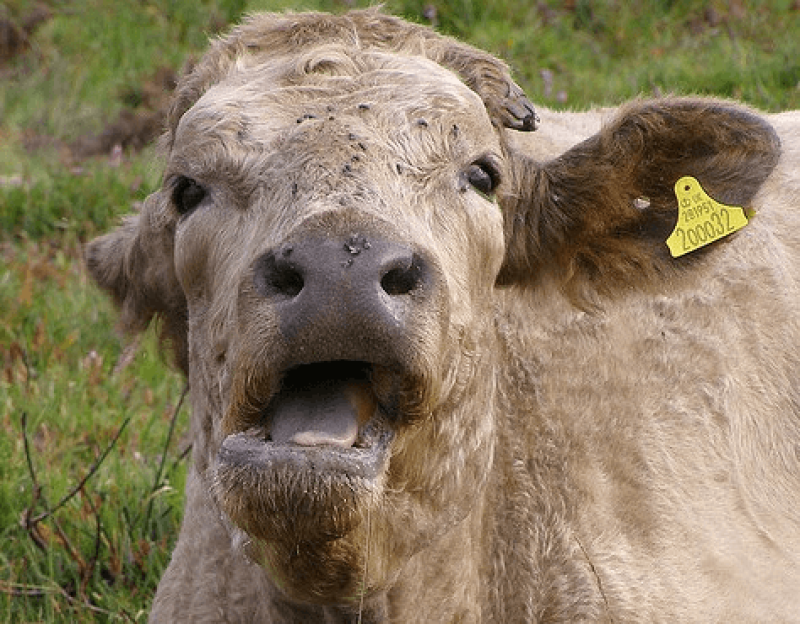
Methane-releasing cow ‘burps’ are a major global contributor to climate instability. Could a vaccine fix that?

Credit: Jim Champion/Flickr

The methane emitted by the world’s billion-plus belching cattle has roughly the same impact on the climate as all the passenger vehicles on the planet and four times the impact of all airlines, according to Colin South, chief executive of ArkeaBio, a Boston agricultural biotechnology firm.

Carbon dioxide may get more attention, but methane is more potent, with 84 times the warming power over a 20-year period, according to European Union energy experts. ArkeaBio is working on a vaccine that would be administered to cattle not to prevent disease but to reduce methane emissions caused by a group of microorganisms in their stomachs.

Justin Tupper, president of the United States Cattlemen’s Association, said he doesn’t believe that cow burps are a major contributor of greenhouse gases and called the notion of vaccinating cattle to reduce methane “laughable.”

Follow the latest news and policy debates on sustainable agriculture, biomedicine, and other ‘disruptive’ innovations. Subscribe to our newsletter.

ArkeaBio is working on a vaccine that would target a methane-producing subset called methanogens. The vaccine would stimulate antibodies to bind to and neutralize methanogens. There’s no indication that this would harm cattle, South said.

The shot would likely be administered a couple of times a year. Cattle already receive regular vaccinations to protect them from brucellosis, respiratory diseases, bovine viral diarrhea, and other ailments.


This is an excerpt. Read the original post here

{{ reviewsTotal }}{{ options.labels.singularReviewCountLabel }}
{{ reviewsTotal }}{{ options.labels.pluralReviewCountLabel }}
{{ options.labels.newReviewButton }}
{{ userData.canReview.message }}

Related Articles

Infographic: Global regulatory and health research agencies on whether glyphosate causes cancer

Infographic: Global regulatory and health research agencies on whether glyphosate causes cancer

Does glyphosate—the world's most heavily-used herbicide—pose serious harm to humans? Is it carcinogenic? Those issues are of both legal and ...

Most Popular

ChatGPT-Image-Jun-25-2026-12_23_17-PM
No, Bill Gates did not secretly engineer ticks to promote veganism
ChatGPT-Image-Mar-10-2026-01_39_01-PM
Viewpoint—“Miracle molecule” debunked: Why acemannan supplements don’t work
Screenshot-2026-06-05-at-2.12.30-PM
Some plants can poison you. So how did humans figure out what is safe to eat?
ChatGPT-Image-Jun-17-2026-10_52_43-AM
Anguished parents, doctors in tears: Utah’s long measles outbreak takes a toll
ChatGPT-Image-May-18-2026-12_06_18-PM-2
Defying death: The immortality movement goes mainstream
ChatGPT-Image-Jun-23-2026-03_12_23-PM
Is cellular reprogramming junk science? Nearly 20 patients are getting eye injections in the first FDA-cleared cellular trial

Sorry. No data so far.

glp menu logo outlined

Get news on human & agricultural genetics and biotechnology delivered to your inbox.