The discovery of CRISPR in 2012 accelerated the evolution of genetic engineering. Distinctions are now made between first-generation biotechnologies developed in the 20th century and second-generation biotechnologies—NGT or New Genomic Techniques—including genome editing.
How do these genomic modifications compare to those that occur spontaneously in nature? How are these techniques applied in the sciences of plant, animal, and human health? What are the prospects for the development of these new technologies in countries around the world?
Since the end of the 20th century, biotechnologies have evolved as essential tools for progress in human medicine, animal health and welfare, and sustainable agricultural production. The genetic modifications they induce have also been the subject of a societal controversy that began with an opposition to GMOs in the 1990s. New developments in the techniques used in agricultural biotechnology—gene editing in particular—have opened new perspectives that many countries have welcomed, adapting the regulatory provisions for these new products.
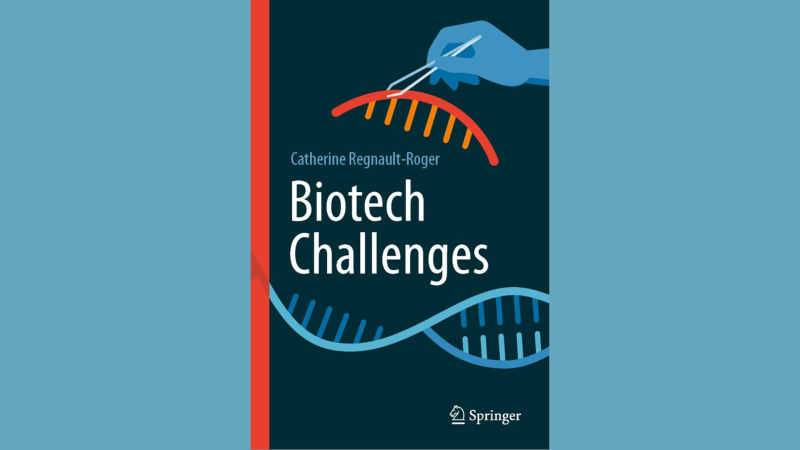
Biotech Challenges, Catherine Regnault Roger’s latest book, reviews these fast-changing innovations, as New Genomic Techniques (NGTs) such as CRISPR gene editing are being deployed in countries around the world. It is thoughtfully constructed and easily digestible, even for a lay readership; it runs 17 chapters and a concise 150 pages, making it widely accessible to a lay readership. It also includes invaluable bibliographic references.
She guides us through the first wave of the agricultural biotechnology revolution, in the 1980s and 1990s. That was driven by advances in genetically modifying organisms (GMOs), transgenesis, and random mutagenesis. These first-generation of genetic engineering tools yielded many important farming advances such as weed and pest control. They were not nearly as precise as the second wave of innovation, the application of efficient New Genomic Techniques, which are revolutionizing both human and veterinary medicine as well as agriculture.
Rogers provides an update about GMOs (Genetically Modified Organisms) and NGT in terms of research, development and dissemination over the last forty years on the planet. Let’s review the book in more detail:
Regnault-Roger introduces us to the fast-innovating world of agricultural biotechnology. Focusing on both animal and farming applications, she profiles leading researchers and their breakthrough products.
Biotech Challenges is also in part a political book, as agricultural biotechnology has stirred strong feelings among scientists, farmers, and environmentalists who often disagree on the benefits and dangers of food and farming innovations. These tensions have resulted in sharply differing country-by-country regulations, grounded more in politics than science. As she explains, the debate over the future of agriculture has become geopolitical at times, raising issues of local control of food production, national sovereignty, and international competition.
Regnault-Roger is a technological optimist, constantly reminding the reader of the importance of GMOs and genome-edited products and their myriad applications in the world. She documents the evolution of global attitudes from the first generation of genetically engineered crops (late 20th century) to the current era, shaped by the discovery of New Breeding Techniques.
She guides us through the first wave of the agricultural biotechnology revolution, in the 1980s and 1990s. That was driven by advances in genetically modifying organisms (GMOs), transgenesis, and random mutagenesis. These first-generation of genetic engineering tools yielded many important farming advances such as weed and pest control. They were not nearly as precise as the second wave of innovation, the application of efficient New Genomic Techniques, which are revolutionizing both human and veterinary medicine as well as agriculture.

Countries around the world have greeted these innovations much differently, reflecting their internal politics, trade needs, cultural traditions, and their comfort level with change. There are also geopolitical factors at stake, such as the competition between the United States, which has evolved a comparatively relaxed regulatory scheme, with the European Union, which has been cooler to agricultural technology.
These differing technology paths have led North America and the European Union to approach their agricultural trade relationships with developing countries much differently. Africa has emerged as a geopolitical and trade battlefield. For many years, the sub-Saharan countries resisted adopting genetically engineered technology, fearing a frosty reaction from the EU, its largest trading partner. Only recently, with the development of NBTs, has the African countries shaken loose of Europe’s influence to launch biotechnology research projects of their own.
These recent developments, and the fast-paced technology innovation being driven by NBTs, put the European Union at a crossroads. After rejecting first-generation agricultural biotechnologies, and seeing its farmers suffer, will it be able to adopt regulations that meet the geopolitical challenges of the present and future?
This small book is an educational opus with a clarity of presentation that makes it accessible to the public. It is also an act of advocacy, reflecting the author’s conviction that the NGT revolution is poised to improve the lot of the developing world, unless it is blocked by superstition and politics. Regnault-Roger challenges preconceived ideas and the spread of misinformation about biotechnology, gently prodding the reader to analyze these technologies from a rigorous scientific perspective and an openness to change.
This English edition of the book, published on New Year’s Day 2024 by Springer Nature, is updated from the French original: “Enjeux biotechnologiques, des OGM à l’édition du génome” from the collection “Académie d’Agriculture de France”, published by Presses des Mines (Paris, France), and released in 2022.
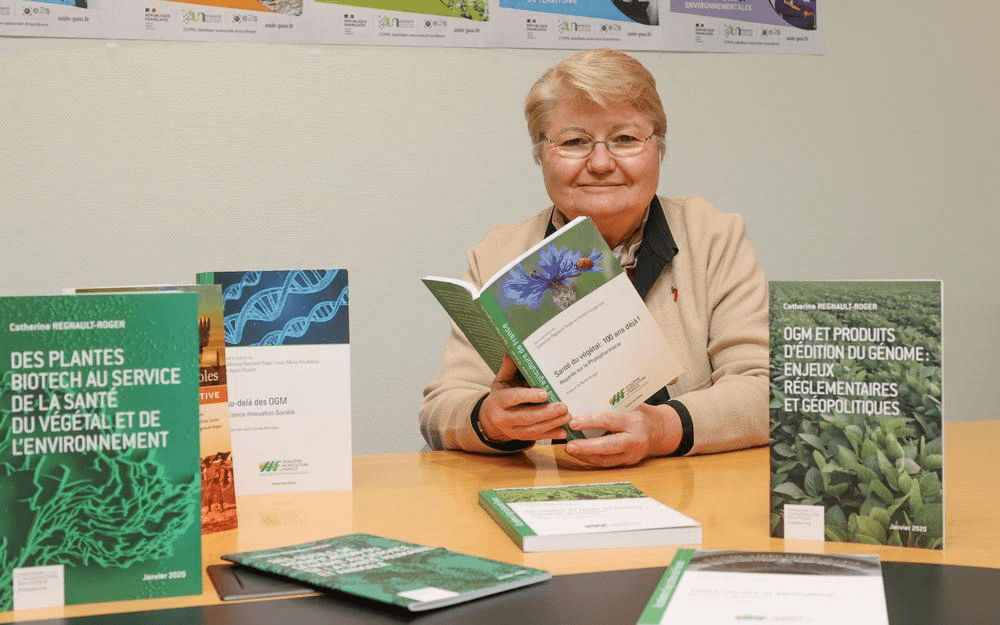
Catherine Regnault Roger’s is professor emeritus at the University of Pau and the Pays de l’Adour (France), member of the Academy of Agriculture of France and of the National Academy of Pharmacy. She is a former member of the Scientific Committee of the High Council of Biotechnology (HCB), and it is in this capacity that she began acquiring the research that led to this book.
The book contains two provocative Forewords. The first one was written for the French version by Dr Jean-Yves Le Déaut, former professor of biochemistry at the University of Nancy and now Honorary Member of Parliament, former President of the French Parliamentary Office for the Evaluation of Scientific and Technical Choices (OPECST) and member emeritus of the Académie agriculture de France who reveals the intense debates that took place in the French Parliament. It tells the story of the intense debates over the safety and science of GMOs that took place in the French Parliament.
The English version includes an original essay by Marc Van Montagu, Professor emeritus at the University of Gent (Universiteit Gent). He was pioneer researcher who developed the first insecticide transgenic tobacco. He reinforces that this book echoes and honors the fifty years of the extraordinary biotechnological scientific epic.
Professor Michel Thibier, DVM, Dr ès Sci., Past President of the UEAA (European Union of Academies of Agriculture), Past President of the Académie Vétérinaire de France and member of the Académie d’agriculture de France.