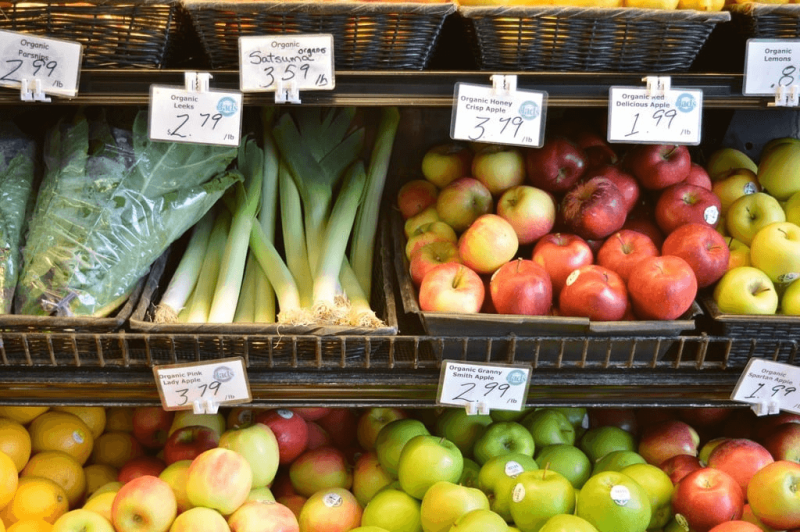

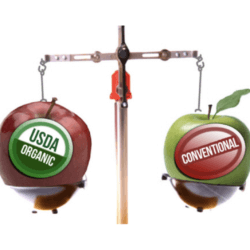
Every time you walk into your favorite grocery store, there is a competition happening. Its contestants include all sorts of food and the people selling them. I am talking about the battle of organic versus conventional foods.
…
Organic food is proven to be beneficial for the environment in some ways, and this shouldn’t be ignored. A quick Google search will tell you that increased biodiversity and lower greenhouse emissions are among the benefits of organic farming. What is less obvious is that these methods bring up potential issues as well. More land is required than conventional farming, though the yield is much lower. Organic products have shorter shelf lives too, which brings the sustainability of organic farming on a large scale into question.
Here’s the kicker. That little green sticker on your apple might not even guarantee a bite fully free of pesticides and other additives. Many food experts are concerned that standards for organic certification have slipped in the increased demand for organic foods since their rise to the mainstream. Organic farmers are also still free to use other inputs in the growing process. Sulfur is a major one, and though it is low in toxicity, it still dispels the myth that organic foods are completely untouched by additives.



For these reasons, I feel no guilt choosing inorganic food when I go grocery shopping, and you shouldn’t either. I used to, until I learned that “organic” doesn’t mean “good,” and “inorganic” doesn’t mean “bad.”