It is frustrating to read blatantly false science information online, but it’s a fact of our time. For years, we’ve at least we’ve had bulwarks, such as the online “The Conversation,” which bills itself as “an independent, nonprofit platform for informed commentary and analysis written by university faculty and researchers”.
Independent it may be, but informed? Unfortunately, its standards are slipping. There are increasing examples of advocacy campaigners hijacking the site to promote ideological perspectives that collide with scientific consensus.
It’s most recent science distortion: yet another article claiming that the world’s most widely-used weedkiller, glyphosate, poses a cancer-causing danger, affecting human health and the environment.
There may be media controversy over this issue, and there have been billions of dollars in court filings that make that claim, but the mainstream science community has long since reached a consensus: As Health Canada stated in its assessment of glyphosate:
No pesticide regulatory agency in the world currently considers glyphosate to be a cancer to humans
But such unanimity among independent regulatory and oversight organizations has not deterred environmental activists from misreporting the science; that’s what they do. Disconcerting, however, is when guardians of science — which The Conversation claims to be — abuse their public trust by feeding the disinformation slurry.
Advocacy academicians twist consensus science
The latest and most egregious misreporting on the science of glyphosate was circulated by The Conversation on July 10: “Mexico’s planned glyphosate ban helped show how agroecology can lead the way forward”.

It should be noted from the start that the three co-authors are sociologists, with one having expertise in agricultural economics. None has any training in even basic science, let alone toxicology. Keep that in mind, because many of their assumptions and proclamations, while memes in the advocacy community, are thoroughly rejected by the overwhelming majority of experts in the study of chemical toxicity.
Let’s deconstruct The Conversation article point-by-point.
The title itself is misleading, as the article had little to do with the amorphous subject of agroecology. Instead, it mounts a full-scale attack on the well-beaten glyphosate piñata. It claimed that the herbicide, used in conjunction with some genetically engineered crops, can cause cancer and pose serious environmental risks. Neither claims are accurate, according to consensus science or the results of continued rigorous regulatory evaluations which continually show no special risk at occupational or dietary exposures.
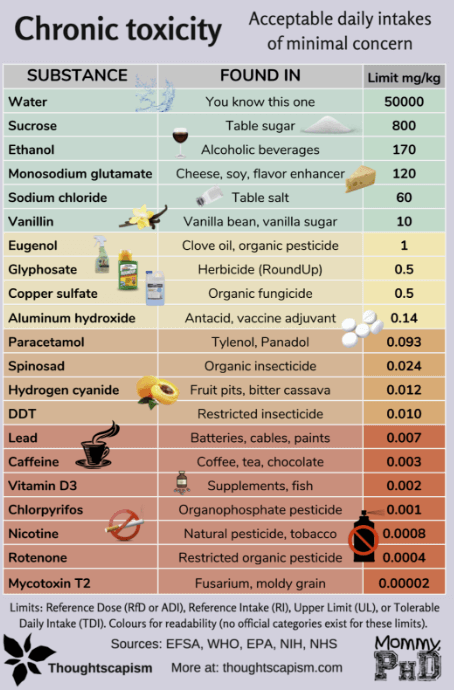
The sub-title is equally egregious: “Weed killers like glyphosate are highly toxic to both humans and our ecosystems.” There are no data to support this contention, nor do they cite or link to any consensus research supporting these toxicity claims. Glyphosate is toxic to plants, yes. It’s designed to kill weeds. It kills plants by inhibiting an enzyme required for metabolism that animals do not have. It poses limited toxicity to humans, in stark contrast to the authors’ claims. But in the case of glyphosate, toxicity does not equate with human health or ecological danger. Here is a chart that illustrates the comparative toxicity of glyphosate with more than a dozen other substances. It’s less toxic than coffee and about as toxic as copper sulfate, a fungicide widely used without restrictions by agroecology enthusiasts.
The International Agency for Research on Cancer’s problematic ‘hazard’ ratings
The authors base their assertion (presented falsely as accepted science science) on one agency report, which it misrepresents. In 2015, a sub-agency of the United Nations — International Agency for Research on Cancer — issued a monograph classifying glyphosate as a “probable carcinogen.” IARC’s conclusion, in opposition to conclusions of every other independent chemical risk agency in the world, has become the ‘go-to’ citation for every advocacy group advancing the belief that glyphosate poses serious human health hazards.
IARC’s methodology and findings in evaluating glyphosate are challenged by every regulatory agency in every industrialized country. But for illustration’s sake, let’s them at face value. IARC has established various hazard categories.
How dangerous is glyphosate? IARC lists the herbicide in the same hazard category as working the night shift or eating food cooked at high temperatures. It’s considered as “dangerous” as eating a hamburger. What does IARC consider far more dangerous and possibly cancer-causing than glyphosate? Drinking wine or beer. Eating bacon or salted fish. Taking birth control pills.
So, even if we take IARC’s conclusions at face value — again, not one chemical oversight agency in the world agrees with its assessment — then why aren’t these activist academicians campaigning for the shutting down of every McDonald’s in Mexico and the banning of Modelo and tequila?
Let’s dive deeper into the weeds (so to speak) of the glyphosate safety debate. Most of the thousands of exculpatory studies on glyphosate involve only in-lab research. What does real-world data reveal?
There is one state-of-the-art analysis that IARC conspicuously and controversially ignored: the U.S. government’s 25-year, ongoing longitudinal Agricultural Health Study which tracked glyphosate use and cancer incidence among 54,000 American farmers and applicators.
AHS re-examined its data in 2018 in the wake of IARC’s report, evaluating and dismissing the rogue agency’s findings. “No association was apparent between glyphosate and any solid tumors or lymphoid malignancies.”
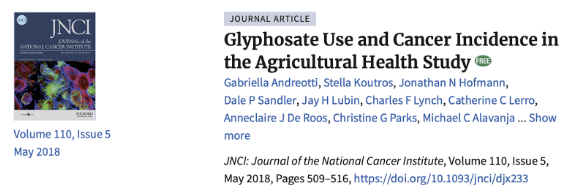
The AHS study de-linking activist claims that glyphosate causes cancer is in line with the 24 glyphosate assessments that have been issued over the past two decades. Not one has concluded that glyphosate poses a cancer hazard at occupational or dietary exposures.
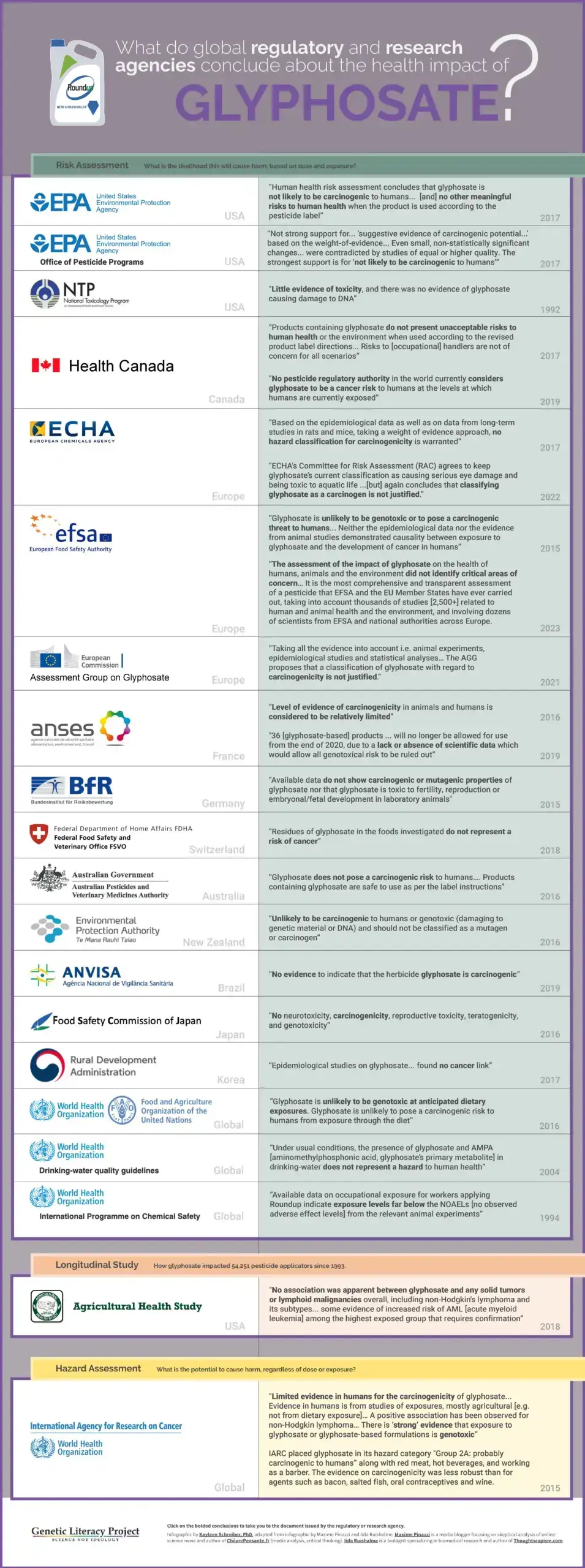
Click here for a downloadable .pdf version of this infographic
An independent review comparing IARC’s findings with the global consensus, published in 2018, concluded this:
The IARC classification of glyphosate as a probable carcinogen was the result of a flawed and incomplete evaluation of the very rodent cancer studies that IARC relied upon. Although the Working Group concluded that there was sufficient evidence that glyphosate was an animal carcinogen, a proper summary of the rodent studies relied upon by IARC would not even support the conclusion that there is limited evidence that glyphosate is an animal carcinogen.
A key point needs to be reinforced: The widely-panned IARC monograph on glyphosate focused only on petri dish and animal studies; it did not even address occupational exposure although the monograph has been widely misrepresented to claim that. In reaching its conclusion, IARC examined more than 300 in vitro studies; only a tiny subset showed evidence of cytotoxicity. In every case, in every study cited by IARC, the exposure levels were at crazy-high doses that far exceed real-life exposure.
At no point in IARC’s flawed monograph does it endorse the claim by these three rogue social scientists (claims repeated endlessly by ‘faux journalists’ funded by tort lawyers whose business model is suing Bayer) that it poses a dietary risk to humans at the extremely low levels that it is found in food. In sum, no agency in the world, including IARC, concludes that micro-traces of glyphosate (in the parts per billion/trillion) residue present in some food products pose health dangers.
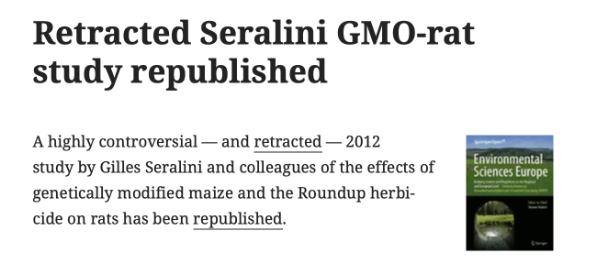
What other evidence do the authors invoke to support their targeting of glyphosate? The authors reach back eight years to an opinion piece published by a suite of authors in Environmental Sciences Europe. The journal has published dozens of less-than-credible papers that align with the precautionary European policy that restricts GE crops. ESE is most notorious for republishing, without peer review, the retracted 2012 paper by French activist scientist Gilles-Éric Séralini, which claimed, falsely, that GMO corn consumption caused many massive tumors in rats.
Glyphosate and the environment
The authors casually assert as accepted wisdom that glyphosate poses serious environmental dangers. The ‘evidence’ they cite is both selective and erroneously framed.




The weedkiller, also sold under the trademark Roundup, often has been referred to as a “miracle herbicide” or a “once in a lifetime” weedkiller because it is so effective and targeted, with little evidence of deleterious environmental impact. Glyphosate is a systemic herbicide, meaning it is absorbed by the plant and translocated throughout its tissues, leading to the death of the entire plant, including its roots. This makes it highly effective in controlling tough and resilient weeds.
Glyphosate binds tightly to soil particles and is poorly taken up by roots, which means it is less likely to affect subsequent crops, making it safer for crop rotation and other agricultural practices. According to the US Environmental Protection Agency and the University of Cambridge, glyphosate breaks down relatively quickly in the environment, primarily through microbial degradation. Its half-life in soil is relatively short, averaging about 30 days in temperate climates. This rapid degradation reduces the likelihood of long-term environmental accumulation and minimizes potential harm to non-target organisms and ecosystems.
The EPA has conducted a comprehensive environmental risk assessment, including evaluations of glyphosate’s effects on terrestrial and aquatic organisms, concluding that when used according to label instructions, the weedkiller poses no significant risks to non-target species, including endangered and threatened species. The European Commission renewed glyphosate’s approval just last December, citing no critical areas of health or environmental concern that would prevent its continued use.
In sum, studies have shown that glyphosate-resistant crops are more sustainable than alternative weed removal systems, including those promoted by agro-ecologists, as their use contributes to reduced soil erosion and improved soil health by facilitating no-till and low-till farming practices, which are beneficial for the environment.
Glyphosate poses no unique danger to bees or birds
The Mexican authors also falsely claim that glyphosate “threatens honeybee populations”. It needs to be stated that glyphosate is not an insecticide but an herbicide. It targets the shikimate pathway, a biochemical pathway crucial for the synthesis of certain amino acids in plants and some microorganisms. Animals, including honeybees, do not possess this pathway, so glyphosate does not directly affect them in the same way it affects plants.
Under typical field conditions, honeybees are not likely to encounter harmful levels of glyphosate. The herbicide is usually applied to crops and weeds rather than directly to flowering plants that bees forage on. Moreover, glyphosate tends to degrade relatively quickly in the environment, further reducing the potential for exposure to harmful levels.
The authors’ erroneous claim is based entirely on two laboratory and high-dose field studies (e.g. Farina et al, 2019, Abraham et al., 2018) that have been widely criticized by the entomology community. The studies did not replicate real-world conditions; rather the scientists fed bees glyphosate in sugar water and/or using doses that could never be found in realistic settings.
Studies have consistently reaffirmed that glyphosate has low acute toxicity. Regulatory bodies such as the EPA, the European Food Safety Authority (EFSA), and Health Canada conclude that when used properly, glyphosate does not pose a threat to honeybee health. EFSA’s review specifically considered the potential for exposure and found that the risk to honeybees is low.
The authors do mention that glyphosate destroys wildflowers, certainly a source of bee foraging, but so does any other weedkiller or plows used by many agroecology-focused farmers. Bottom line: if we’re going to grow crops we must manage weeds, and glyphosate poses less harm to the agricultural ecosystem than alternatives.
The scholarship of the article hits a low with the claim that glyphosate “has been found to kill birds and soil microorganisms.” Its source? A link to an article on The Ecology Center website, with thirty-year-old links.
False claim of glyphosate bans
The three authors state that “some governments have restricted or even banned glyphosate application.” Its source? A link to an Agence France–Presse article that directly contradicts their claim. The 2023 AFP article noted that the EU just re-authorized the use of glyphosate for a decade; Brazil concluded no risk to human health; and Colombia and El Salvador reversed their bans and now authorize the use of glyphosate. Vietnam is the only country in Asia that currently ban its use. Sri Lanka reversed its 2021 ban which contributed to a disastrous collapse of its farm economy. Mexico’s proposed ban was reversed.
This article is academic gaslighting, and represents gross misconduct in misrepresenting a citation. Most regulatory bodies are not in favor of bans or restrictions on glyphosate. A few EU countries placed restrictions on its use in the wake of the hysteria over the since-retracted Séralini paper, bowing to pressure from environmental activist groups, but none formally bans it.
The authors conclude by writing “Banning glyphosate is an essential step in protecting the health of humans and our ecosystems,” an opinion in contrast to the synopsis of the link they provided.
Selling agroecology
The authors clearly have two intentions: Discrediting glyphosate, which they use as a strawman stand-in for conventional agriculture, and promoting agroecology, the rebranded moniker for organic farming.
While most of the rest of the world rushes to embrace agricultural gene editing and the use of advanced chemistry as part of a sustainable, integrated weed management approach, the authors present a romantic vision of a citrus farm in the Veracruz region of Mexico that eschews technology.
The authors claim that a group of farmers are abandoning glyphosate, substituting cover crops and weed whackers. Mexico’s National Research Council has apparently supplied money for thousands of (massively polluting) weed whackers and 38 agroecology technicians. Government-sponsored agents visited over 10,000 farms, “sharing information about the potential dangers of glyphosate and the viability of agroecological alternatives.”
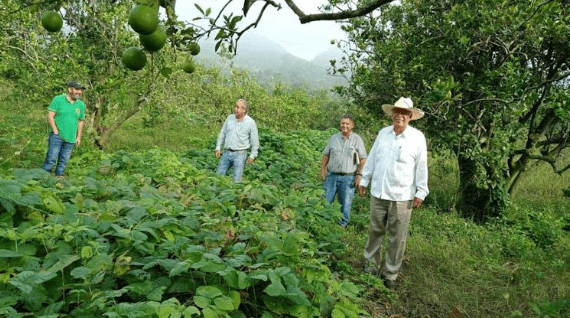
The article included a photo of a citrus farm that has implemented these practices. It is hardly weed free. While the cover crops look good in the row middles, the trees are inundated with weedy overgrowth. Those weed whackers just aren’t cutting it.
This account, if true, is as scandalous as it is a rebuff of science. Government grants are being used to poison the well, scaring farmers away from scientifically advanced farming techniques, and supplanting those methods with alternative production schemes that have no track record of success. That’s a high-stakes gamble with people’s livelihoods based on limited evidence.
The social science researchers note that a recent presidential decree supports atypically large investment into agroecological research, which aims to scale up adoption nationwide. That’s great. If these grants produce evidence that revised practices can make farming more profitable, or as profitable with fewer environmental impacts, then that would be quite a victory for Mexican farmers.
That’s how science should work. If the evidence is solid, farmers adopt change. Farmers know what works in their fields. Big shifts in practices come only after several seasons of evaluating the impact on productivity and cost. Nothing is more annoying to a farmer than an academic egghead landing on their soil and telling them they are doing it wrong. On the other hand, a partnership that improves a farmer’s bottom line based on evidence is a great use of government and academic resources.
Reflections
The Conversation is considered credible because of its pool of authors —supposedly independent-thinking academics. That gives its articles a special patina of legitimacy, as there is an implicit expectation of scholarship, objectivity, appropriate citation, and adherence to evidence.
Publishing poor-quality journalism under the guise of scholarship compromises its integrity and denigrates all academics who write under its banner. This polemic is rife with poor scholarship and citation bias. It pitches its points without providing evidence, instead misrepresenting the scientific consensus on the safety of a widely used, well-studied herbicide. It provides platitudes and anecdotes that agroecological methods are superior —without evidence. It fails farmers and consumers by glibly ignoring the fact that farmers welcome change in production based on evidence, and its effect on cost vs. profit.
This article’s misrepresentation of basic facts about the science of weed control and the impact of herbicides on human and environmental health is not an anomaly. In contrast to its stated commitment to “academic rigor”, The Conversation has posted at least three other articles echoing factually false, tired, advocacy group and tort lawyer claims about the world’s most used and one of the safest herbicides, glyphosate (here, here, here),
Featuring sloppy scholarship irreparably damages a valuable public resource. The repercussions of this article and similar diatribes under the guise of encouraging ‘public debate’ go far beyond this one news source. It causes the public to question the value of alleged experts. And it damages science communication and trust in expertise.
How did The Conversation allow this to be posted? Are there no fact-checkers? What next? Vaccines are deadly and COVID-19 was a hoax?
Kevin M. Folta is a professor, keynote speaker, and podcast host. Follow Professor Folta on X @kevinfolta
Jon Entine, founder and executive director of the Genetic Literacy Project, is an Emmy-winning investigative TV News producer and author of seven books, including three on genetics. Please follow him on X at @JonEntine