There have been at least 10 outbreaks of measles across twenty states already this year, an alarming and dramatic surge. What a contrast to 2000 when health officials boasted that the United States had officially “eliminated” the disease with so few known cases. How? A highly effective vaccination program that created herd immunity.
The number of reported infections has increased almost 17 times the average over the same period in each of the past four years, according to the CDC. That surge has resulted in the hospitalization of about half of those infected, predominantly children.
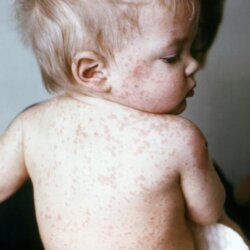
Why the unprecedented surge? Health officials blame an increasing number of parents opting out of vaccinating their children against measles and other preventable childhood diseases. A staggering 80% of this year’s measles cases have occurred among unvaccinated individuals or those with unknown vaccination status.
Growing epidemic of disinformation
This trend is largely driven by politicians and “influencers” on television and social media who spread disinformation that undermines confidence in vaccination generally, including routine childhood shots.
KFF Health News examined the common tropes of vaccine rejectionists, highlighting why such disinformation is profoundly misguided and dangerous.
A pervasive distortion propagated by vaccine skeptics — mostly Republicans according to surveys — spreads the scientifically misguided assertion that vaccines are unnecessary and shouldn’t be mandated because the diseases they prevent are not particularly dangerous or are too rare to be of concern.
They cite two reasons. First, many accuse public health officials and the media of fear-mongering about measles and other surging diseases. Second, many Libertarians believe they are standing for liberty.
“It’s not the vaccine itself, it is the mandate [that’s the problem],” said state Rep. Kathy Edmonston of Louisiana, which has one of the lowest vaccination rates in the country. The Republican has borrowed a phrase from the pro-choice movement. “We’re against the government telling us what to do with our own bodies,” she said recently. (Ironically, Edmonston has a 100% rating from the anti-abortion Right to Life Federation.) That is what American Council on Science and Health’s Dr. Barbara Pfeffer Billauer and I called in a recent article, “the freedom to cause harm.”
Measles remains a severe threat. According to the CDC, it kills approximately 2 out of every 1,000 infected children. Although this might appear to be a small, tolerable risk, it is essential to recognize that a much higher percentage of children with measles end up requiring hospitalization due to complications such as pneumonia. One in ten children with measles develops an ear infection that can lead to permanent hearing loss; and the measles virus can also compromise a person’s existing immunity, making it harder to recover from other common infections.
Over the past 50 years, measles vaccines have saved approximately 94 million lives, predominantly children, worldwide, according to an April analysis by the World Health Organization. Adding to that the benefits of immunizations against polio and other diseases, since 1974 vaccines have saved more than 154 million lives globally.
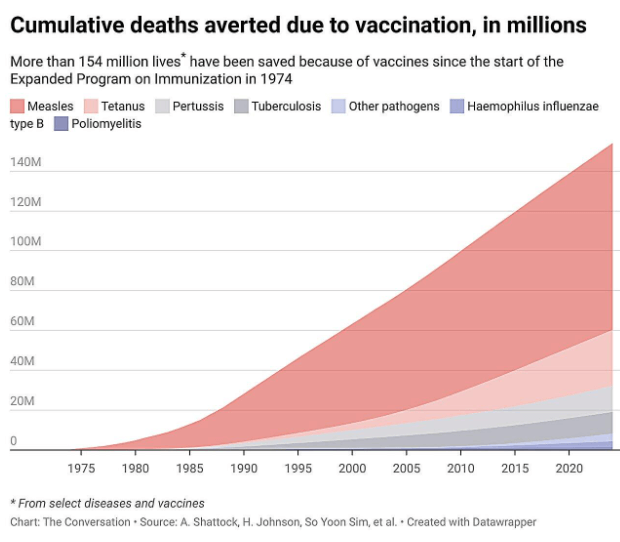
Despite these statistics, some skeptics argue that vaccine-preventable diseases are no longer a threat due to their rarity in the U.S. It is true that they’ve become rare – thanks to widespread vaccination.
The ‘You Never Know’ Trope
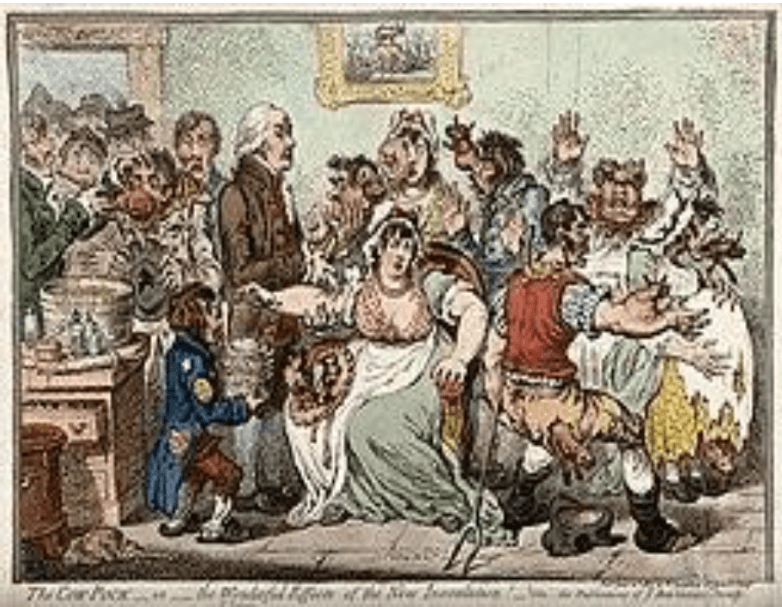
Since the inception of vaccines, a segment of the public has viewed with suspicion. In the 1800s, skeptics claimed that smallpox vaccines caused people to become deformed and sprout animal parts (because the vaccine was derived from cowpox virus):
A modern variation on that old theme is what I call “the outright, blatant, evidence-free lie.” Examples include attributing to vaccines conditions such as attention-deficit/hyperactivity disorder (ADHD), autism, and immune system disruption, despite scientific evidence to the contrary. Some claims are simply absurd, such as that vaccine recipients became “magnetized,” or that vaccines contain microchips that enable the government to track vaccinees.
Anti-vaxxers have even fabricated opinions about vaccines, supposedly from respectable medical organizations. A recent example was the American Heart Association’s public warning that
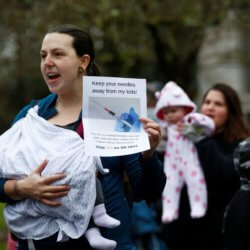



…false information about COVID vaccination and heart defects attributed to the Association may be spreading. The misinformation is inaccurately and incorrectly connected to a recent scientific paper on cardiovascular-kidney-metabolic (CKM) syndrome.
Their disclaimer continued:
The American Heart Association’s 2023 Cardio-Kidney Metabolic Health scientific statement, as detailed in the news release, the presidential advisory and manuscript, does not include any references to COVD-19 vaccination or vaccines of any kind. (emphasis added).
The safety of vaccines is taken seriously by both those who develop them and by federal regulators. Because vaccines are administered to large numbers of healthy people – unlike most other drugs and medical devices — they are among the most exhaustively studied medical interventions. Extensive clinical trials test vaccines both during development and post-approval for safety and efficacy.
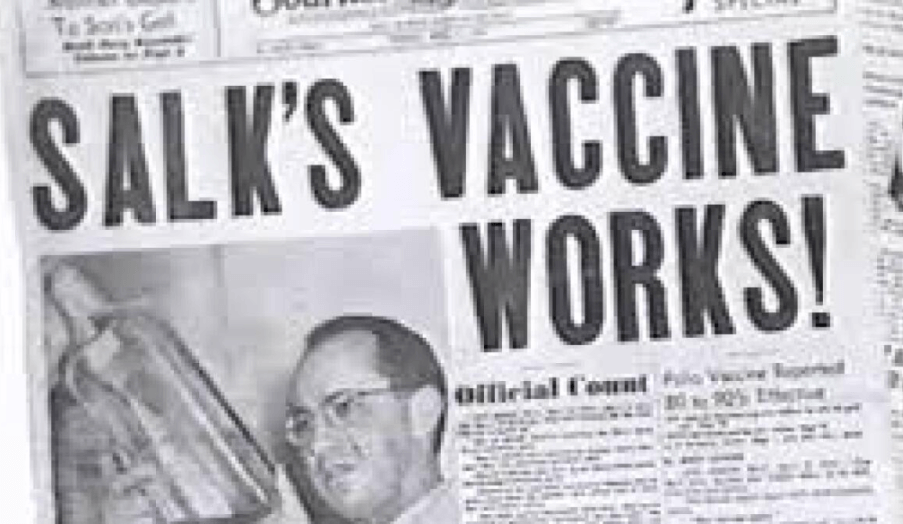
In the clinical trials of the Salk polio vaccine in the 1950s, 623,972 schoolchildren were injected with vaccine or placebo, and more than 12,000 people participated in clinical trials for the most recent measles, mumps, and rubella (MMR) vaccine.) Such extensive research allows for the detection of even rare risks.
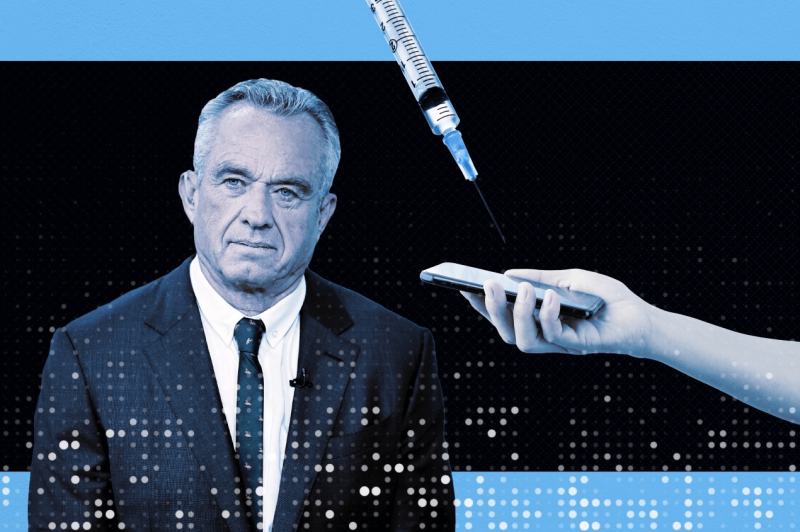
To assess long-term risks, researchers meticulously analyze vast datasets for signals of harm. A Danish study of more than 657,000 children found no link between the MMR vaccine and autism, and another study of 805,000 children found no evidence to support the concern that multiple vaccinations might impair immune systems. Nevertheless, cranks like Robert F. Kennedy, Jr. and the other members of the “Disinformation Dozen” blithely dismiss these carefully performed studies.
The ‘Too-Much-Too-Soon’ Trope
Some anti-vaxxers promote the unwise notion that parents should delay or skip their children’s vaccinations, which results in preventable and sometimes life-threatening infections. The CDC’s vaccination schedule is designed to protect children at their most vulnerable stages and to minimize side effects. For example, the MMR vaccine is not given in the first year of life because maternal antibodies can interfere with the immune response. A second dose is recommended around kindergarten age because some children do not generate a strong response to the first dose, and schools are a Petri dish for pediatric infections. Delaying the MMR vaccine beyond age 10 increases the risk of adverse reactions.
The ‘They Don’t Want You to Know’ Trope
RFK Jr., one of the most deluded and vocal of the anti-vaxxers, has compared Florida’s vaccine-rejectionist Surgeon General Joseph Ladapo to Galileo, claiming that the unconventional views of both were unfairly suppressed. A better analogy would be to compare Ladapo to Edwin Goodwin, the amateur mathematician who convinced Indiana legislators to try to help science and engineering along by redefining the value of pi as 3.2. (Pi = 3.14159…, and like Ladapo and Kennedy, he was an ignoramus who didn’t know what he didn’t know.)
In her first campaign speech, Kennedy’s running mate, Nicole Shanahan, drew a connection between vaccinations and autism that echoed many tenets of the anti-vaccine movement. She has also claimed that discussions about vaccine harms are censored and that federal agencies conceal data on side effects and deaths due to corporate influence.

There is no evidence for that. If anything, the FDA, where I spent 15 years, is overly risk-averse. Federal agencies are transparent about the side effects of vaccines and the federal government has a compensation program for individuals who can show evidence that have been harmed by certain vaccines.
Conclusion
The rising number of measles cases in the United States, let alone the likelihood of another COVID surge later this year and the possibility of human-to-human transmission of H5N1 avian flu, underscores the critical need to address vaccine misinformation. The benefits of vaccination are immense and well-documented, saving millions of lives globally every year. As misinformation continues to erode public trust in vaccines, it is crucial to counter false narratives with robust scientific evidence and clear communication from health authorities and others.
Vaccination remains one of the most effective tools in protecting public health, and maintaining high immunization rates is essential to preventing the resurgence of preventable diseases.
Henry I. Miller, a physician and molecular biologist, is the Glenn Swogger Distinguished Fellow at the American Council on Science and Health. He was the founding director of the FDA’s Office of Biotechnology. Find Henry on X @HenryIMiller