

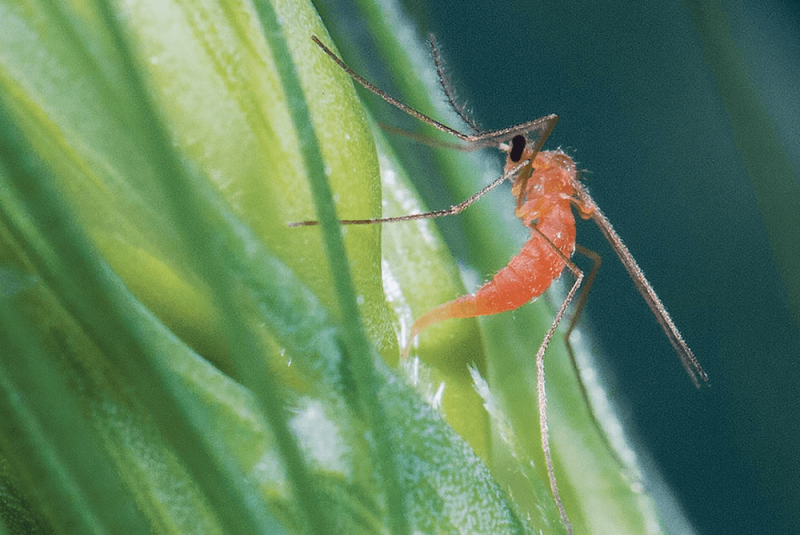
Farmers are staying one step ahead of the enemy by using genetics to create better methods of pest control

Production of volatile organic compounds that repel female wheat midge could be a valuable trait to breed into wheat varieties.  Credit: Shelley Barkley
Production of volatile organic compounds that repel female wheat midge could be a valuable trait to breed into wheat varieties. Credit: Shelley Barkley

Scientists have discovered that some wheat varieties naturally deter [wheat midge] from laying eggs. It’s not about taste, but smell. These plants release volatiles that mimic those found in post-anthesis wheat, a stage wheat goes through that makes it hard for insect larvae to survive. 

Follow the latest news and policy debates on sustainable agriculture, biomedicine, and other ‘disruptive’ innovations. Subscribe to our newsletter.

It’s like a clever trick — a plant defense strategy called oviposition deterrence….

“Understanding these volatile cues isn’t easy — it took scientists years of collecting air samples from wheat fields to decipher which chemicals deterred midge and which didn’t. Now, armed with this knowledge, we can better understand how plants defend themselves and how insects like wheat midge respond to their environment,” says Tyler Wist, entomologist with Agriculture and Agri-Food Canada (AAFC) in Saskatoon, Sask.

Wist’s team is uncovering new traits and genes that protect wheat from destructive pests like wheat midge. They’ve identified a novel QTL region enhancing the efficacy of the Sm1 gene, along with other genetic regions altering wheat’s scent to make it less appealing to wheat midge.

This is an excerpt. Read the original post here

{{ reviewsTotal }}{{ options.labels.singularReviewCountLabel }}
{{ reviewsTotal }}{{ options.labels.pluralReviewCountLabel }}
{{ options.labels.newReviewButton }}
{{ userData.canReview.message }}
Infographic: Global regulatory and health research agencies on whether glyphosate causes cancer

Infographic: Global regulatory and health research agencies on whether glyphosate causes cancer

Does glyphosate—the world's most heavily-used herbicide—pose serious harm to humans? Is it carcinogenic? Those issues are of both legal and ...
glp menu logo outlined

Get news on human & agricultural genetics and biotechnology delivered to your inbox.








