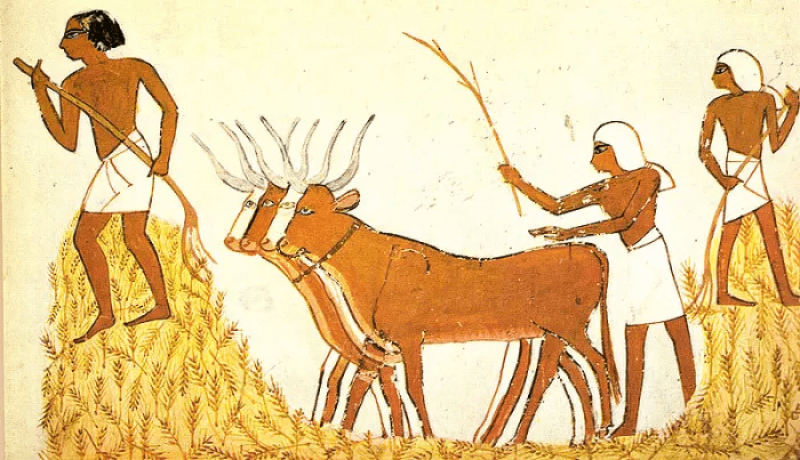

Scientists have long suspected that humans’ ability to digest starch may have increased after our ancestors transitioned from a hunter-gatherer lifestyle to a settled, agricultural lifestyle. This shift was shown to be associated with more copies of the amylase genes in people from societies that domesticated plants.
…
“These remarkably complex, crazy structures — regions of gene duplication, inversion and deletion in the human genome — have evolved independently in different human populations over and over again, even before the rise of agriculture,” [Peter Sudmant, assistant professor of integrative biology at the University of California, Berkeley] said.
Analysis of the many contemporary human genomes also pointed to an origin 280,000 years ago of an initial duplication event that added two copies of AMY1 to the human genome.





“That particular structure, which is predisposed to high mutation rates, emerged 280,000 years ago, setting the stage for later on, when we developed agriculture, for people who had more copies to have increased fitness, and then for these copy numbers to be selected for,” Sudmant said. “Using our methods, for the first time we could really date the initial duplication event.”