In January, I was fortunate to attend a much-anticipated debate between astronomer royal Lord Martin Rees and Mars exploration advocate Dr Robert Zubrin. The event at the British Interplanetary Society took on the topic of whether the exploration of Mars should be human or robotic.

In a recent book called The End of Astronauts, Lord Rees and co-author Donald Goldsmith outline the benefits of exploration of the solar system using robotic spacecraft and vehicles, without the expense and risk of sending humans along for the ride. Dr Zubrin supports human exploration. Where there was some agreement was over Rees’s advocacy of using gene editing technology to enable humans to overcome the immense challenges of becoming an interplanetary species.
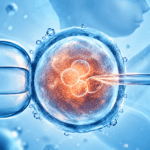
Our genome is all the DNA present in our cells. Since 2011, we have been able to easily and accurately edit genomes. First came a molecular tool called Crispr-Cas9, which today can be used in a high school lab for very little cost and has even been used on the International Space Station. Then came techniques called base and prime editing, through which miniscule changes can be made in the genome of any living organism.
The potential applications of gene editing for allowing us to travel further are almost limitless. One of the most problematic hazards astronauts will encounter in deep space is a higher dosage of radiation, which can cause havoc with many processes in the body and increase the longer-term risk of cancer.
Perhaps, using genome editing, we could insert genes into humans from plants and bacteria that are able to clean up radiation in the event of radioactive waste spills and nuclear fallout. It sounds like science fiction, but eminent thinkers such as Lord Rees believe this is key to our advancement across the solar system.
Identifying and then inserting genes into humans that slow down aging and counter cellular breakdown could also help. We could also engineer crops that resist the effects of exposure to radioactivity as crews will need to grow their own food. We could also personalise medicine to an astronaut’s needs based on their particular genetic makeup.
Imagine a future where the human genome is so well understood it has become pliable under this new, personalised medicine.

Genes for extremes
Tardigrades are microscopic animals sometimes referred to as “water bears”. Experiments have shown that these tiny creatures can tolerate extreme temperatures, pressures, high radiation, and starvation. They can even tolerate the vacuum of space.
Geneticists are eager to understand their genomes and a paper published in Nature sought to uncover the key genes and proteins that give the miniature creatures this extraordinary stress tolerance. If we could insert some of the genes involved into crops, could we make them tolerant to the highest levels of radiation and environmental stress? It’s worth exploring.
Even more intriguing is whether inserting tardigrade genes into our own genome could make us more resilient to the harsh conditions in space. Scientists have already shown that human cells in the lab developed increased tolerance to X-ray radiation when tardigrade genes were inserted into them.
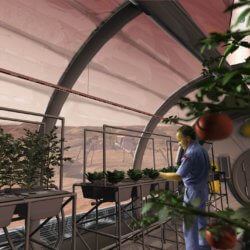




Transferring genes from tardigrades is just one speculative example of how we might be able [to] engineer humans and crops to be more suited to space travel.

We’ll need much more research if scientists are ever to get to this stage. However, in the past, several governments have been keen to enforce tight restrictions on how genome editing is used, as well as on other technologies for inserting genes from one species into another.
Germany and Canada are among the most cautious, but elsewhere restrictions seem to be relaxing.
In November 2018, the Chinese scientist He Jiankui announced that he had created the first gene-edited babies. He had introduced a gene into the unborn twins that [confer] resistance to HIV infection.
The scientist was subsequently jailed. But he has since been released and allowed to carry out research again.
In the new space race, certain countries may go to lengths with genome editing that other nations, especially in the West where restrictions are already tight, may not. Whoever wins would reap enormous scientific and economic benefits.
If Rees and the other futurists are right, this field has the potential to advance our expansion into the cosmos. But society will need to agree to it.
[There will likely] be opposition, because of the deep-seated fears of altering the human species forever. [W]ith base and prime editing now having advanced the precision of targeted gene editing, it’s clear that the technology is moving faster than the conversation.One country or another is likely to [leap whereas] others pull back from the brink. Only then will we find out just how viable these ideas [are?] Until then, we can only speculate with curiosity, and perhaps excitement too.
is an Associate Tutor and PhD Candidate in Philosophy of Science, at Manchester Metropolitan University
A version of this article was originally posted at Conversation and has been reposted here with permission. Any reposting should credit the original author and provide links to both the GLP and the original article. Find Conversation on X @ConversationUS