IVF mixup: What’s to be done if your child gets switched with another at birth—and you don’t find out till years later

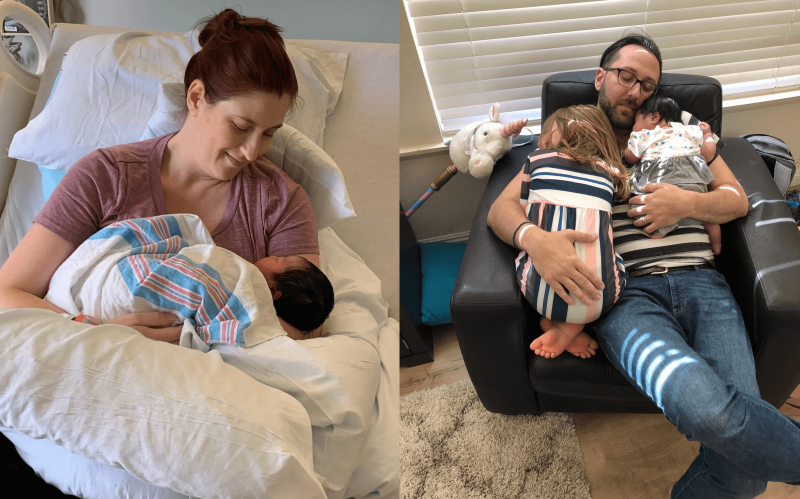
Daphna Cardinale with May (left) and Alexander Cardinale at the hospital with Olivia and May (right). Credit: Cardinale family/New York Times Magazine

In the days after Daphna Cardinale delivered her second child, she experienced a rare sense of calm and wonder. The feeling was a relief after so much worrying: She and her husband, Alexander, had tried for three years to conceive before turning to in vitro fertilization, and Daphna, once pregnant, had frequent and painful early contractions. But now, miraculously, here was their baby, their perfect baby, May, with black hair plastered on her head.

Alexander, … wanted to share his wife’s happiness, but instead, he was preoccupied [with] a concern that he was reluctant to voice: May did not look to him like a member of their family…. Alexander often turns to dark humor to mask a simmering anxiety, and in the days after the birth, he started to joke that their I.V.F. clinic had made a mistake.

Follow the latest news and policy debates on sustainable agriculture, biomedicine, and other ‘disruptive’ innovations. Subscribe to our newsletter.

Trying to ease Alexander’s mind, Daphna ordered a DNA testing kit… [and] in November 2019, they sent DNA samples off to a testing company. Then they waited. Three weeks passed before the results appeared in Alexander’s inbox.

Alexander opened the email on his phone, as Daphna, holding May, paced around their bedroom. She saw her husband’s face immediately look drawn; his body language registered defeat. He read out loud: “99.9 percent likelihood, not a match for the father.”


This is an excerpt. Read the original post here

{{ reviewsTotal }}{{ options.labels.singularReviewCountLabel }}
{{ reviewsTotal }}{{ options.labels.pluralReviewCountLabel }}
{{ options.labels.noReviewsLabel }}
{{ options.labels.newReviewButton }}
{{ userData.canReview.message }}

Related Articles

Infographic: Global regulatory and health research agencies on whether glyphosate causes cancer

Infographic: Global regulatory and health research agencies on whether glyphosate causes cancer

Does glyphosate—the world's most heavily-used herbicide—pose serious harm to humans? Is it carcinogenic? Those issues are of both legal and ...

Most Popular

ChatGPT-Image-Mar-10-2026-01_39_01-PM
Viewpoint—“Miracle molecule” debunked: Why acemannan supplements don’t work
ChatGPT-Image-Jul-22-2026-09_13_07-AM
Viewpoint—The Strategic Litigation boom: Understanding the tightening coalition among NGOs, foundations, journalists, and tort lawyers
ChatGPT-Image-Jun-25-2026-12_23_17-PM
No, Bill Gates did not secretly engineer ticks to promote veganism
How to Include More Strawberries in Your Diet
Strawberries are berries—and 35 other surprising food and drink myths
ChatGPT-Image-May-22-2026-10_26_09-AM
Trump-RFK, Jr. National Science Board firings: Accountability vs. partisan meddling
diversity
We are entering a new era of personalized medicine—if you’re white

Sorry. No data so far.

glp menu logo outlined

Get news on human & agricultural genetics and biotechnology delivered to your inbox.