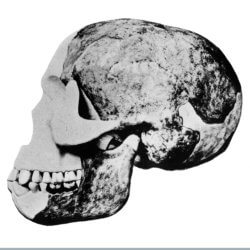
Scientists have reconstructed the face of a long-lost human ancestor that may have played a critical role in our evolution. They used the Harbin skull, also known as ‘Dragon Man,’ which is a 150,000-year-old nearly complete human skull discovered in China in 1933. Paleoartist John Gurche utilized fossils and genetic data from the extinct species to recreate plastic replicas of remains.

Video: ‘Dragon Man’—What did our Denisovan ancestors look like 150,000 years ago?
Ellyn LaPointe | Daily Mail (UK) | January 22, 2025
{{ reviewsTotal }}{{ options.labels.singularReviewCountLabel }}
{{ reviewsTotal }}{{ options.labels.pluralReviewCountLabel }}
{{ options.labels.newReviewButton }}
{{ userData.canReview.message }}
Related Articles
Showing Slide 1 of 4
![]() |
Bees & Pollinators | More... |
![]() |
Infographics | More... |
Infographic: Global regulatory and health research agencies on whether glyphosate causes cancer
Does glyphosate—the world's most heavily-used herbicide—pose serious harm to humans? Is it carcinogenic? Those issues are of both legal and ...
Most Popular
Viewpoint: The state of U.S. vaccine policy? Dismal nationally, but some states are stepping up.
How criminals are using AI to target social media users and steal their money and confidential data
Viewpoint: Will AI democratize personalized cancer treatment or fuel medical misinformation?
As U.S. officials spread medical misinformation, scientists fact check online
Viewpoint — Digital gods and human extinction: Will we be the first species ever to design our own descendants?
Viewpoint: Anti-vax fake ‘turbo cancer’ claims threaten cancer treatment breakthroughs