There are many reasons for the EU to take the necessary measures against the climate crisis. For example, the worst drought in 500 years will be experienced in some countries in the summer of 2022 ; Up to 30% yield loss in products such as corn and soybeans; yield losses due to extreme heat and dry periods during the flowering period in the Southeastern countries; a significant increase in water and other production inputs, especially electricity, and even increases in prices exceeding 300% in some inputs.
However, due to the climate crisis and the war, Poland, Spain and Hungary have taken action to change the “Farm to Fork” regulations in question. Although food security in the EU is not directly under threat, it is a fact that the European Union is undoubtedly going through a complex period. The ongoing effects of Covid-19, price shocks in world food, energy and fertilizer markets, as well as the current geopolitical situation that has led to shortages of some raw materials cannot be denied. In addition to high inflation, the Covid-19 crisis and the Russia-Ukraine war have negatively affected the EU. Around 7 million refugees have sought refuge in European countries in the last 2 years. The negative economic impacts have been further increased and an economic recession has emerged due to the economic sanctions imposed by the EU against Russia and the decline in industrial production capacity caused by the disruption of natural gas flows.
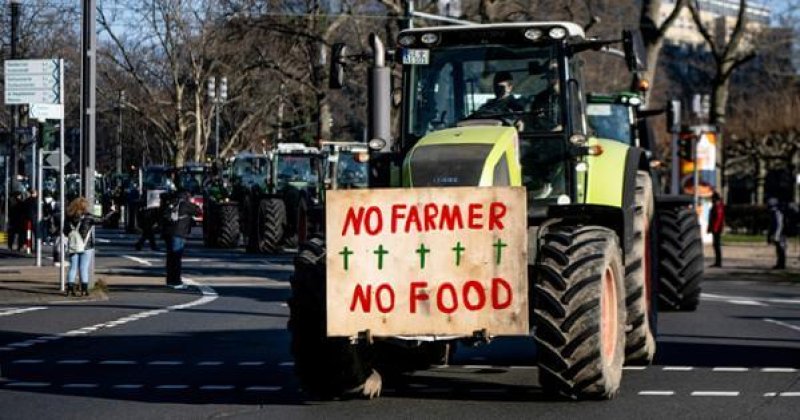
The widespread farmer protests in 2023-2024 have led Europe to make many changes to its environmental policies and projections. The new approach to agri-food policy presented by the EU Commission focuses on simplifying regulations and making farming an attractive profession again, rather than imposing unrealistic environmental standards, some of which don’t promote sustainability.
The Commission has moved to “Simplify” the agreement, with one official saying, “We need an approach that rewards farmers rather than putting too much pressure on them.” This will begin to simplify the implementation of the Common Agricultural Policy (CAP), the massive EU farm subsidy program worth almost a third of the total EU budget.


The so-called “Sustainable Use of Pesticide Regulation”, originally proposed in 2022, was withdrawn in February 2024 amid a growing right-wing backlash against the European Green Deal and widespread protests by angry farmers.
Despite the policy change, the new vision aims to make subsidy distribution fairer by reducing payments to large agribusiness and allocating more funds to small farmers.
The Commission is pushing for the production of essential agricultural products to be prioritized in order to increase food sovereignty.
In addition:
- The plan to reduce pesticide use by 50% by 2030 was cancelled;
- The Sustainable Use of Pesticide Regulation, proposed in 2022, was withdrawn completely in 2024 after protests;
- Stringent green criteria that farmers must meet to receive EU agricultural subsidies will be relaxed;
- Mandatory sustainability labels: The practice of placing labels on the front of packages showing the environmental impact of food production has been withdrawn. Instead, labels containing information on product origin and animal welfare will be included;
- Some rules requiring farmers to use agricultural land according to certain sustainability rules have been relaxed.
- Regulations requiring imported agricultural products to comply more strictly with environmental and health standards have been left vague.
- Economic support and subsidy practices given to farmers will be simplified;
- Food safety has been made a priority;
- Environmental criteria will be shifted from strict rules to voluntary incentives;
- Pesticide standards will be maintained on imported products, but sustainability requirements will be relaxed.
Nazimi Açıkgöz graduated from Ankara University and earned his Ph D. degree at Munich Technical University. He is now a freelance writer. Find Nazimi on Twitter @nazimiacikgoz