
The trade war hit my farm and greenhouse business here in northwest Missouri on March 4. The first email I received that morning was from the Canadian company that supplies peat-moss-based potting soil for our geraniums and petunias. Because of the new tariffs, the potting soil being shipped that morning would cost $1,750 more than I had expected the night before. But on March 6 we received the invoice and found that it didn’t include the tariff because President Trump had temporarily suspended certain tariffs. Who knows what will happen next? We buy six truckloads of potting soil a year, so if Mr. Trump reimposes these tariffs in April as he has threatened, we’ll face an annual cost increase of about $10,500.
Our part of Missouri is known for its native walnut trees. I recently contracted to sell $8,000 of hardwood lumber from walnut trees on a farm that my son and I own. According to a sawmill manager I talked to, most walnut lumber enters the export market, which has collapsed because of Mr. Trump’s tariffs. I won’t cut my trees this spring as I had planned, and what could have been a windfall for my family has disappeared.
Like peat moss, nearly all the potassium fertilizer, or potash, I use on my farm comes from Canada. The tariff on this essential fertilizer will be 10% beginning in April—another $2,500 contribution from our farm to the trade war. In his recent address to Congress, Mr. Trump urged farmers to “have a lot of fun.” I’m working on it, but am struggling to find anything fun about tariffs.
Most countries faced with new U.S. tariffs have responded with import tariffs on U.S. agricultural products—a direct blow to farmers’ export markets. I grow corn and soybeans on my farm. So far, corn and soybean prices have each dropped about 50 cents a bushel since their February highs, meaning some $75,000 less in revenue for my farm this year. Commodity prices go up and down for many reasons, from rain in South America to fighting in Ukraine, but the recent weakness is due to fears over declines in our export markets. The top three export markets for U.S. agricultural products are China, Mexico and Canada. To add to our fun, these countries seem to be the main targets in our trade war.
Farmers have generally been quiet about the trade war for at least three reasons. First, most agree with the president that the rules of international trade are unfair. This belief predates President Trump. Among my neighbors, it’s almost a dogma that wily foreigners are forever taking advantage of the naïfs who have represented the U.S. in trade negotiations over the decades.
Second, farmers voted for this administration. In the small county where I live, Mr. Trump received 79% of the vote. Anyone paying attention could see that tariffs were in our future. Atchison County, Mo., and most of the Farm Belt voted for Mr. Trump despite the tariffs, or perhaps because of them. Now that we’re getting what we voted for, good and hard, farmers are willing to endure some pain to ensure “fairness” in the future.

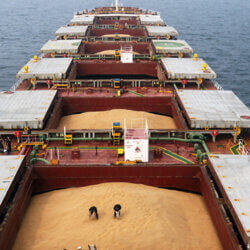



Finally, when the U.S. started a trade war during the first Trump term, farmers received tens of billions of dollars in aid to offset losses in agricultural export sales. I’ve heard at least two farm leaders in the past week mention the possibility of another round of payments, and numbers of that magnitude seem to temper criticism.
We buy potting soil from Canada because that’s where large deposits of peat moss are found. We buy potassium fertilizer from north of the border because there isn’t that much of it in the U.S. Does that mean Canada is acting unfairly? I freely enter into these transactions because they make me better off, just as the buyers of my exported corn and soybeans buy them because they benefit from the transaction. Tariffs hamper my ability to make decisions that are in my best interest.
Sometime this summer, I’ll order a container load of nursery pots from China for our 2026 greenhouse production. The additional tariffs on this purchase will be another $2,500. I don’t know why U.S. manufacturers don’t make large pots, but I guess maybe the end result of all this will be a revitalization of the flowerpot industry in the U.S. No country can long survive without making flowerpots, and there’s at least some chance that my complaints will pale in comparison to the benefits of reshoring the nursery container industry.