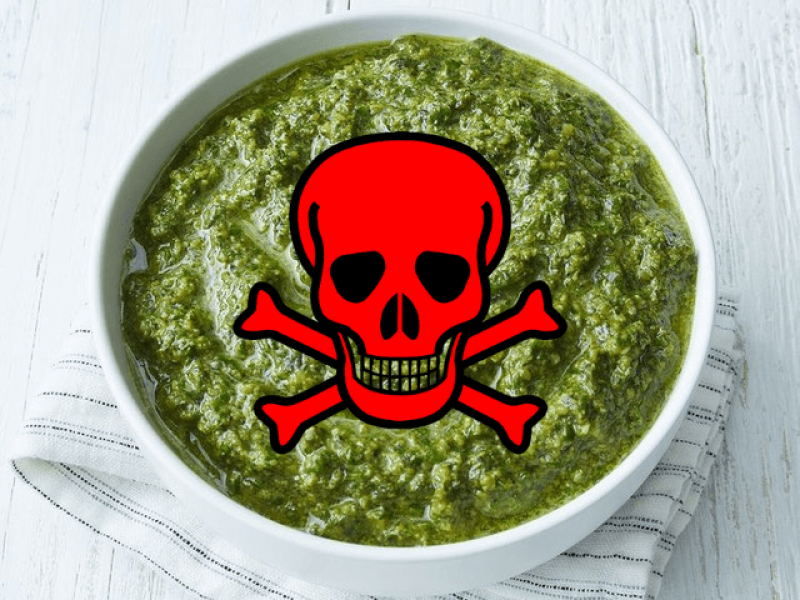
IARC is the agency that famously classified eating bacon as in the same cancer risk category as smoking cigarettes and inhaling asbestos. It also claims that drinking wine or a beer, or even visi ting a hairdresser or barber shop, could cause cancer. Even more bizarre, they placed working night shifts and the consumption of pickled vegetables in categories suggesting significant cancer risk. The IARC’s approach often seems more like a performative exercise in anxiety manufacturing than a sober evaluation of real-world risks. Instead of focusing on realistic exposure levels and actual danger, they prefer a binary, black-and-white model: can it cause cancer in any context whatsoever, no matter how unrealistic? If so, onto the hazard list it goes.
This leads to absurd scenarios where sitting in the sun, drinking a cup of coffee, or simply living in a city are all framed as hazardous behaviors. In its zeal to label everything under the sun as carcinogenic, IARC has increasingly detached itself from meaningful public health guidance and drifted into the territory of self-parody. Yet, that’s the agency that environmeantal groups cite exclusively in ther partnership with ambulance-chasing tort lawyers to target what they caricature as ‘evil’ corporate devils, such as Bayer, which manufacturers glyphosate, or Johnson & Johnson, maker of perfectly harmless (and once beloved) talcum powder.
About aspartame and pesto sauce
As an illustration of how scientifially moronic IARC has become, let’s look at two of its more recent cancer classifications. In July 2023, they classified aspartame, the widely used artificial sweetener, as a “possible” carcinogen — a decision largely based on flimsy and inconsistent data, leading to widespread ridicule from toxicologists and nutritionists alike. Freaked-out moms everywhere dumped bottles of soda down the drain and emptied their drawers of Trident Gum to protect their families. Decades of research, and the fact that you’d have to pound down about 36 Diet Cokes a day for decades to approach a risk threshold, be damned. The IARC rating sent environmental activists into high gear.
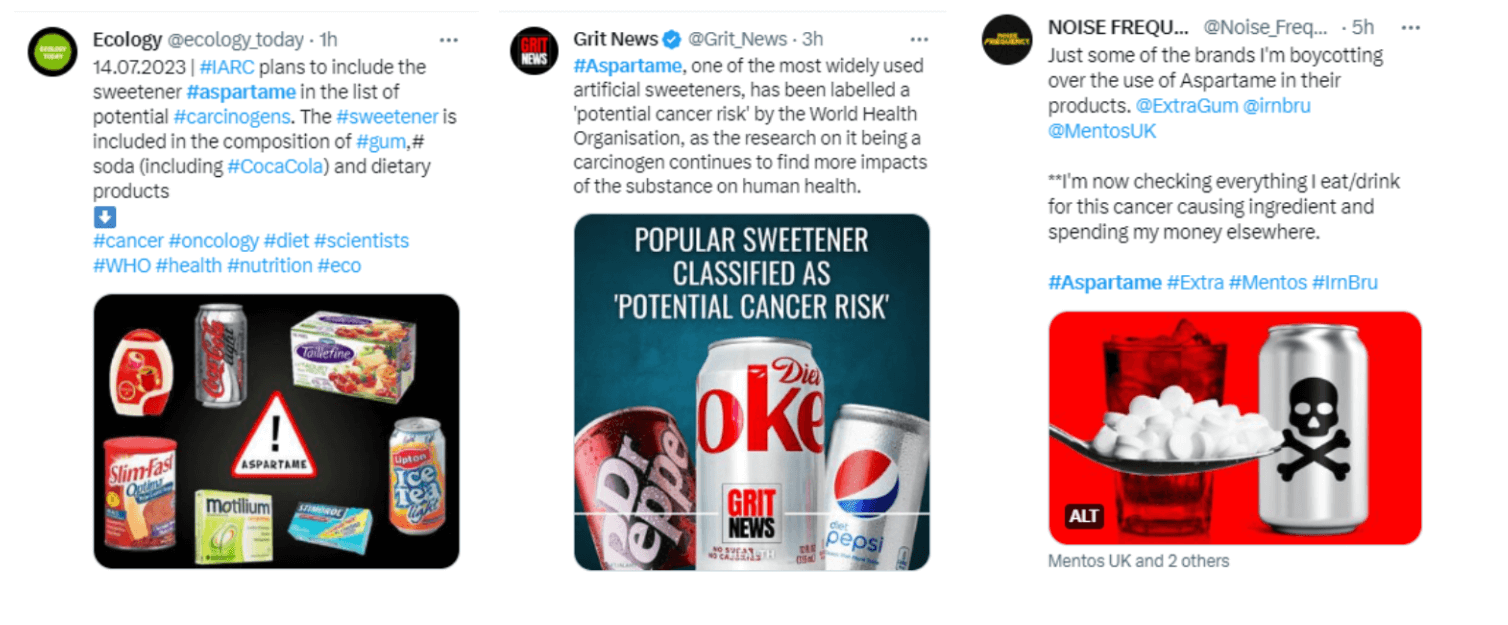
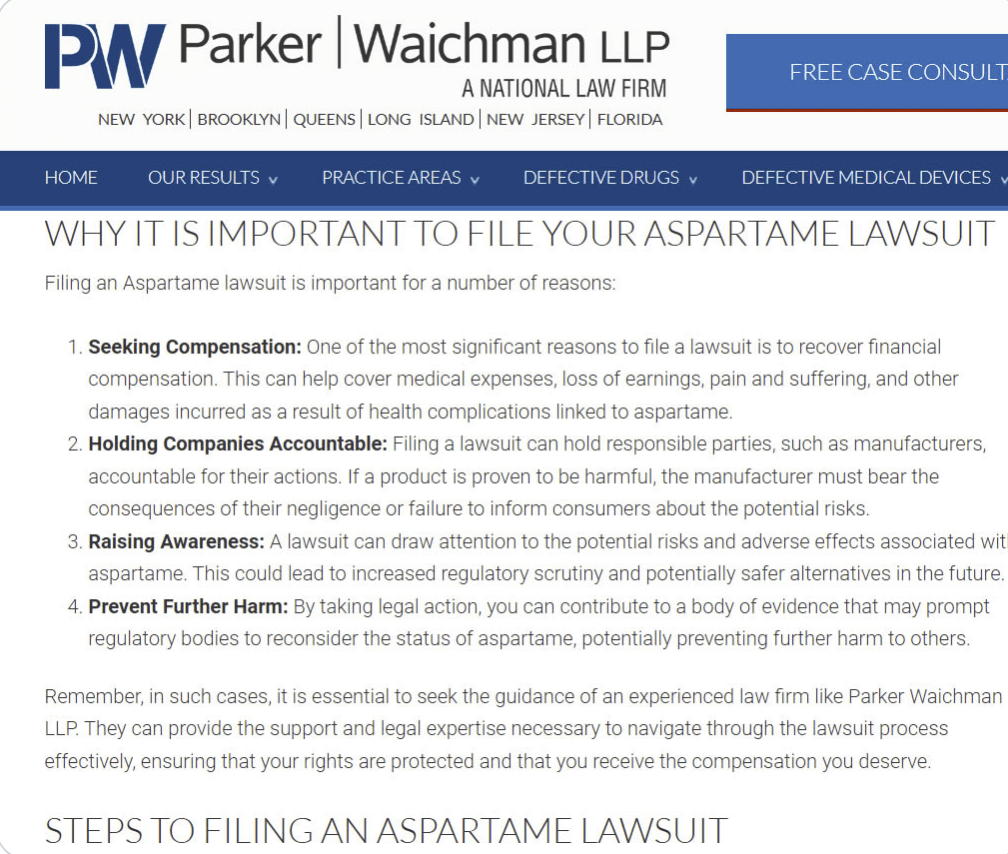
And within hours, tort lawyer firms who make their living off exploiting public misunderstandings about science to shake down companies fearful of billion-dollar jury verdicts were trolling the internet for victims.
While aspartame’s classification as a possible carcinogen grabbed headlines, the classification of another ubiquitous chemical slid silently beneath the diet cola outrage. IARC similarly classified a common chemical — methyleugenol — found naturally in nutmeg, basil and clove oil and commonly used in perfumes and lotions. Like aspartame and glyphosate, IARC classifies it as a group 2A “probable carcinogen”, which means it poses even a greater cancer threat than aspartame.
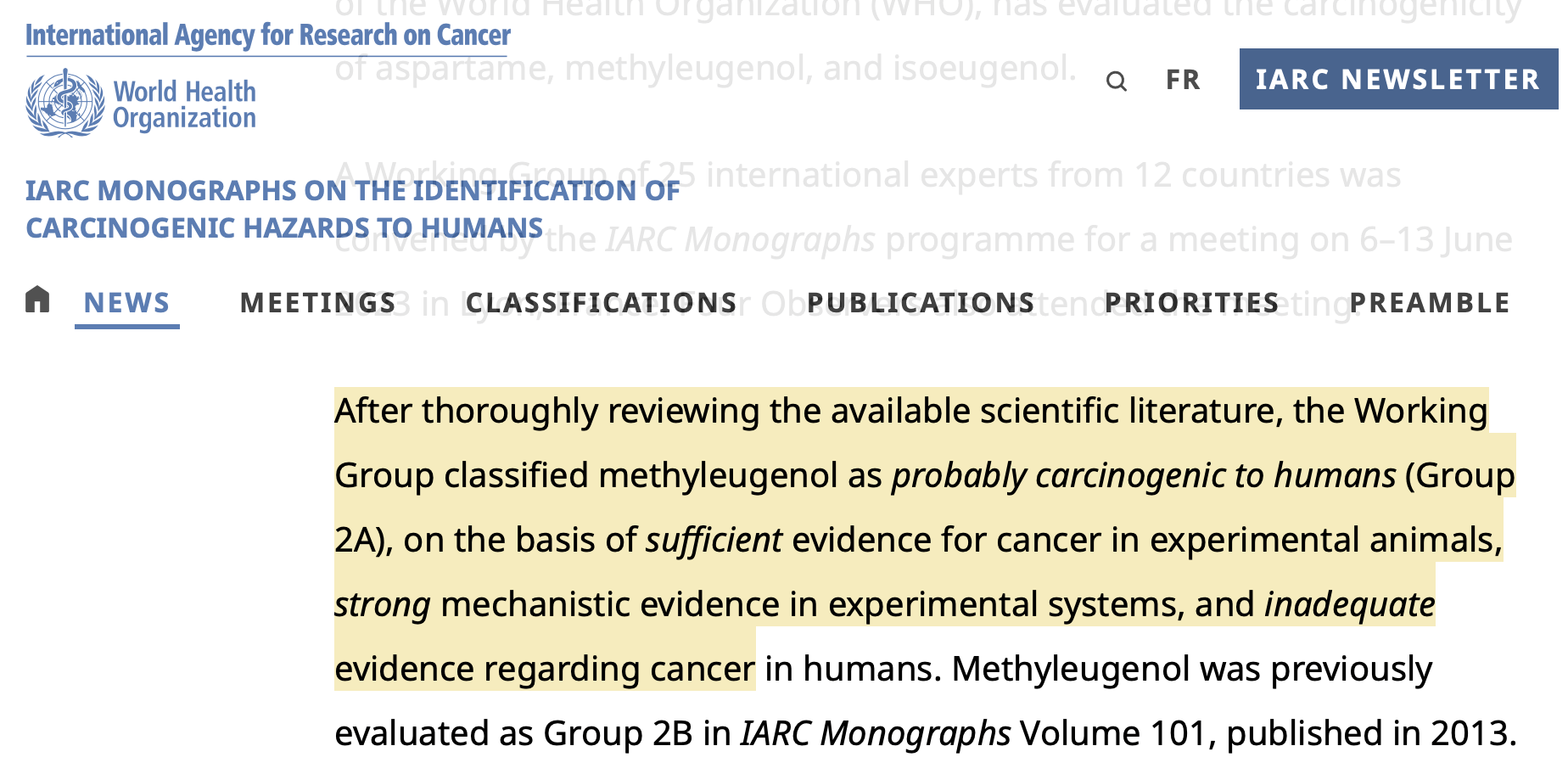
According to IARC’s comical logic, methyleugenol is in the same ‘danger’ category as the bête noire of activist envioronmental groups everywhere: the herbidide glyphosate, marketed for years under the brand name Roundup. Based on Twitter logic, since glyphosate is a dangerous Group 2A “probable carcinogen”, methyleugenol must also be a deadly poison. [It should be noted that every independent chemical risk agency in the world has classified glyphosate as non carcinogenic and safe-as-used, but the air tight science consensus has been swamped by the trial lawyers—environmental NGOs propaganda machine.
Methyleugenol is a central component of essential oils, like tea tree oil and citronella. It is a dominant flavor note in nutmeg, lemon grass, cloves and allspice.
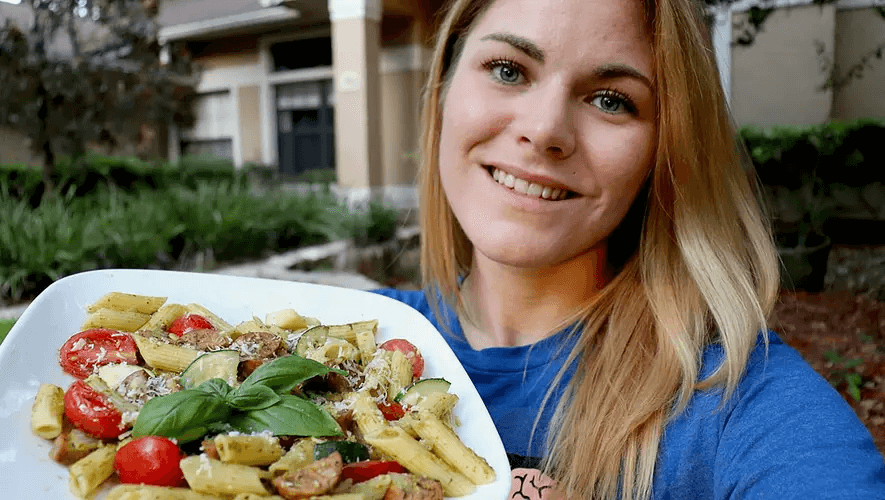
Progressive dudes with man-buns will slather on methyl-eugenol-laden tinctures and creams. Naturopaths will sing the praises of aromatherapy, while inhaling a Class 2A carcinogen deep into the lungs. Skin creams will give you a healthy glow, as methyl eugenol’s magic combines with essential oils and carnauba wax — and better yet it’s organic!



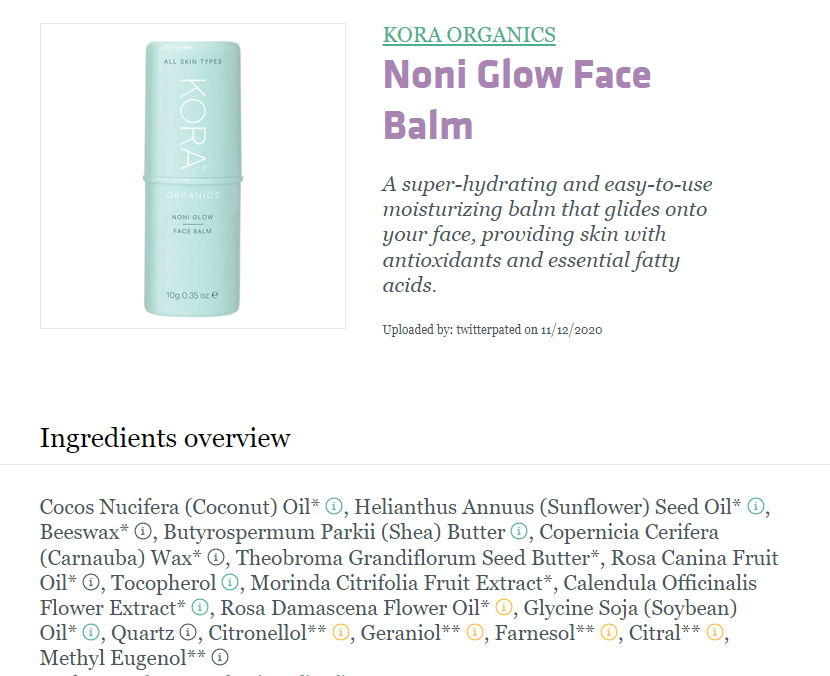
Hypocrisy on display
Here’s the catch: Methyleugenol or its metabolites is detectable in the urine of close to 100 percent of individuals that recently ate bananas or oranges. It is present in orders of magnitude higher levels than the parts per billion of glyphosate reportedly found in grocery products deemed deadly toxic by anti-glyphosate interests. According to the National Institutes of Health, pesto-eaters could be exposed to some of the highest levels of methyleugenol, because fresh pesto is prepared from a large quantity of fresh basil, reflected by basil amounts in pesto sauce products on the market. Patchouli oil and basil are loaded with the stuff.
If the reaction to glyphosate’s and aspartame’s classification offered a reliable guide as how a consistent world world should function, the companies that sell methyleugenol should be facing social media roastings and a slew of opportunitist court filings. Activists should be clamoring for products containing methyleugenol to be labeled as ‘cancer causing’. There should be calls for bans with lawyers filing massive class action lawsuits against the crooked Merchants of Poison that produce … essential oils, aromatherapy candles and pesto sauce.
In the widespread application of a IARC Class 2A probable carcinogen you won’t see social media activists slamming Annie’s Heirloom Seeds for profiting off of seeds of death. You won’t see lawyers line up to sue Big Pesto. Irrelevant pseudo-journalists will not write books that reinterpret internal emails at McCormick spices, cherry-picking to denounce cherries.
IARC has revealed itself, time and again, as a dangerous, science-underming, crackpot agency—and it’s feted every day by trial lawywers and environmental activists groups around the world (who remain curiously reluctant to call for a ban on Classico and Whole foods pesto sauce. The case of methyleugenol is a stellar illustration of the hypocrisy and IARC-induced chemophobia that grips activist environmental groups and tort lawyers everywhere.
The point is simple. The archaic IARC classification system has been mobilized by unscrupulous actors to malign chemistries used by industries targeted by activist groups — what they call Big Ag or Big Soda or Big Food or Big Chemical or other simplistic, brain dead categorizations. An IARC classification and its attention-getting headlines are the first stinky step in lawsuits and manipulation of public opinion.
The differing media and advocacy group reactions to classification of aspartame and glyphosate, while ignoring methyl eugenol, ethanol (drinking wine or beer, Class 1 carcinogen) and lunch meat (Class 1 carcinogen) illustrates how pronouncements by IARC and a similar agency based in Italy, Ramazzini Institute, are selectively twisted to mislead, affect public perception, and recruit for a lawsuit class action.
[Editor’s note: Read GLP’s investigative report on how IARC’s aspartame classification is providing gruel to anti-chemical environmentalists and tort lawyers.]
It is clear that IARC has devolved into an activist-dominated, tort inspiring global disinformation chemical assessment agency. The weight and urgency of the IARC classifications only matter on products that online quacks, consumer watchdogs, pseudoscience nutrition hawks — and a host of so-called mainstream environmental groups that raise money off of chemophobia with glyphosate tops on their list (e.g., Environmental Working Group, Natural Resources Defense Council, Organic Consumers Association, Union of Concerned Scientists — don’t like.
But for the rest of us, relying on bedrock science , where it’s well recognized that the dose makes the poison, the social outrage driven by IARC and its fellow travelers among scientists, academicians and many sloppy media outlets, break trust in science while lining the pockets of ideologically lecherous attorneys.
Kevin M. Folta is a professor, keynote speaker and podcast host. Follow Professor Folta on Twitter @kevinfolta @JonEntine is the executive director of the GLP.