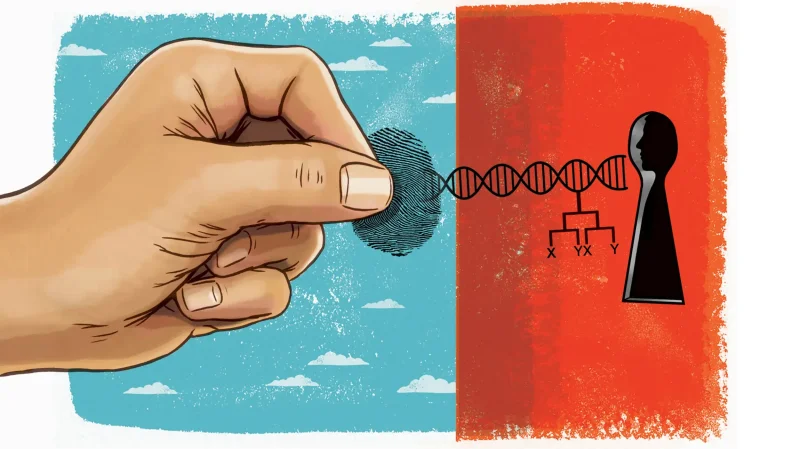
‘If our genetic differences are part of what makes us human, do we have the right — or the responsibility — to change them?

genefb.jpg

With CRISPR technology, scientists can now edit both somatic genes (from the body) and germline genes (from gametes, the sex cells that form embryos), literally clipping out and replacing parts of them. … If such changes were made in germline cells, the resulting embryo would never develop the disease at all.

But while curing [a painful disease like sickle cell] may seem like an unalloyed positive, the questions around gene editing raise many troubling ethical questions. “Should we be using CRISPR for diseases or syndromes that are compatible with life, like Down syndrome?” asked Baer. “Who is going to make those decisions?”

Mis- and disinformation are distorting science and public policy. Subscribe to our Daily and Weekly Digests for incisive coverage of ‘disruptive’ innovations in AI, agricultural biotechnology, food, chemicals, nuclear energy, vaccines, and other disruptive innovations.
[W]hat if two deaf parents want their child genetically modified to be able to hear? “Should parents make that decision for their child? Is it up to parents to decide what attributes their children should have?”

…

Additionally, Baer pointed out, gene editing may have unintended consequences. … “Genes don’t just pop out,” he said. “They evolve and interact and do many different things.”


This is an excerpt. Read the original post here

Related Articles

Infographic: Global regulatory and health research agencies on whether glyphosate causes cancer

Infographic: Global regulatory and health research agencies on whether glyphosate causes cancer

Does glyphosate—the world's most heavily-used herbicide—pose serious harm to humans? Is it carcinogenic? Those issues are of both legal and ...

Most Popular

Screenshot-2026-11-09-at-1.40.16-PM
As measles cases continue to surge, RFK Jr. blocks CDC scientists from issuing emergency alert warning unvaccinated pregnant women of significantly increased risks
ChatGPT-Image-Mar-10-2026-01_39_01-PM
Viewpoint—“Miracle molecule” debunked: Why acemannan supplements don’t work
Screenshot-2026-11-09-at-3.01.19-PM
Are Texas data centers killing calves? Debunking viral AI claims
Colorful GLP-1 Pens with Clocks_tagger
Biohacker influencers are claiming GLP-1 weight loss drugs extend lifespan. One mice experiment suggests there may be some truth to the claim
Paper Field Portraits with Distant Barn (1)
Viewpoint: After MAHA-Republican election debacle, controversial campaigner Zen Honeycutt looks to sympathetic Democrats to promote her anti-chemical agenda
Neon Binary Code Bacteriophage
AI medicine breakthrough: Could ‘good viruses’ created by AI cure deadly diseases and infections?
Screenshot-2026-11-06-at-11.44.47-AM
'Gattaca stack': The eugenic, technological push to 'improve the human stock'
gmos africa
Slow adoption: Only 15 of Africa’s 54 nations embrace genetic engineering food revolution. Here’s why
Stern-Profile-and-Marked-U.S.-Map
RFK Jr.’s collapsing legacy: U.S. poised to lose measles elimination status
Children’s Health Defense Press Conference
As measles deaths among the unvaccinated hit a 35-year high, Kennedy-founded Children’s Health Defense bizarrely blames doctors for slow-walking a cure
Aerial Sprayer Over Gradient Fields
Farming, food, and chemicals: Post-midterms, the MAHA alliance between Democrats and MAGA Republicans is bruised but not cowed. What comes next?
Microscopic IVF Egg Injection
With technical barriers to human embryo editing falling, ethical concerns escalate
glp menu logo outlined

Get news on human & agricultural genetics and biotechnology delivered to your inbox.