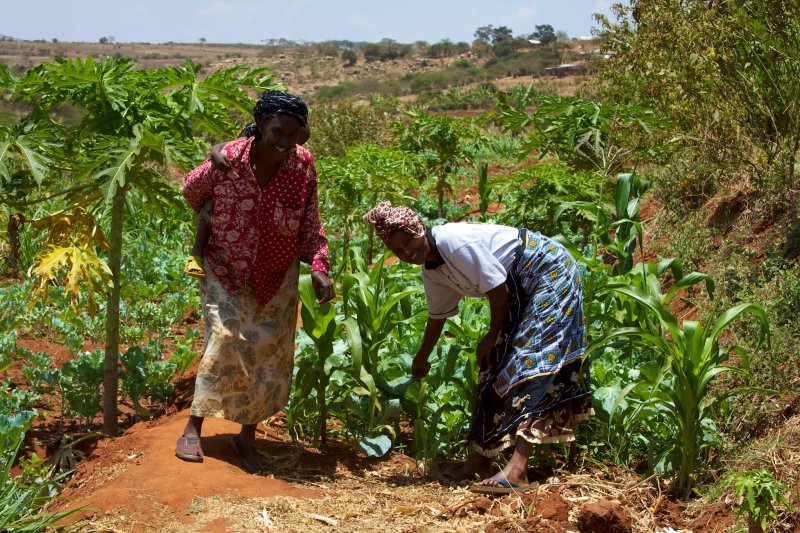
In the developing world, smallholder farms are key to climate resilient, sustainable agriculture

The 28-member Mbini self-help group (SHG) in Machakos farms a 4-acre plot where they grow oranges, avocado, vegetables, maize. The group members also have their own plots, do bee keeping, baking of cakes, and rear goats, cattle and chickens. Their challenges are lacking capital to expand and pump water, lacking insurance and storage facilities for their produce.

Smallholder farmers are integral to sustainable agriculture, contributing to climate mitigation through soil carbon sequestration, methane reduction, and agroforestry. Techniques like AWD and DSR further enhance emission reductions while generating higher rice yields and incentives. Equipping these farmers with the necessary tools, knowledge, and market access is crucial to turning challenges into opportunities.

Follow the latest news and policy debates on sustainable agriculture, biomedicine, and other ‘disruptive’ innovations. Subscribe to our newsletter.

Advanced farming resources, digital platforms, and market access initiatives are driving this shift by empowering farmers to adopt climate-smart practices. Additionally, deployment of advanced technologies like remote sensing, Artificial Intelligence (AI), and machine learning (ML), ensures transparent validation of carbon credits, enhancing market trust. Such innovations enable smallholder farmers to participate effectively in carbon markets, creating credible, high-quality credits that contribute to global climate goals.

Leveraging digital platforms to connect farmers with carbon credit buyers can ensure transparency and ease of transactions. Mobile advisory services offering real-time guidance … support farmers in their transition to eco-friendly methods.


This is an excerpt. Read the original post here

{{ reviewsTotal }}{{ options.labels.singularReviewCountLabel }}
{{ reviewsTotal }}{{ options.labels.pluralReviewCountLabel }}
{{ options.labels.newReviewButton }}
{{ userData.canReview.message }}

Related Articles

Infographic: Global regulatory and health research agencies on whether glyphosate causes cancer

Infographic: Global regulatory and health research agencies on whether glyphosate causes cancer

Does glyphosate—the world's most heavily-used herbicide—pose serious harm to humans? Is it carcinogenic? Those issues are of both legal and ...

Most Popular

ChatGPT-Image-Jun-25-2026-12_23_17-PM
No, Bill Gates did not secretly engineer ticks to promote veganism
ChatGPT-Image-Mar-10-2026-01_39_01-PM
Viewpoint—“Miracle molecule” debunked: Why acemannan supplements don’t work
Screenshot-2026-06-05-at-2.12.30-PM
Some plants can poison you. So how did humans figure out what is safe to eat?
ChatGPT-Image-May-18-2026-12_06_18-PM-2
Defying death: The immortality movement goes mainstream
ChatGPT-Image-Jun-23-2026-03_12_23-PM
Is cellular reprogramming junk science? Nearly 20 patients are getting eye injections in the first FDA-cleared cellular trial

Sorry. No data so far.

glp menu logo outlined

Get news on human & agricultural genetics and biotechnology delivered to your inbox.