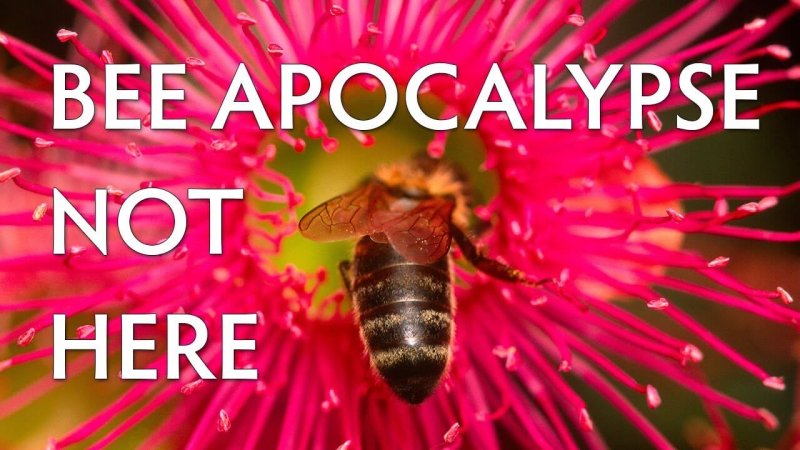
Video: John Stossel and GLP’s Jon Entine on the faux bee-apocalypse—How environmental groups and the media manufacture chemical scares

maxresdefault
Have you heard? The honey bees are dying!

At least, that’s what the media and big money- hungry environmental groups want you to (bee)lieve.

About 20 years ago, some American bees died from “colony collapse disorder.”

The media soon warned of a “bee-pocalypse” and that it might devastate our food supply.

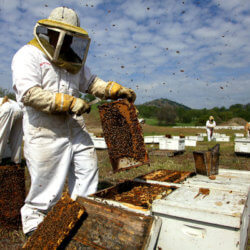
But while the media was in a buzz, beekeepers adjusted and rebuilt their colonies.

Since then, there are 31% more bees in America.

“We’re not facing a honeybee or insect apocalypse as so many activists claim and the media misreports,” says Jon Entine of the Genetic Literacy Project. “For honeybees, there are health problems related to the varroa mite destructor and climate change but it’s never been better in terms of the numbers of bees. Claims of a bee-mageddon originated with environmental groups determined to stigmatize neonicotinoids and other crop chemicals. It was a backdoor way to attack what they claim is the threat of Big Ag, their biggest hyped bugaboo. It was never science-based.”
Do the media stop their fearmongering? NO!

The scare just won’t go away.

Our video tells more of the story.

Follow the latest news and policy debates on sustainable agriculture, biomedicine, and other ‘disruptive’ innovations. Subscribe to our newsletter.

Jon Entine is the Executive Director of the Genetic Literacy Project and a life-long journalist with 20 major journalism awards. Follow him on X @JonEntine

John Stossel is an author, columnist, investigative reporter, and television host with over 40 years of experience. He is best known for being the former co-anchor of 20/20. Find John on X @JohnStossel


{{ reviewsTotal }}{{ options.labels.singularReviewCountLabel }}
{{ reviewsTotal }}{{ options.labels.pluralReviewCountLabel }}
{{ options.labels.newReviewButton }}
{{ userData.canReview.message }}

Related Articles

Infographic: Global regulatory and health research agencies on whether glyphosate causes cancer

Infographic: Global regulatory and health research agencies on whether glyphosate causes cancer

Does glyphosate—the world's most heavily-used herbicide—pose serious harm to humans? Is it carcinogenic? Those issues are of both legal and ...

Most Popular

Screenshot-PM-24
Viewpoint: The herbicide glyphosate isn’t perfect. Banning it would be far worse.
d-b
Blocked arteries, kidney stones, nausea, constipation, fatigue: Long list of health problems caused by too much vitamin D 
Screenshot-2026-04-27-at-12.22.38-PM
Running ‘wild’: Last year, RFK, Jr. was given a green light to ‘reform’ chemical policies. Glyphosate illustrates how Trump now has him on a tight leash, and MAHA is furious
ChatGPT-Image-Apr-22-2026-11_06_18-AM
Wellness influencer nonsense: No, nicotine does not boost cognition and productivity, but it can damage your health 
bayer-supremecourt-lt
EPA concludes glyphosate is not carcinogenic. Missouri courts say Monsanto failed to warn it might be. SCOTUS weighs in.
ChatGPT-Image-Feb-16-2026-01_57_31-PM
Viewpoint: ‘Science-as-Satan’ unites the MAHA—MAGA movements. Is a breakup in the works?
Screenshot-2026-04-27-at-1.40.55-PM
With federal funding for scientific research already reeling, Trump fires the entire apolitical National Science Board
Screenshot-2026-04-13-at-3.54.04-PM
AI disinformation stress test: Challenges and response strategies
Screenshot-2026-04-12-135256
Bixonimania: The fake disease scam that AI swallowed whole
ChatGPT-Image-Feb-16-2026-01_04_32-PM
Raw milk myth wake-up call
glp menu logo outlined

Get news on human & agricultural genetics and biotechnology delivered to your inbox.