But what struck me even more was how she overcame dyslexia by relying on her extraordinary ability to think visually and spatially, developing a unique way of learning and solving problems. This is the kind of story that fascinated Oliver Sacks, the British neurologist, naturalist, and historian of science, who in An Anthropologist on Mars showed how “defects, disorders [and] diseases … can play a paradoxical role, by bringing out latent powers, developments, evolutions, forms of life that might never be seen, or even imaginable, in their absence.”
In 1959-1960, when I was thirteen, my father took our family to Paris to spend a sabbatical year at the Pasteur Institute. Through the offices of his colleagues, we were given an apartment on the top floor of a government building, located in the Latin Quarter on what was then called rue Pierre Curie, but was later renamed “rue Pierre et Marie Curie.”
At the other end of our street, half a block away, was the Institut de Radium, where Marie Curie and her husband discovered the radioactive elements polonium and radium by isolating them from uranium ore for which they won the Nobel Prize in Physics in 1903. A block down the adjacent street, rue d’Ulm, was a building in which Pasteur had made many of his discoveries.
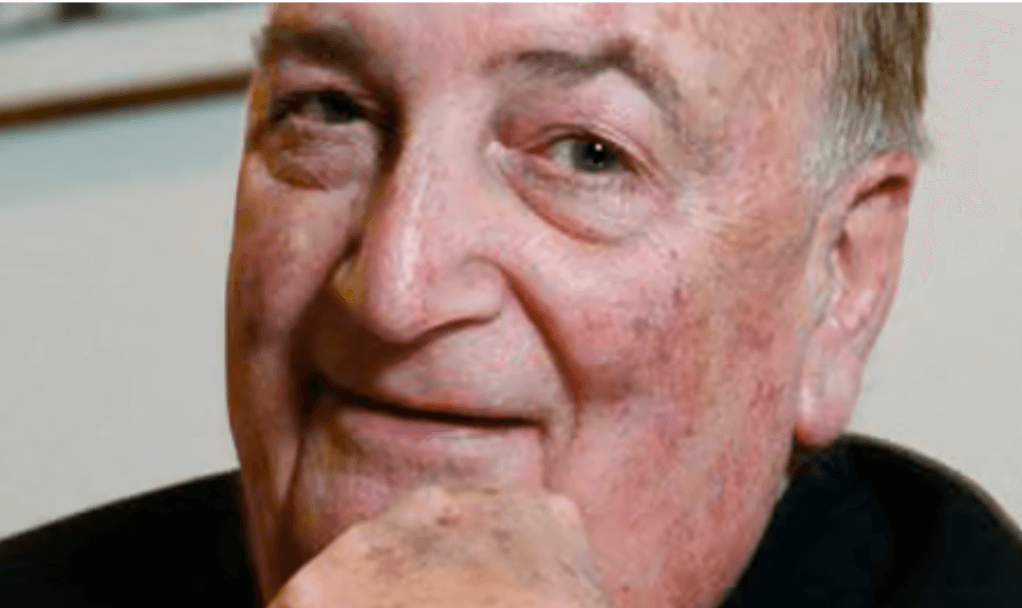
In our dining room overlooking the street, my parents hosted dinner parties for my father’s colleagues from the Pasteur, as well as for colleagues who were passing through Paris. Among the people we saw a number of times were Baruj Benacerraf and his wife Annette and their daughter Beryl.
In the late 1940s, Baruj had spent two years in my father’s lab at Columbia University learning immunology. Baruj published his first papers with my father. He credits my father with having taken a “green physician in his laboratory and taught him the critical importance of accuracy and the necessity to evaluate data with total objectivity, before indulging in speculations.”

He went on to a career at Harvard, where, with two colleagues, he discovered the ‘major histocompatibility complex,’ which plays a critical role in helping the immune system to distinguish between self and non-self. Baruj and his colleagues were awarded the Nobel Prize for this work in 1980.
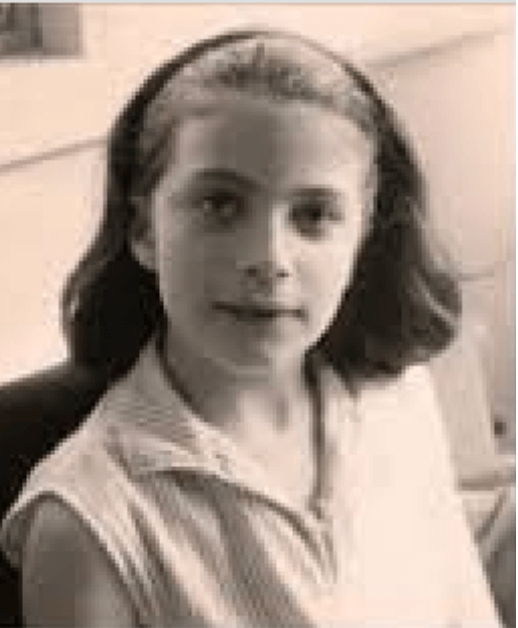
One day, Baruj, his wife Annette, and their daughter, Beryl, came over to our apartment in the morning for a brief visit. While the grown-ups were talking in the living room, I talked with Beryl in another room. She was three years younger than me. She was serious and had a lovely face and black hair. On another occasion, when Benacerrafs came to dinner, I was able to show them several celestial objects through my three-and-a-half-inch reflecting telescope from the back terrace off our kitchen. From the few times I saw her, I developed a crush on her. But, although I would see Baruj occasionally in New York, when he visited my father, I never saw her again.
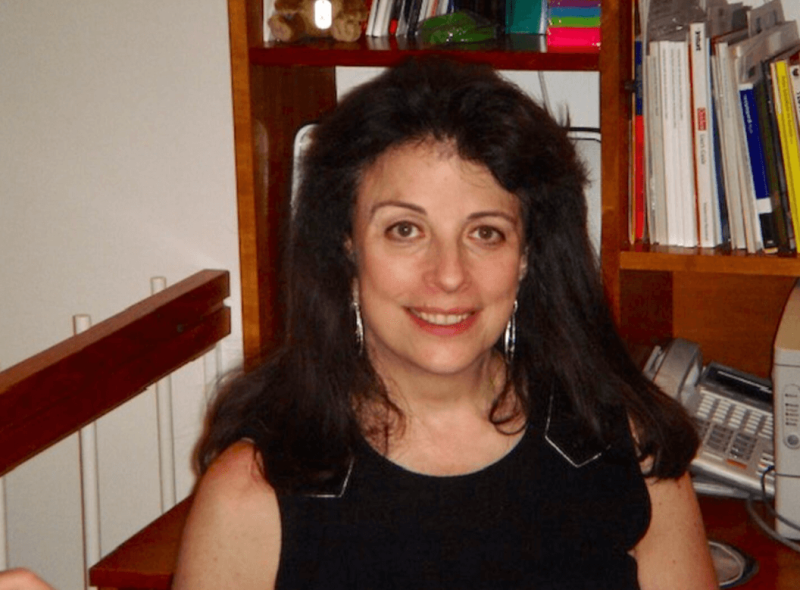
In October 2022, reading the New York Times, I was shocked to see an obituary for Beryl and learn that she had died of cancer at the age of seventy-three. The obituary told the story of a remarkable career.
Beryl had gone to elite schools — Brearley, Barnard, and Harvard Medical School — but she had struggled academically through high school and college owing to a difficulty with reading. Her parents thought the problem might be due to their move from France to America; however, Beryl was eventually diagnosed with dyslexia. She decided to apply to medical school, where it turned out that her problem with printed material did not prevent her from excelling because she quickly learned she could absorb the assigned material by studying the images and graphics in a textbook.
She considered pursuing surgery as a specialty, but, during a radiology rotation, a senior radiologist told her, “that even from the back of a room, she could spot an abnormality in an image. ‘You have a gift that I’ve never seen before,’ he told her.”
She went on to complete a residency in radiology and a fellowship in ultrasound, and in 1982 to set up her own practice in prenatal ultrasound, which, at that time, was in its infancy. Hers was the only prenatal ultrasound practice in the Boston area. Soon after, she made what may be her most noteworthy discovery: that a thickening of a patch of skin at the back of a fetus’s neck, known as the nuchal fold, was associated with Down syndrome and other chromosomal anomalies.

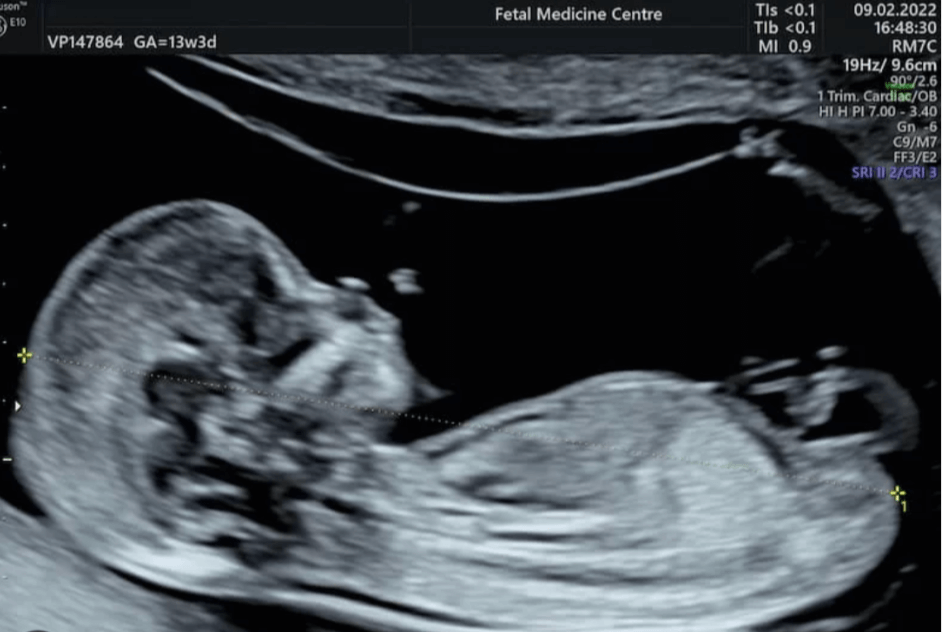
Before Beryl’s research, screening for prenatal defects was generally restricted to women of 35 years or more and was done by amniocentesis, an invasive procedure, which on occasion, can cause harm to the developing fetus.
In 1985, she published her first papers calling attention to ultrasound’s potential for providing an informative, noninvasive means of fetal screening usable in women at all ages. The reaction of her peers was unexpected. “I was almost booed off the stage at several national meetings, and papers emerged discrediting my research and me,” she reported in an interview. She added, “I was devastated, but that much more determined to prevail because I knew I was right.”
As ultrasound became a routine part of prenatal care, her results were corroborated, and she went on to become a leader in the field of prenatal imaging of chromosomal abnormalities and birth defects. She continued to find new uses for ultrasound and to make new discoveries. Her own pregnancies had drawn her attention to the physiology of pregnancy, including fetal anatomy, biometry, pathology, and genetics.

Of note, she evaluated fetal hearing by studying eye movement in response to sound, publishing her results in Science. She used ultrasound to study gynecologic problems, including endometriosis and ovarian cancer, where it can be used to help determine whether a mass is benign or malignant.
Although a hospital position had eluded her early in her career, she later became a professor of gynecology, reproductive biology, and radiology at Harvard Medical School and the Brigham and Women’s Hospital in Boston.
By dint of her perseverance and learning the trick of accomplishing tasks as early as possible to make sure she was not overloaded, she managed to overcome her disability by exploiting a formidable strength. Circumventing the obstacle posed by dyslexia, she cultivated her innate gift for thinking visually and spatially. A 2021 profile of her career observes that, “Beryl’s dedication to ultrasound seems strongly connected to her gift for deciphering images that are obscure to so many, which itself, she believes, is linked to her dyslexia.
‘I think entirely visually, using patterns, flowcharts, and pictures in my mind,’ she said. ‘Even outside of imaging, I realize that, when thinking through a problem, I do not think linearly or verbally as someone would who is speaking or reading. I see the entire problem as a big image that fills in with information, or sometimes as a flowchart flashing before me.’”
Among the many honors bestowed on Beryl for her accomplishments, I was struck by the Marie Curie Award from the American Association of Women Radiologists and the Giant in Obstetrics and Gynecology Award from the American Journal of Obstetrics and Gynecology.
Reading about her early struggles and her extraordinary energy and creativity that revolutionized her field, I thought about the ten-year-old girl I had sat talking with for half an hour more than sixty years ago, envisaging the unfolding of a flower.
Geoffrey Kabat is an epidemiologist and the author of Hyping Health Risks: Environmental Hazards in Daily Life and the Science of Epidemiology and Getting Risk Right: Understanding the Science of Elusive Health Risks. He writes frequently about controversies pertaining to environmental and personal health risks. Find Geoffrey on X @GeoKabat or his website geoffreykabat.com