For decades, European regulations have dominated the global conversation on agricultural biotechnology in many regions of the globe. From field to trade port, the EU’s strict GMO rules have long dictated what Global South farmers can grow, how crops are regulated, and where they can be sold. But in a quiet policy shift, a few African nations are starting to resist this orthodoxy. Nigeria, Kenya, Ghana, and Malawi are now embracing gene editing on their own terms, crafting regulatory frameworks that treat CRISPR and similar tools not as GMOs, but as something different.
It is not a sudden break but a slow shift, and one that may ultimately reshape everything.
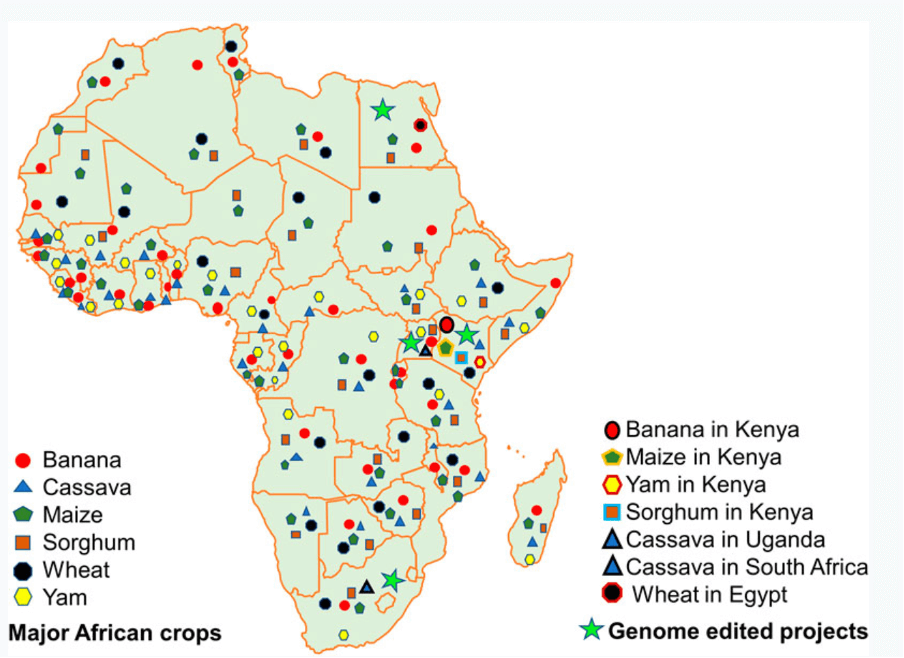
While the EU continues to regulate gene-edited crops under its sweeping, restrictive GMO regime, many African countries are adopting product-based regulations. In 2022, Nigeria amended its biosafety law to explicitly allow genome editing. Kenya followed with guidelines that support a case-by-case assessment, based on the product rather than the method. Malawi approved and released a full genome-editing framework in 2022, while Ghana released new guidelines the following year.
This shift mirrors product-based biotechnology regulatory models in place in Argentina, Brazil, United States and Canada. The aim is regulatory flexibility without compromising biosafety. It also represents an effort to assert sovereignty in food systems long shaped by foreign donor expectations and NGO-driven narratives.
Pushing back against imported ideology
Europe’s influence in African biotech has never been purely regulatory. Opposition to gene editing in Africa is often framed as a defense of food sovereignty and indigenous farming systems. The rhetoric emphasizes threats to traditional agriculture, ecological disruption, and the fear of foreign corporate control. Yet behind these campaigns lie broader questions — about how scientific narratives are shaped, who sets the terms of public discourse, and what role ideology plays in determining which innovations are deemed acceptable. The loudest voices in the debate, often regional NGOs backed by money funneled in by European activist organizations, frequently invoke caution, but rarely engage with the evolving science or the regulatory ambitions emerging from within African states themselves.
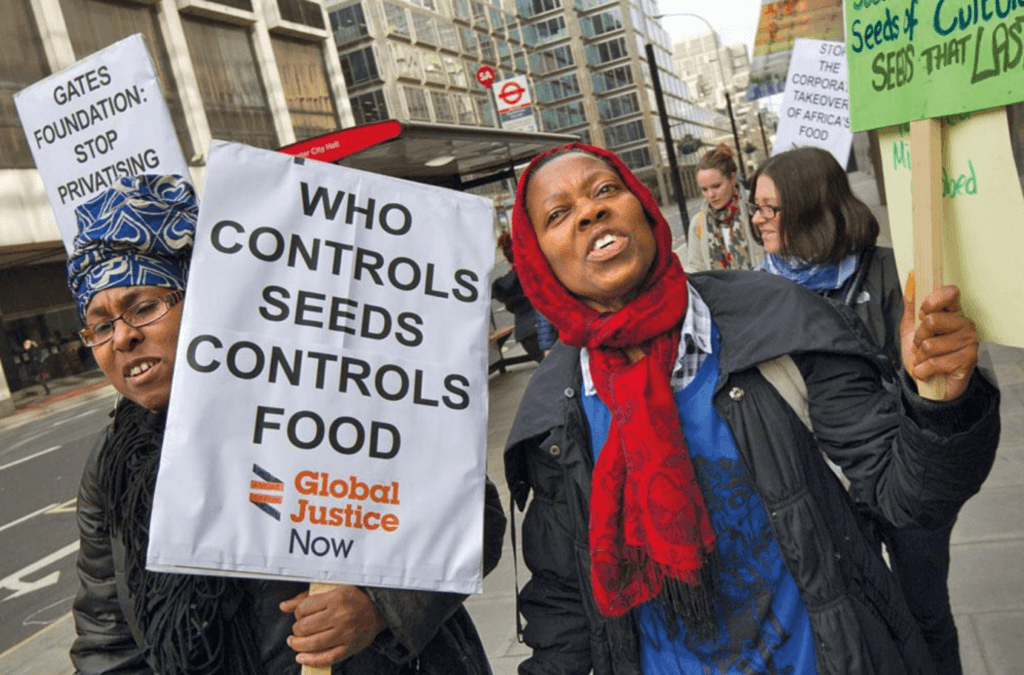
Their campaigns have been effective at slowing biotech adoption, especially by framing gene editing as a continuation of colonial patterns and corporate control. But ironically, the insistence on Europe-style precaution keeps African policy tethered to a model that increasingly even European scientists consider outdated.
A measured departure: Signs of regulatory divergence take shape
To be clear, Africa is not a biotech powerhouse. Research infrastructure remains limited. Field trials are few. Most biotech crop development still relies on international partnerships and philanthropic funding. But there is movement. Nigeria has gene-editing trials in cowpea and maize. Kenya is testing disease-resistant cassava and banana. Uganda has advanced banana trials. Ghana and Malawi have regulatory frameworks, if not yet field deployment.
Yet political volatility and NGO resistance have slowed efforts elsewhere. Uganda’s biosafety bill has faced repeated delays. Ethiopia is moving cautiously. Zambia and Tanzania remain skeptical, with little distinction made between GMOs and gene editing.
Europe’s hardline stance on gene editing has long created a regulatory dead-end that discourages crop innovation even within the bloc. The advent of gene editing offered an opportunity for Europe to break from is desultory past, but so far that has happened. In 2018, the European Court of Justice ruled that gene-edited crops must be regulated as GMOs. Since then, EU regulators have approved almost no biotech crops.



But in early 2024, the European Parliament voted in favor of a new legal framework that would loosen rules on New Genomic Techniques (NGTs), a move widely seen as a departure from the earlier precautionary stance. It’s still being debated, and passage is not assured. This shift is being watched closely by African regulators, some of whom see it as retroactive validation of their own pragmatic choices.

New trade corridors
The regulatory divergence is also strategic. By separating gene editing from traditional GMOs, African countries can better align with regions like Asia and Latin America, which have adopted similar regulatory flexibility. Brazil’s CTNBio treats gene-edited crops as non-GMOs. Argentina exempts many NGTs from GMO oversight. The Philippines has endorsed genome-edited crops like high-yield rice.
These alignments could open up South-South trade routes for biotech crops, sidestepping the EU altogether. In a geopolitical context, this shift marks a small but meaningful decoupling from European dominance in ag-biotech standards.
Biotech as sovereignty
Ultimately, gene-editing regulation in Africa is not just a scientific issue. It is about power. For countries like Nigeria, Kenya, and Ghana, crafting homegrown regulatory systems is a step toward food sovereignty and technological independence. It is a signal that African governments are prepared to make their own decisions, even when they diverge from their largest trading partners.
Still, without strong seed systems, more research funding, and public education, these frameworks risk becoming paper tigers. Regulation alone will not deliver food security or farmer adoption. But they are an essential first step.
Africa’s embrace of gene editing is cautious, contested, and far from complete. But in opting for an alternative to Europe’s turtle-like approach, these countries are not simply importing Western science; they are adapting it, contextualizing it, and laying the groundwork for a more autonomous future.
Whether that future materializes will depend on who controls the seeds, who owns the knowledge, and whether African institutions are empowered to lead not just in policy, but in practice.
Dr. Joseph Maina is a Senior Lecturer in the Department of Earth and Environmental Sciences at Macquarie University, Sydney. His work integrates diverse disciplines including macro-ecology, climate science, oceanography, remote sensing, hydrology, fisheries management, and decision science.