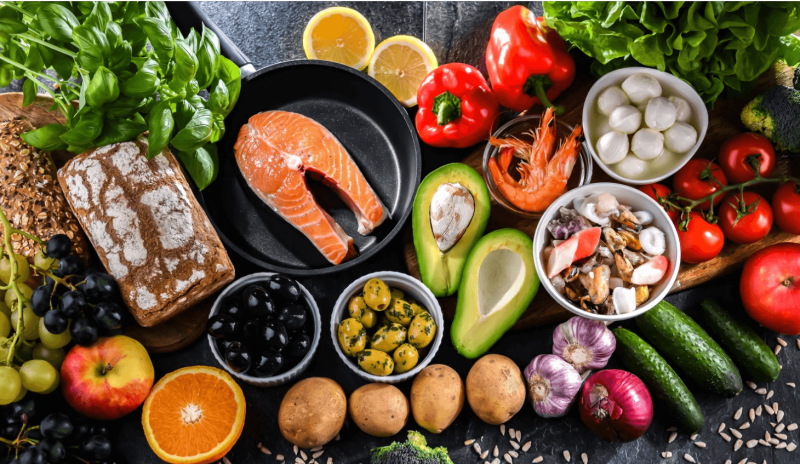
Mediterranean diet may offset much of the genetic risk of Alzheimer’s

Screenshot 2025-09-12 at 1.20.09 PM

Many observational studies have linked a Mediterranean diet to better cognitive health.

Now, new research suggests that people at high genetic risk for Alzheimer’s disease may benefit the most by following a Mediterranean diet.

Follow the latest news and policy debates on sustainable agriculture, biomedicine, and other ‘disruptive’ innovations. Subscribe to our newsletter.

Sporadic Alzheimer’s disease, the most common type, develops later in life and is not directly tied to family history. Rather, it’s due to an interaction between genetics, the environment and lifestyle factors.

Mediterranean diet-derived metabolites may influence metabolic pathways in the brain and, in so doing, reduce the risk of cognitive decline and dementia, especially in individuals carrying two copies of the APOE4 gene.

The researchers found, for example, cognitive benefits associated with betaine, a phytochemical plentiful in beets, spinach and whole grains, in people at high genetic risk for AD. Betaine is thought to protect the brain by removing toxic compounds, supporting blood flow and reducing inflammation and oxidative stress.


This is an excerpt. Read the original post here

{{ reviewsTotal }}{{ options.labels.singularReviewCountLabel }}
{{ reviewsTotal }}{{ options.labels.pluralReviewCountLabel }}
{{ options.labels.newReviewButton }}
{{ userData.canReview.message }}

Related Articles

Infographic: Global regulatory and health research agencies on whether glyphosate causes cancer

Infographic: Global regulatory and health research agencies on whether glyphosate causes cancer

Does glyphosate—the world's most heavily-used herbicide—pose serious harm to humans? Is it carcinogenic? Those issues are of both legal and ...

Most Popular

ChatGPT-Image-May-7-2026-12_16_37-PM-2
Viewpoint: Are cancer rates ‘skyrocketing’ as RFK, Jr. and MAHA claim? The evidence says mostly the opposite
Screenshot-2026-04-13-at-1.39.26-PM
Viewpoint: ‘Safer for children?’ Stonyfield yogurt under fire for deceptive organic marketing
Screenshot-2026-04-22-at-10.46.29-AM
Viewpoint: How to counter science disinformation? Science journalist offers 12 practical tips
Picture1-14
When superbugs threaten vulnerable children: Can AI help solve antibiotic resistance?
Screenshot-2026-04-23-at-11.00.36-AM
Regulators' dilemma: Thalidomide, Metformin, and the cost of getting drug approvals wrong
Picture1-1
Cooling the planet with balloons: Could a geoengineering gamble slow global warming?
ChatGPT-Image-May-12-2026-08_39_41-PM
GLP podcast: Big Pharma, Big Ag, Big Food—health harming industries or life-saving innovators?
bigstock opioids on chalkboard with rol
GLP podcast: 'Safe injection sites': enabling drug addiction or saving lives?

Sorry. No data so far.

glp menu logo outlined

Get news on human & agricultural genetics and biotechnology delivered to your inbox.