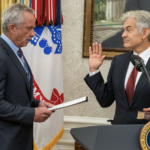
Health and Human Services Secretary Robert F. Kennedy, Jr.’s reshaped federal vaccine panel is expected to vote this week to push the Hepatitis-B birth dose forward from the day of birth to around age 4 years — a major break from long-standing U.S. guidance. The meeting is also slated to consider recommendations on COVID-19 and chickenpox shots.
As part of Kennedy’s broader health agenda, his “Make America Healthy Again” report pressed for tighter scrutiny of vaccines’ alleged link to autism, and floated ideas like placebo-controlled testing for new vaccines — positions that have drawn sharp pushback from medical groups. Decades of established and safe vaccine guidance are being set aside.
To understand what is at stake, we need to recall how far public health has come. The 17th-century English philosopher Thomas Hobbes famously described human life as “nasty, brutish, and short.” He was not exaggerating. In 17th-century England, poverty and crime were rampant, and the average life expectancy hovered around 37 to 40 years — dragged down by astronomical rates of infant mortality. In London, an estimated 251 out of every 1,000 babies died before their first birthday. Conditions in the early American colonies, particularly in the disease-ridden South, were often worse.
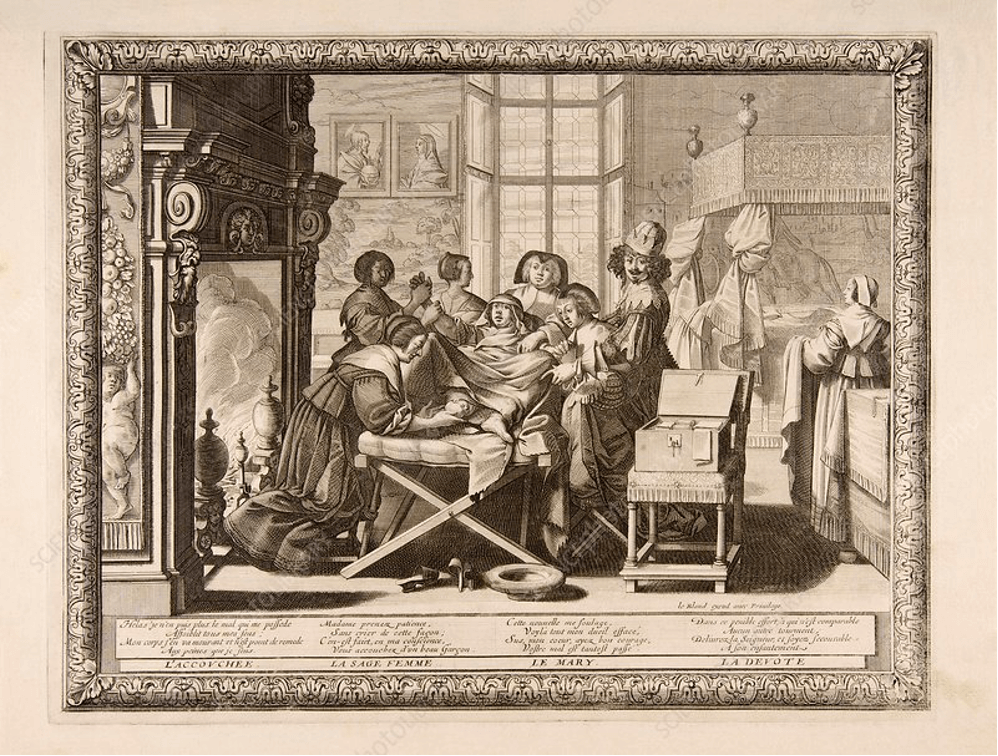
Fast forward to the early 20th century; global infant mortality rates remained staggeringly high: There were roughly 100 deaths per 1,000 live births just 50 years ago, and fewer than one in 20 children in developing countries had received even a single dose of any vaccine. For much of human history, parents lived with the terrible reality that childhood death was not an exception but an expectation.
Today, the picture is dramatically different. Global infant mortality has plummeted to fewer than 25 deaths per 1,000 live births, and in the United States, the rate is just 5.2. This extraordinary progress is one of humanity’s greatest triumphs. Clean water, improved sanitation and nutrition, and better neonatal care all contributed, but no single innovation has been more transformative than vaccines. These graphs chart the stunning impact of vaccinations on selected diseases in the U.K.
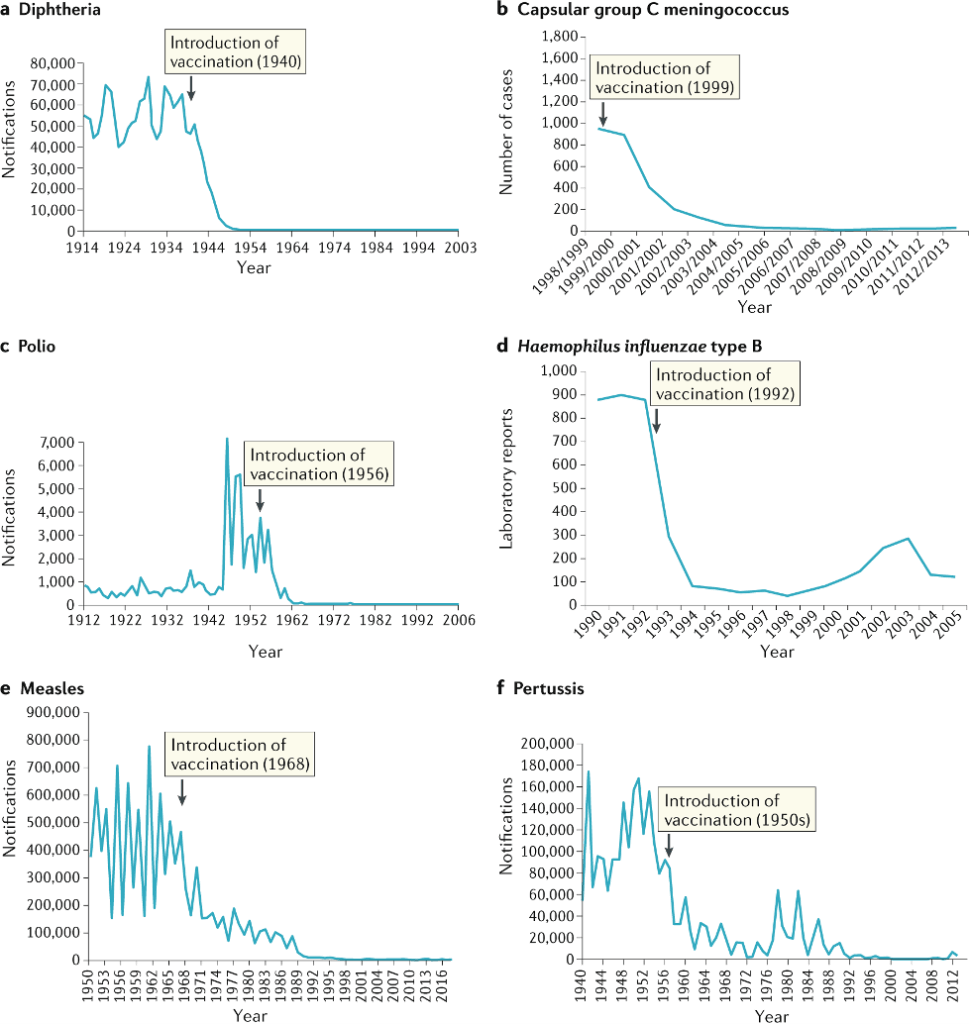
From: A guide to vaccinology: from basic principles to new developments
Vaccine revolution
The success of immunization has always depended not only on advances in science and the investment and innovativeness of companies that manufacture vaccines, but also on public trust. Skepticism is not new: When Edward Jenner first inoculated a young boy with cowpox in 1796 to protect against smallpox, critics denounced the practice as unnatural, even blasphemous. The Irish playwright George Bernard Shaw once called vaccination a “filthy piece of witchcraft” that did more harm than good.
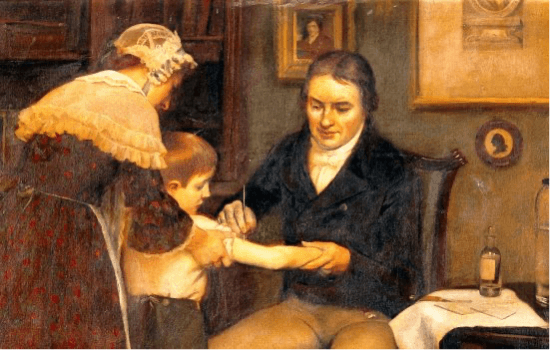
Despite such resistance, vaccination campaigns eventually became one of the greatest public health achievements of the modern era. The World Health Organization’s Expanded Program on Immunization, launched in 1974, is credited with reducing global infant mortality by 40 percent over the past half-century. Today, nearly 90 percent of children worldwide receive at least one dose of the combined diphtheria, tetanus, and pertussis (DTP) vaccine — a standard measure of immunization coverage. Where once parents feared losing their children to whooping cough or tetanus, vaccines now protect tens of millions from diseases once thought inevitable.
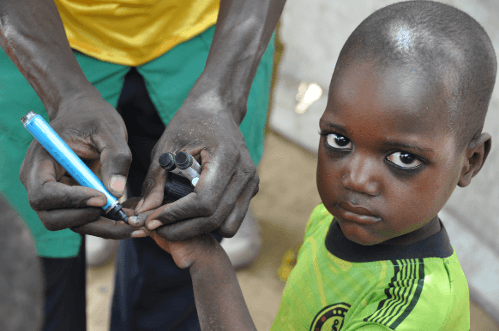
And yet, at precisely the moment when the promise of vaccines has never been greater, political forces in the United States — long regarded as the global leader in biomedical science and vaccine innovation — are threatening to unravel decades of progress. Science and vaccine innovation, once a source of near-universal optimism, face threats that could unravel decades of progress.
The difference today is the scale of the stakes. After decades of painstaking research and investment, confidence in vaccines had been strong enough to sustain mass immunization programs. Now, however, public health faces three converging challenges: reaching the final 10 percent of “zero-dose” children who receive no vaccines at all and account for nearly half of vaccine-preventable deaths; countering coordinated campaigns of disinformation; and confronting a retreat of U.S. leadership at home and abroad.
Shift in U.S. leadership
Against this backdrop, the actions of the new U.S. administration are especially alarming. American leadership has been central to funding, coordination, and scientific credibility in global immunization efforts. That foundation is now at risk. The confirmation of Robert F. Kennedy Jr. — one of the nation’s most insidious vaccine skeptics — as Secretary of Health and Human Services epitomizes the shift.
During his confirmation hearings, he assured members of Congress that U.S. vaccine practices would remain unchanged. He lied. Within weeks of assuming leadership of HHS, he instituted a sweeping rollback of basic science and biomedical research, politicization of health policy, withdrawal from the WHO, weakening the Centers for Disease Control and Prevention (CDC), and even shuttering the U.S. Agency for International Development (USAID) — thereby, dismantling decades of American leadership.

Kennedy also fired the entire 17-member Advisory Committee on Immunization Practices (ACIP), replacing it with a smaller panel dominated by unqualified or openly anti-vaccine members, many with glaring conflicts of interest. Their first act was to recommend eliminating thimerosal, a preservative used in multi-dose influenza vaccines, and a fixation of the anti-vaccine movement. Despite overwhelming scientific evidence of its safety, the panel linked it to an increase in autism — a long-debunked claim. In the U.S., the move is largely symbolic, because thimerosal is used in only about seven percent of flu vaccine doses. But abroad, the policy could jeopardize campaigns in the world’s poorest regions, where multi-dose vials are essential for mass immunization.
Measles warning
Kennedy’s collection of ill-conceived actions reinvigorated the faux public debate over the safety of vaccines, which was definitively settled in the science community decades ago. He and his acolytes, many populating leadership positions throughout the CDC, NIH, and HHS, have reignited fears without new evidence but from much more influential pulpits.


The dangers inherent in this reversal of vaccine policy are not theoretical. Measles, the most contagious virus known, and declared eliminated in the U.S. in 2000, has come roaring back. Midway through this year, more than 1,300 cases and three deaths had already been reported — the highest totals since the virus’ elimination a quarter century ago.
Kennedy initially downplayed the importance of the measles-mumps-rubella (MMR) vaccine, suggesting taking vitamin A and cod liver oil instead. Although vitamin A can mitigate complications in malnourished children, it is no substitute for vaccination. After intense pressure from alarmed public health advocates, Kennedy issued a lukewarm endorsement of the MMR vaccine. But his muddled guidance sowed confusion at a dangerous time and echoed his role in exacerbating the deadly 2019 measles outbreak in Samoa, where Kennedy’s advice led to 83 needless deaths.
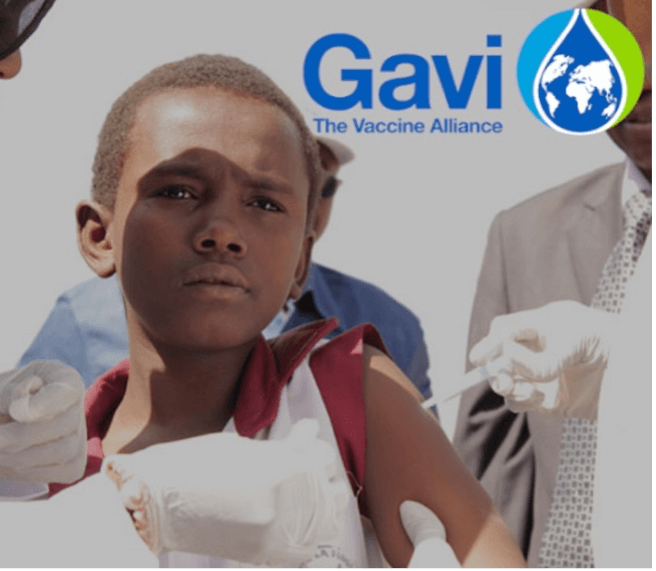
Most consequentially, Kennedy announced that the U.S. would cease funding for Gavi, the Vaccine Alliance, which has helped vaccinate nearly half of the world’s children and cut child mortality in half over 25 years. Gavi warns that without U.S. funding, 75 million fewer children could be vaccinated, leading to 1.2 million preventable deaths.
As vaccine expert and Brown University Professor Seth Berkley has noted, when a vaccine has “an established and strong safety record and is saving lives, the onus should be on producing evidence of a genuine risk before there is any change in policy.” That valid principle has now been abandoned.
Basic research under assault
The administration’s attacks on vaccine policy have even extended to the research underpinnings of medical advances. In March, the government abruptly canceled nearly half a billion dollars in grants for next-generation research on mRNA vaccines. Developed three decades ago, the technology proved its worth during the COVID-19 pandemic and is now showing extraordinary promise against cancer, tuberculosis, and Epstein-Barr virus.
In August 2025, an editorial in the journal Nature warned:
A technology that played a key part in saving millions of lives during the COVID-19 pandemic1 should be feted to the skies. Instead, US health secretary Robert F. Kennedy Jr announced [in August] that the US federal government is terminating 22 grants worth nearly US$500 million for projects researching messenger RNA (mRNA) vaccines.
These reversals come at a moment of remarkable scientific opportunity, when advances in immunology are bringing new vaccines within reach against killers like tuberculosis and Epstein-Barr virus, while opening the door to cancer therapeutics. By promulgating disinformation and slashing government-funded biomedical research, Secretary Kennedy is disrupting future generations of breakthroughs.
Crossroads for public health
Vaccines are not just medical products; they are instruments of equity, extending the gift of survival to children regardless of wealth or geography. The arc of progress on vaccines — hundreds of millions of lives saved, parents spared the grief of preventable loss, epidemics interdicted before they can spread — is one of humanity’s proudest achievements. Yet, history shows how fragile such gains can be.
Kennedy has been compared to Stalin-era agronomist Trofim Lysenko, whose misguided, pseudoscientific agricultural policies led to one of history’s greatest health catastrophes — famines that killed as many as 7 million people, most of them children.
If the United States further weakens its own scientific institutions, spreads misinformation under the guise of “gold standard science,” and abandons international commitments, the consequences will be global — and dire: rising child mortality, resurgent epidemics, and diminished safety even for otherwise healthy Americans.
Public health, like trust, takes generations to build, but in the age of internet “influencers” and trolls can be quickly destroyed. The question now is whether the U.S. will continue to lead the world in protecting lives — or drive a tragic reversal of some of history’s greatest successes.
Henry I. Miller, a physician and molecular biologist, is the Glenn Swogger Distinguished Fellow at the Science Literacy Project. A veteran of the NIH and FDA, he was the founding director of the FDA’s Office of Biotechnology. Find him on his website: henrymillermd.org