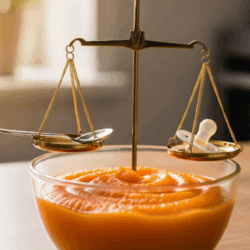
A few months ago, a law firm emailed one of us (Cameron) asking for help promoting their litigation against baby food manufacturers. The email falsely implied that puree ingredients like rice, root vegetables, and spices harbor dangerous levels of naturally occurring chemicals such as arsenic, lead, cadmium, and mercury, posing severe risks to infants’ brain development. The email went on to link these exposures to autism and developmental delays, citing brown rice syrup with arsenic levels exceeding 100 parts per billion (ppb) and cinnamon in fruit purees as a lead source, referencing a single 2023 recall of cinnamon-apple pouches.
Rather shamefully, the email was carefully tailored to avoid several awkward facts that refuted the firm’s litigation narrative.
First, the recall—and the subsequent litigation—stemmed from North Carolina health officials alerting the FDA to lead in Wanabana products, ultimately triggering the bankruptcy of the U.S. company and the closure of its Ecuadorian cinnamon supplier. By October 2024, the CDC reported 130 asymptomatic cases of elevated blood lead levels, four illnesses, and no deaths: isolated incidents caught by health officials, not a widespread crisis. An extensive 2025 review found that “… the daily inorganic arsenic exposure for most Americans … did not rise to a level that was a concern to pose elevated risks of harmful health outcomes,” a conclusion echoed by another expert who analyzed the data.
More broadly, the American Academy of Pediatrics (2021) notes that baby foods contribute minimally to overall metal exposure, while a 2016 study detected negligible lead in U.S. samples. The simple fact is that heavy metals are ubiquitous; zero exposure is impossible, and lead levels have plummeted since the 1970s. Trial lawyers are again peddling fear in pursuit of profit. U.S. baby foods are carefully tested and regulated. In rare cases where companies sell unsafe products, they face financial ruin.
Join Dr. Liza Lockwood and Cam English on this episode of Facts and Fallacies as they deconstruct an anti-chemical litigation pitch from a tort law firm.

Podcast: Play in new window | Download
Subscribe: RSS
Dr. Liza Lockwood is a medical toxicologist and the medical affairs lead at Bayer Crop Science. Follow her on X @DrLizaMD
Cameron J. English is the director of bio-sciences at the American Council on Science and Health. Follow him on X @camjenglish