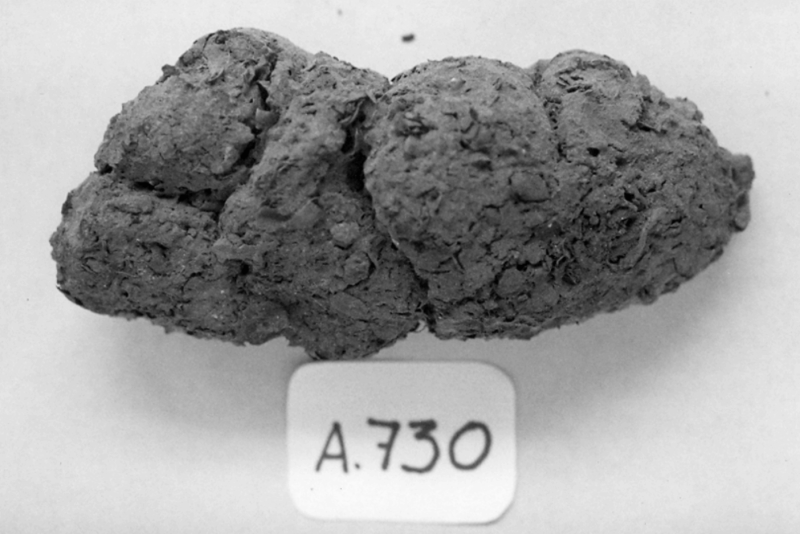

Feces is an open window into the many other organisms living in our bodies—from beneficial bacteria to harmful parasites. The genetic material from these other life forms makes its way out into the world via our own output.
But while information-rich in the present, DNA, like most biological materials, has a way of degrading over time. So finding such small traces of it from pathogens in ancient excrement can be challenging. Researchers behind a new study, published in PLoS ONE, used PCR testing, and additional sequencing, to see what they could find in a collection of 10 different samples of paleofeces …. The remnants had been deposited approximately in 725-920 A.D.
Pathogens and parasites, it turned out, were exceedingly common in people living in that area then. For example, the vast majority of samples revealed that the human defecator was harboring E. coli, and six of the 10 studied were infected by pinworm.
…



“Working with these ancient samples was like opening a biological time capsule,” Drew Capone, an assistant professor … at Indiana University, said in a statement.