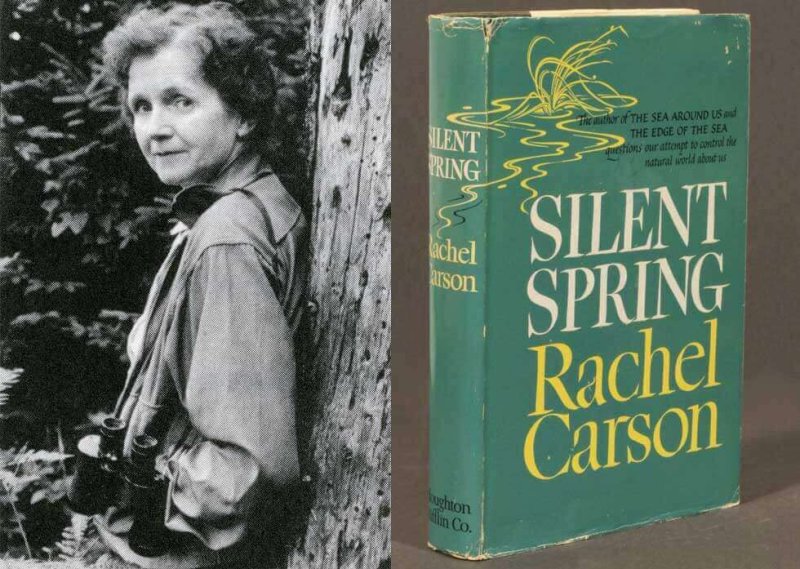
The insecticide DDT has prevented roughly half a billion deaths. A relatively low-toxic chemistry widely used to control disease-vectoring mosquitoes for decades (and still selectively employed today), DDT carries an undeserved reputation as a deadly chemical with devastating ecological consequences. This popular understanding originated in the 1962 book Silent Spring, authored by famed environmentalist Rachel Carson, whose description of the risk posed by pesticide use more broadly was truly alarming:
“Along with the possibility of the extinction of mankind by nuclear war, the central problem of our age has therefore become the contamination of man’s total environment with such substances of incredible potential for harm … How could intelligent beings seek to control a few unwanted species by a method that contaminated the entire environment and brought the threat of disease and death even to their own kind? Yet this is precisely what we have done” (Silent Spring p 14-15 Kindle Edition).
Although Carson is remembered fondly for her colorful prose that helped to launch the modern environmental movement, her criticisms of pesticides were flawed in important ways. “Silent Spring was replete with gross misrepresentations and atrocious scholarship,” says former FDA scientist Dr. Henry Miller. While she was broadly correct that pesticides can be harmful to off-target organisms (e.g. DDT causing eggshell thinning in some bird species), Carson’s claim that the insecticide was driving many birds to extinction was contradicted by multiple studies published before and after Silent Spring hit bookstores.
Strikingly, annual data from the North American Breeding Bird Survey from 1966, a study launched in response to concerns Carson popularized, showed “through the end of the 1970s … no obvious pattern of overall increasing bird populations as would be expected to follow the 1972 banning of DDT if it were truly harming bird populations,” science writer Robert Zubrin noted in 2012.
But of particular note was Carson’s allegation that DDT caused a variety of illnesses, including cancer: it was speculative at the time and subsequently refuted by additional research. “…[S]tudies in Europe, Canada, and the United States have since shown that DDT didn’t cause the human diseases Carson had claimed,” Dr. Paul Offit observed in 2017:
“Indeed, the only type of cancer that had increased in the United States during the DDT era was lung cancer, which was caused by cigarette smoking. DDT was arguably one of the safer insect repellents ever invented—far safer than many of the pesticides that have taken its place.”
But the story of highly toxic DDT persists to this day, and mainstream accounts of Carson’s work maintain that her claims about pesticides were vindicated.
Join Dr. Liza Lockwood and Cam English on this episode of Facts and Fallacies as they take a closer look at the risks of benefits of DDT use, and challenge some common misunderstandings along the way.

Podcast: Play in new window | Download
Subscribe: RSS
Dr. Liza Lockwood is a medical toxicologist and the medical affairs lead at Bayer Crop Science. Follow her on X @DrLizaMD
Cameron J. English is the director of bio-sciences at the American Council on Science and Health. Follow him on X @camjenglish