
Gene-edited foods are advancing fast—but commercialization and consumer acceptance lag

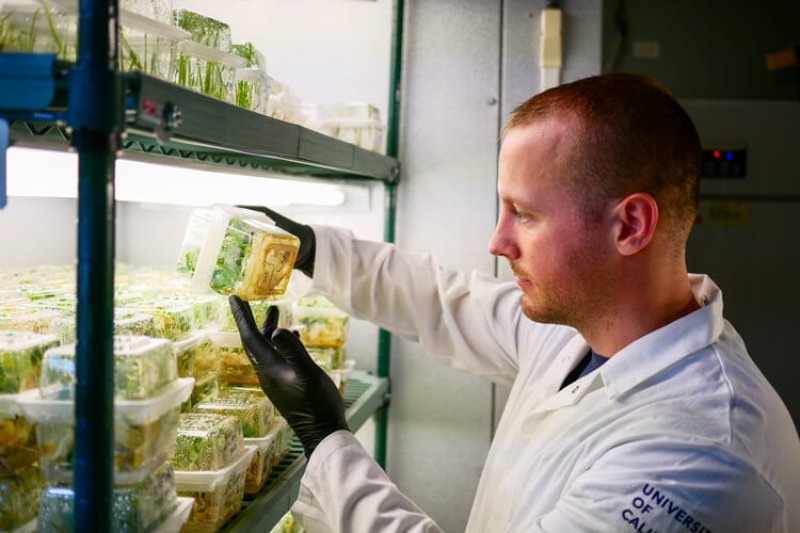
Jesse Jones, lab manager of the Plant Genomics and Transformation Facility at the Innovative Genomics Institute, examines seedlings of crop plants that have been edited using CRISPR techniques. Credit: IGI
[A]s gene editing matures, another reality has come into focus. The science accelerates. Commercialization does not.

That tension surfaced during a discussion at the American Seed Trade Association Vegetable and Flower Conference on the road from concept to crop. The message was clear: speed in the lab does not automatically translate to speed on the shelf.

Pairwise vice president of regulatory and government affairs Dan Jenkins says gene editing accelerates breeding, but it does not replace it.

Follow the latest news and policy debates on sustainable agriculture, biomedicine, and other ‘disruptive’ innovations. Subscribe to our newsletter.

Gene editing still carries the shadow of earlier biotech battles. Jenkins argues that the industry itself sometimes perpetuates outdated narratives.

“A lot of times, industry is in its own way too,” Jenkins says. …

He urges companies to treat gene editing as what it is.

“It’s just another tool to achieve a breeding outcome,” Jenkins says. “That’s all it is.”

That framing shifts the conversation away from ideology and back to agronomy, quality and performance. It encourages companies to present gene editing as a refinement of plant improvement rather than a disruptive break from it.

This is an excerpt. Read the original post here

{{ reviewsTotal }}{{ options.labels.singularReviewCountLabel }}
{{ reviewsTotal }}{{ options.labels.pluralReviewCountLabel }}
{{ options.labels.newReviewButton }}
{{ userData.canReview.message }}
Infographic: Global regulatory and health research agencies on whether glyphosate causes cancer

Infographic: Global regulatory and health research agencies on whether glyphosate causes cancer

Does glyphosate—the world's most heavily-used herbicide—pose serious harm to humans? Is it carcinogenic? Those issues are of both legal and ...
glp menu logo outlined

Get news on human & agricultural genetics and biotechnology delivered to your inbox.








