Paywall science predicament: AI answers often skew toward misinformation

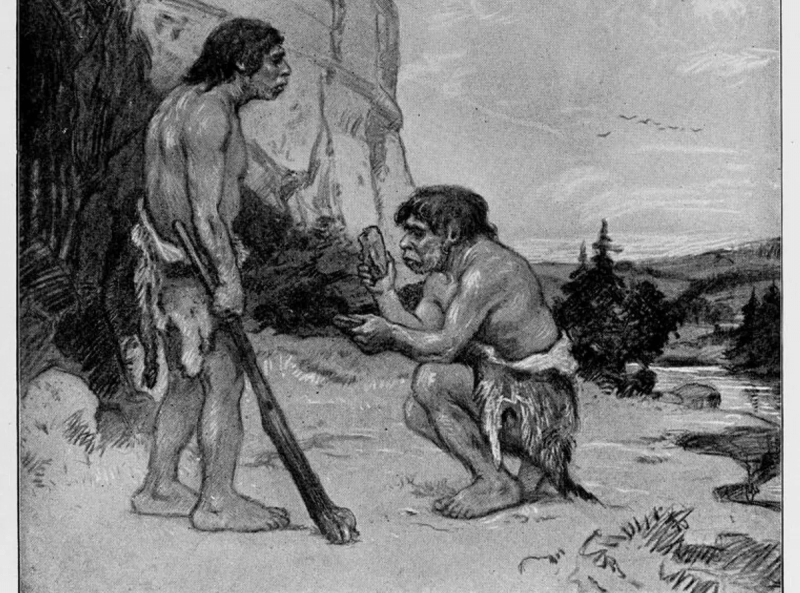
A historic illustration of the so-called "Neanderthal Man".
Credit: Wellcome Collection
A historic illustration of the so-called "Neanderthal Man". Credit: Wellcome Collection

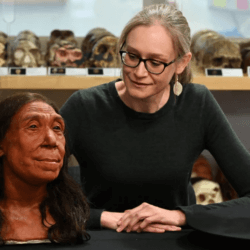
When researchers Matthew Magnani of the University of Maine and Jon Clindaniel of the University of Chicago tried prompting ChatGPT and DALL-E to illustrate Neanderthals in words and visuals, the AIs produced grossly inaccurate images and text about what our ancestors looked like and how they lived.

“A majority of images depict human-like figures, slightly stooped, with large quantities of body hair. These depictions have more in common with early twentieth-century drawings of Neanderthals than contemporary scientific knowledge,” Magnani and Clindaniel said in a study recently published in Advances in Archaeological Practice

Follow the latest news and policy debates on sustainable agriculture, biomedicine, and other ‘disruptive’ innovations. Subscribe to our newsletter.

What information is used to train generative AI is left to speculation, as these programs tend to operate in a relatively black-box manner. That said, we do know that these programs collect their training data sets by scraping the internet. Even with open access making many scientific articles publicly available, many more are paywalled, which makes the information much harder to scrape. Because of that, and because of other copyrighted material being otherwise inaccessible, the most easily collected information may be outdated. 

This is an excerpt. Read the original post here

{{ reviewsTotal }}{{ options.labels.singularReviewCountLabel }}
{{ reviewsTotal }}{{ options.labels.pluralReviewCountLabel }}
{{ options.labels.newReviewButton }}
{{ userData.canReview.message }}

Related Articles

Infographic: Global regulatory and health research agencies on whether glyphosate causes cancer

Infographic: Global regulatory and health research agencies on whether glyphosate causes cancer

Does glyphosate—the world's most heavily-used herbicide—pose serious harm to humans? Is it carcinogenic? Those issues are of both legal and ...

Most Popular

Screenshot-2026-05-01-at-1.29.41-PM
Viewpoint: What happens when whole grains meet modern food manufacturing? Labels don’t tell the whole story.
S
As vaccine rejectionism spreads, measles may be taking a more dangerous turn
ChatGPT-Image-Mar-27-2026-11_47_30-AM-2
FDA’s expedited drug reviews are hailed in some quarters but other approval practices are problematic
Screenshot 2026-05-06 at 2.56
Singularity crisis ahead? Can super babies save us from rogue AI geniuses?
Farmers can talk to plants
Farmers are a major source of misinformation—about farming
Screenshot-2026-04-20-at-2.26.27-PM
Viewpoint — Food-fear world: The latest activist scientists campaign: Cancer-causing additives
Screenshot-2026-04-30-at-2.19.37-PM
5 myths about summer dehydration that could damage your health — or even kill you
Screenshot-2026-05-06-at-2.07.43-PM
Manufacturing a conspiracy: The timeline of how  the White House embraced the fringe claim that scientists are being mysteriously murdered
Screenshot-2026-03-13-at-12.14.04-PM
The FDA wants to make many popular prescription drugs OTC—a great idea. Here’s why it’s unlikely to happen
Screenshot 2026-05-06 at 2.19
Vaccine shootout at the CDC 
Screenshot-2026-04-03-at-11.15.51-AM
Paraben panic: How a flawed study, media hype, and chemophobia convinced the public of the danger of one of the safest classes of preservatives
glp menu logo outlined

Get news on human & agricultural genetics and biotechnology delivered to your inbox.