In consulting rooms across America, physicians face a challenge that no medical school prepared them for. A parent arrives with a list of concerns gathered from social media, podcasts, and well-meaning friends. The questions sound scientific. The language borrows from immunology. The citations reference real studies. And yet the conclusions are wrong.
These parents are not ignorant. Many are educated, thoughtful, and deeply invested in their children’s health. They have encountered a sophisticated ecosystem of misinformation that exploits legitimate parental instincts: protect your child, question authority, demand evidence. The problem is not that these parents are asking questions. The problem is that they are receiving false answers.
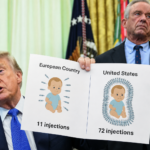
The current moment has made this worse. The head of the Department of Health and Human Services has spent decades promoting vaccine skepticism and has now revamped the US childhood immunization schedule to have one-third fewer recommended vaccines. The Advisory Committee on Immunization Practices, which guides the Centers for Disease Control and Prevention (CDC), has reversed long-standing recommendations without presenting new safety data. Measles, a disease eliminated from the United States in 2000, has returned at levels not seen in decades.
The information environment has never been more polluted, and the stakes have never been higher.
The most persistent myths about childhood vaccines are not fringe theories. They are the claims that appear most frequently in my clinical practice and in the broader public discourse.
Each has been studied extensively. Each has been refuted. And yet each persists, because misinformation travels faster than correction and because these myths tap into fears that are genuinely human.
Myth #1: ‘Vaccines were never properly tested’
The claim takes several forms. Vaccines were never tested against placebos. Vaccinated children have never been compared to unvaccinated children. Safety was monitored for only a few days. Each version relies on the same sleight of hand: narrowing the definition of “evidence” until only one impossible standard remains, then declaring that standard unmet.
The trick works by conflating regulatory paperwork with the totality of scientific evidence. When critics claim a vaccine was “never tested against a placebo,” they often mean that a specific Food and Drug Administration (FDA) filing for a specific commercial approval used an active comparator rather than saline as a placebo. They systematically exclude the foundational trials that established safety of these antigens (the substance in a vaccine that produces a response by your body’s immune system): trials conducted before the current product’s licensure, trials run in other countries, trials published in peer-reviewed journals but not listed in a particular regulatory submission.
The primary literature tells a different story. The hepatitis B vaccine, for instance, has been tested in numerous placebo-controlled trials. One early example: a randomized, double-blind trial published in the New England Journal of Medicine in 1980. Researchers enrolled 1,083 subjects and randomized them to receive the vaccine or placebo.
The placebo contained only the aluminum adjuvant and was packaged in vials visually indistinguishable from the vaccine. Using the adjuvant alone as the control allowed researchers to attribute any differences specifically to the hepatitis B antigen rather than to the aluminum salt that both groups received. They followed up with participants for 24 to 30 months. Side effects were similar between groups.
Each version relies on the same sleight of hand: narrowing the definition of ‘evidence’ until only one impossible standard remains, then declaring that standard unmet.
Critics often assume that only saline counts as a “real” placebo, but this reflects a misunderstanding of trial design.
The goal of a control is to isolate the variable being tested. If you want to know whether the active ingredient causes side effects, you compare it against everything else in the shot minus that ingredient. This design reflects a common approach in vaccine trials: placebos often contain the adjuvant or other vaccine components minus the antigen, allowing researchers to isolate the effect of the immunizing agent itself. A 1984 trial in Hong Kong newborns used a similar approach for the hepatitis B vaccine, with a placebo of aluminum phosphate in saline, and assessed infants for 12 to 24 months.
Other trials have used saline placebos. A 1968 double-blind trial of the mumps vaccine—now a component of the measles, mumps, and rubella (MMR) vaccine—randomized schoolchildren to vaccine or saline and demonstrated 80% efficacy with a reassuring safety profile. Saline-placebo-controlled trials also exist for varicella; rotavirus; Haemophilus influenzae type B (Hib); tetanus, diphtheria, and acellular pertussis (Tdap); pneumococcal; meningococcal; human papillomavirus (HPV); influenza; and COVID-19 vaccines—representing hundreds of thousands of participants across dozens of studies.
The polio vaccine was tested in the 1954 Francis Field Trial, which enrolled more than 400,000 children and used a placebo consisting of the culture medium, antibiotics, and formalin—everything in the vaccine except the poliovirus antigen and monkey kidney protein. It remains one of the largest randomized controlled trials in medical history.
Our research team has systematically reviewed the randomized controlled trial literature and identified hundreds of childhood vaccine trials using inert placebos such as saline, water, or buffer without antigen. (Full results are in preparation for publication.)
Myth #2: ‘Vaccinated and unvaccinated kids haven’t been compared’
The claim that vaccinated and unvaccinated children have never been compared collapses just as quickly.
A Danish study in 2002 of 537,303 children directly compared autism rates between children vaccinated or not with the MMR vaccine. A follow-up study of 657,461 children did the same and included a sub-analysis of children who had received no early childhood vaccinations at all. Germany’s Robert Koch Institute analyzed 17,641 children, finding no meaningful differences in allergies, atopic diseases (like asthma, allergies, and eczema), attention deficit hyperactivity disorder (ADHD), or epilepsy between vaccinated and unvaccinated groups. The only notable difference was that unvaccinated children had higher rates of vaccine-preventable diseases.
By demanding one trial do everything, they construct a standard no evidence can satisfy.
When shown this evidence, critics often shift their demands. They want a single trial with a saline placebo, years of follow-up, and statistical power to detect rare events. No single trial can do all three simultaneously. Power comes from large samples. Long-term safety comes from post-market surveillance. Placebo controls come from pre-licensure efficacy trials.
By demanding one trial do everything, they construct a standard no evidence can satisfy. If the goalposts move every time evidence is provided, the goal is not safety. It is constructing a position that cannot be challenged.
Myth #3: ‘The ingredients are toxic’
Aluminum. Thimerosal. Formaldehyde. The names sound alarming in isolation. But how toxic something is depends on dose, and the doses in vaccines bear no relationship to the scenarios that frighten parents.
Aluminum salts have enhanced vaccine effectiveness since the 1930s, with doses tightly regulated by the FDA at no more than 0.85 milligrams (mg) per shot. Children receive approximately 4.4 mg of aluminum from vaccines by six months of age. For context, formula-fed infants ingest about 38 mg of aluminum in their first six months from formula alone, and breast-fed infants receive smaller but still measurable amounts.
The body processes aluminum the same way regardless of how it enters: it binds to proteins like transferrin and is filtered by the kidneys. Studies show that routine vaccination does not increase total blood aluminum levels.
The largest study ever conducted on this question—and published just last year—analyzed data on more than 1.2 million Danish children, examining whether cumulative aluminum exposure from vaccines was associated with 50 different conditions including autism, ADHD, asthma, and autoimmune disorders. The results were unequivocal: It found no association between aluminum exposure from vaccines and an increased risk for any of these conditions.
[A recent large study] found no association between aluminum exposure from vaccines and an increased risk for any of these conditions.
Thimerosal, a mercury-containing preservative, was removed from childhood vaccines in the United States starting in 1999 as a precautionary measure. If thimerosal caused autism, rates should have fallen after its removal. They did not. In Denmark, which eliminated thimerosal in 1991, autism rates actually increased in subsequent years.
Currently, only multi-dose influenza vaccines contain thimerosal, and thimerosal-free alternatives are widely available. The mercury in thimerosal is ethylmercury, which is processed and excreted far more rapidly than the methylmercury found in fish. A meta-analysis involving more than 1.25 million children found no association between thimerosal and autism.
Formaldehyde is used to inactivate viruses and detoxify bacterial toxins in some vaccines. Everyone has formaldehyde detectable in their blood as part of normal metabolism. The level in circulation is approximately 10-fold higher than what any vaccine contains. The quantity in vaccines is at least 600-fold lower than that necessary to induce toxicity in experimental animals.
Many newer vaccines contain none of these ingredients. Rotavirus, chickenpox, meningococcal conjugates, annual influenza, and mRNA COVID-19 vaccines are all aluminum-free. Live-attenuated vaccines like MMR work differently than other vaccines, using weakened viruses that replicate briefly and generate strong immunity without requiring aluminum adjuvants at all.
Myth #4: ‘Too many, too soon’
In 1986, children received vaccines protecting against seven diseases. Today, the schedule protects against 16 to 18 diseases. The number of shots has increased substantially. Parents experience more office visits and naturally assume a greater biological burden.
The biology tells a different story. What actually matters to the immune system is not the number of injections but the number of antigens, the proteins and molecules that immune cells recognize and respond to. A century ago, the single smallpox vaccine contained approximately 200 antigens. In 1986, a single whole-cell pertussis (whooping cough) shot contained roughly 3,000 antigens. Today’s entire pediatric schedule exposes children to about 165 antigens total. That is a 95% reduction in antigenic load despite the increase in diseases prevented.
This reduction reflects advances in vaccine engineering. We switched from whole-cell to acellular pertussis vaccines, which contain only the specific components needed for protection rather than every protein the bacterium produces. Recombinant DNA technology now allows manufacture of single-protein vaccines. The result is far more protection with far less immune burden.
The immune system routinely processes thousands of antigens daily through environmental exposures. A few hundred additional antigens from vaccines present no meaningful challenge.
The immune system has enormous capacity. Researchers have estimated that infants could theoretically respond to thousands of vaccines simultaneously before using even 1% of their circulating immune cells. The real-world schedule barely registers on this capacity. The immune system routinely processes thousands of antigens daily through environmental exposures. A few hundred additional antigens from vaccines present no meaningful challenge.
Multiple studies have tested the “too many, too soon” hypothesis directly. A CDC study compared total cumulative antigen exposure in the first two years of life between children with autism and matched controls without autism. The total amount of antigen from vaccines received was the same between groups. A Danish study of more than 800,000 children found that neither the number of vaccines nor receipt of multiple-antigen vaccines increased the risk of hospitalizations from non-targeted infectious diseases. Children who received combination vaccines were actually more likely to complete their full vaccination series, and studies have found no increase in serious adverse events among them.
Myth #5: ‘Vaccines cause autism’
No vaccine claim has been more thoroughly investigated or more definitively refuted.
The concern originated with a 1998 paper by Andrew Wakefield proposing that the measles, mumps, and rubella (MMR) vaccine caused autism through bowel inflammation. The study involved just 12 children, lacked a control group, and described symptom timing inconsistent with the proposed mechanism. It was later discovered that Wakefield had undisclosed financial conflicts and had manipulated data. The Lancet retracted the paper, and Wakefield lost his medical license.
But the damage was done. The hypothesis triggered some of the most rigorous epidemiologic scrutiny in medical history. A 2002 Danish study of 537,303 children found no difference in autism risk between those who received the MMR vaccine and those who did not. A 2019 follow-up of 657,461 children reached the same conclusion and specifically tested whether children with autistic siblings, a high-risk group, showed increased vulnerability. They did not. A US study of 95,727 children with older siblings, including siblings with autism, found no association. Study after study, country after country, the answer has been the same.
When the MMR hypothesis failed, the focus shifted to thimerosal. When thimerosal was removed and autism rates continued rising, the hypothesis shifted again to “too many vaccines given too soon.” When studies of total antigen exposure found no association, critics moved on to aluminum. Each iteration has been tested. Each has failed to find the predicted relationship.
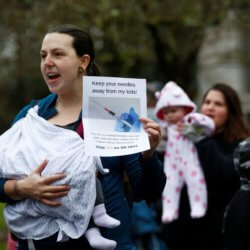



The Institute of Medicine (IOM) in 2004 said the evidence favors rejection of a causal relationship between vaccines and autism. The World Health Organization reached the same conclusion. Research indicates that autism has strong genetic components, with heritability estimates around 80%, and originates in utero, well before any childhood vaccination.
Temporal association—when two events happen around the same time—is not causation.
Autistic symptoms typically become apparent in the second year of life, around the same time children receive several vaccines. This temporal coincidence explains why parents might perceive a connection. But temporal association—when two events happen around the same time—is not causation. Children also learn to walk in the second year of life. No one concludes that walking causes autism.
Myth #6: ‘Vaccines cause SIDS, autoimmune disease, allergies, and cancer’
Each of these claims follows the same pattern: a condition that occurs in early childhood is blamed on vaccines because vaccines are also given in early childhood. The logic is post hoc ergo propter hoc, the fallacy of assuming that because one event follows another, the first caused the second.
Sudden infant death syndrome (SIDS) peaks between two and three months of age, precisely when infants receive several recommended vaccines. A coincidental temporal relationship is statistically inevitable. But SIDS rates in the United States have been declining since the early 1990s for reasons unrelated to vaccination, primarily changes in recommended sleeping positions. The IOM reviewed the evidence in 2003 and rejected the notion that pertussis-containing vaccines cause SIDS.
Studies of vaccines and autoimmune disease have found no association. Two large case-control studies showed no link between hepatitis B vaccine and multiple sclerosis. Another study found no evidence that hepatitis B, tetanus, or influenza vaccines exacerbated symptoms of multiple sclerosis. Multiple studies have found no association between infant vaccines and type 1 diabetes.
The “hygiene hypothesis” suggests that, by preventing infections, vaccines might somehow disrupt immune development and cause allergies. But vaccines prevent only a small fraction of the infections children experience. Children encounter six to eight infections per year in early life, mostly from viruses for which no routine vaccines exist. Studies have found no association between receipt of vaccines and development of asthma or allergic conditions.
Concerns about vaccines and cancer arose from the discovery that polio vaccines administered from 1955 to 1963 were contaminated with simian virus 40 (SV40), a monkey virus with cancer-causing potential in laboratory animals. Approximately 90% of children and 60% of adults in the US during that period may have been exposed. This became one of the most closely studied questions in vaccine safety.
Multiple epidemiologic studies comparing cancer rates in people who received the contaminated vaccines to those who did not found no increased risk in people of the cancers that SV40 causes in animals—including mesothelioma, brain tumors, and bone cancers. The IOM reviewed the evidence in 2002 and found no increased cancer risk. SV40 has not been present in any vaccine since 1963. Several studies have evaluated possible relationships between routine vaccines and childhood leukemia and found none—in fact, some evidence suggests vaccination may slightly reduce leukemia risk.
Myth #7: ‘VAERS proves vaccines are killing people’
The Vaccine Adverse Event Reporting System is a passive surveillance system that accepts any submitted report of an adverse event following vaccination without judging whether the vaccine caused it. Anyone can submit a report. The system was designed to detect potential safety signals that warrant further investigation, not to establish causation. VAERS itself warns that reports “may contain information that is incomplete, inaccurate, coincidental, or unverifiable.”
VAERS data are routinely misused to claim that vaccines cause deaths. During the 2014-2015 measles outbreak, unsubstantiated claims of deaths caused by the MMR vaccine circulated on the internet, based entirely on raw VAERS reports. When scientists from the Food and Drug Administration (FDA) and Centers for Disease Control and Prevention reviewed the complete reports along with accompanying medical records, autopsy reports, and death certificates, no patterns suggesting a causal relationship with vaccination were found.
VAERS data are routinely misused to claim that vaccines cause deaths.
A 2013 Vaccine Safety Datalink study of more than 13 million vaccinated people compared death rates in the vaccinated population to the general US population. The death rate in the one to two months after vaccination was actually lower than in the general population, and causes of death were similar. This provides persuasive evidence that vaccinations are not associated with increased mortality risk.
With rare exceptions like anaphylaxis, which occurs at a rate of approximately one per million doses and is treatable, the evidence does not suggest a causal relationship between vaccination and death. When deaths follow vaccination, careful investigation has consistently found alternative explanations: underlying medical conditions, unrelated accidents, natural deaths that would have occurred regardless.
Myth #8: ‘The flu shot gave me the flu’ and ‘Natural immunity is better’
The injectable influenza vaccine cannot cause influenza. It contains inactivated virus that cannot replicate or cause infection. The symptoms some people experience after vaccination, typically mild fatigue or low-grade fever lasting a day, reflect the immune system learning to recognize the threat. This is the vaccine working, not the vaccine causing illness.
Some research has reported temporary increases in detection of non-influenza respiratory viruses after influenza vaccination. These studies found higher rates of common colds, not serious illness. The timing coincides with when parents are primed to seek care because their child just received a vaccine. When researchers excluded the first two days after vaccination, the association disappeared. The authors of these studies explicitly state that their findings should not change vaccination recommendations, because protection against severe influenza far outweighs any transient effect on mild infections.
Wild-type measles infection causes long-term loss of immune memory, increasing death rates from other infections for years afterward.
The claim that natural immunity is superior to vaccine-induced immunity ignores what “natural” infection actually entails. Before measles vaccination, the virus caused encephalitis and a fatal degenerative brain disease called subacute sclerosing panencephalitis in a small but significant fraction of infected children. Wild-type measles infection causes long-term loss of immune memory, increasing death rates from other infections for years afterward. The “natural” route to immunity runs through the disease itself, with all its potential for permanent damage.
Influenza viruses mutate constantly. Immunity from infection is neither complete nor permanent. People get influenza more than once because the virus changes and because immunity wanes. This is precisely why annual vaccination is necessary. Even in years when vaccine effectiveness drops to 30% because strains circulating in the community don’t match well with those in the vaccine, that represents thousands of prevented hospitalizations and deaths when applied across the US population. In 2019-2020, flu vaccination prevented an estimated 7 million illnesses and 100,000 hospitalizations.
Myth #9: ‘mRNA vaccines are gene therapy that causes turbo cancers’
mRNA vaccines are not gene therapy. Gene therapy involves altering a patient’s DNA, typically by inserting functional genes to replace defective ones. mRNA vaccines do not enter the cell nucleus where DNA is stored. They cannot integrate into the genome—our bodies’ genetic code.
They deliver instructions that cells read to produce a protein, the same process cells perform constantly with their own mRNA. The vaccine mRNA degrades within days, leaving only the immune memory it generated.
The technology represents decades of research, much of it by Katalin Karikó, PhD, who spent years struggling for funding while colleagues dismissed her work. The breakthrough came when she and Drew Weissman, MD, PhD, discovered that modifying one of mRNA’s building blocks allowed it to avoid triggering certain immune responses that had limited earlier attempts. This insight won them the 2023 Nobel Prize in Physiology or Medicine.
Claims about “turbo cancers,” meaning aggressive cancers supposedly caused by mRNA vaccines, have no scientific support. Cancer registries have not detected unusual patterns following vaccination campaigns. The biological mechanism proposed, that mRNA vaccines somehow suppress immune surveillance of cancer, contradicts how these vaccines actually work. They stimulate immune responses rather than suppressing them.
Cancer registries have not detected unusual patterns following vaccination campaigns.
The performance of mRNA COVID vaccines was extraordinary by any reasonable standard. In late 2021, the likelihood of COVID-attributable death was reduced by 98% for fully vaccinated adults who received booster doses. A Commonwealth Fund analysis found that vaccinations prevented 3.2 million deaths in the United States alone in their first two years of use. Globally, estimates suggest from 14 million to 20 million lives were saved in the first year of COVID vaccination.
The current secretary of Health and Human Services has terminated mRNA vaccine research programs on the grounds that these vaccines “fail to protect effectively against upper respiratory infections.”
This represents a fundamental misunderstanding of how we evaluate medical interventions. No vaccine has ever provided complete protection against respiratory viruses, which replicate in the upper airways, where antibody concentrations are lower. Influenza vaccines, in use since the 1940s, prevent perhaps 60% of infections in a good year. We do not abandon treatments because they are imperfect. We use them because the benefits outweigh the limitations.
What these 9 myths share
The myths catalogued here are not random misconceptions. They form a coherent counter-narrative that exploits genuine human instincts: the desire to protect children, skepticism of authority, and the demand for evidence. These instincts are healthy. The problem is that they are being manipulated.
Several patterns recur across these myths. First, the conflation of temporal association with causation. Children receive vaccines in the same developmental window when autism symptoms appear, when SIDS risk peaks, when allergies manifest. The temporal coincidence is statistically inevitable. It is not evidence of causation.
Second, the confusion of regulatory paperwork with the totality of scientific evidence. Package inserts and FDA filings are administrative documents for specific commercial approvals. The scientific evidence base spans decades of research across dozens of countries. Treating one as equivalent to the other is the core sleight of hand behind claims that vaccines are “untested.”
Third, the demand for impossible standards. Critics want a single trial with saline placebo, decades of follow-up, and the power to detect vanishingly rare events. No study can do all three simultaneously. By constructing a standard that cannot be met, they can dismiss any evidence presented and claim vindication when their demands go unsatisfied.
Fourth, the selective citation of evidence. Real studies are cited but stripped of context. A supplementary finding that barely achieves statistical significance in one subgroup is highlighted while the primary null result is ignored. A passive surveillance report is treated as proof of causation. The veneer of scientific engagement makes the misinformation more persuasive, not less.
Parents who encounter these myths deserve compassion, not condescension. They are trying to protect their children in an information environment that has been deliberately polluted. The appropriate response is not to dismiss their concerns but to address them with evidence, patience, and respect.
Parents who encounter these myths deserve compassion, not condescension.
The evidence for vaccine safety and efficacy is overwhelming. It spans millions of children, dozens of countries, and decades of observation. It includes the near elimination of diseases that once killed and disabled thousands of children annually. The infant who died from hepatitis B in Michigan in 1999 because her mother’s positive screening result was incorrectly recorded as negative. The 20,000 babies born with congenital rubella syndrome during the 1964-1965 epidemic. At least 289 children died from influenza during the 2024-25 season, nearly 90% of them unvaccinated. These are the stakes.
The current political moment has given unprecedented platforms to vaccine skepticism. But politics cannot change biology. The diseases remain dangerous. The protection that vaccines offer remains proven. And the children whose lives depend on accurate information deserve better than myths that will not die.
Jake Scott is a Clinical Associate Professor of Infectious Diseases at Stanford University. Follow Jake on X @jakescottMD
A version of this article, Part 1 and Part 2, was originally posted at the University of Minnesota and has been reposted here. Any reposting should credit the original author and provide links to both the GLP and the original article. Find the University of Minnesota on X @UMNews