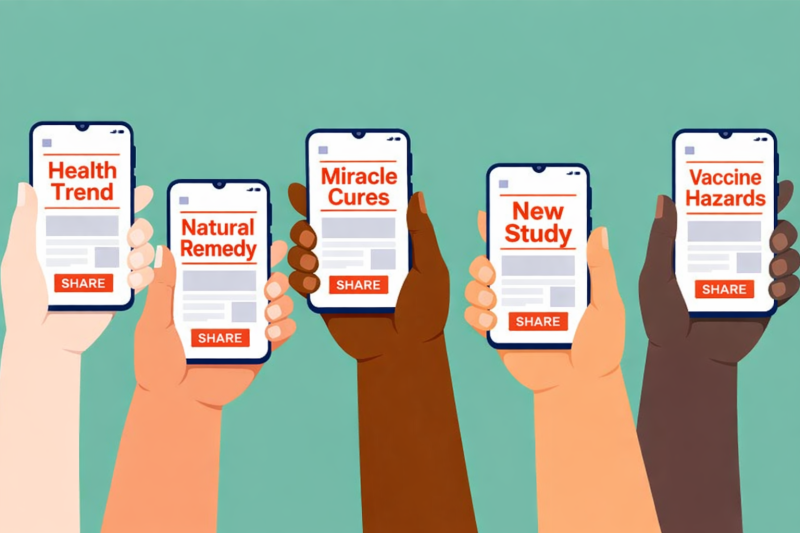
The Harris Poll announced the results from a landmark survey, “Science Under Siege: The Battle Between Viral Misinformation and Shared Belief in the Value of Science,” sponsored by Bayer. The survey revealed a profound “misinformation paradox” at the heart of American life: while 80% of Americans blame social media for false or misleading health and science information in the media and online, these platforms are the public’s top source for such news.
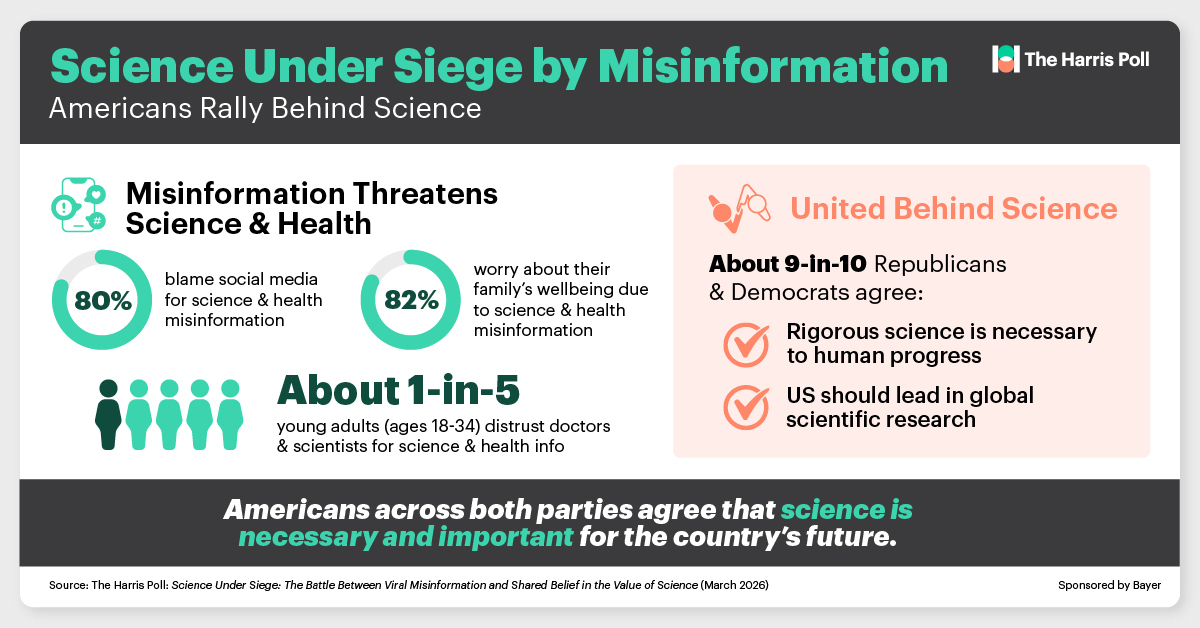
Underpinning this issue is the emergence of a “headline-only” culture, underscored by a staggering 75% of Americans who admit to having shared articles related to health and science with someone they know in the past month based on the headline alone and without reading the full article first. The same poll found that 71% of Americans say that online content creators are very or somewhat to blame for misinformation about science and health.
Misinformation around health and science could be affecting trust in credible sources like doctors and scientists, particularly among young adults. The majority of young adults ages 18-34 (51%) rely on social media as their primary source of science and health information and nearly 1-in-5 distrust doctors (16%) and scientists (20%) as sources of information on health and science. Misinformation also carries an emotional toll: 83% of all Americans report feeling angry when encountering false or misleading information about science and health and 82% worry about their own well-being or the well-being of their families.
Despite these challenges, the data confirms the need for innovation to improve lives, with the majority of Americans across the political spectrum respecting scientists and agreeing rigorous science is necessary for continued human progress – a rare bipartisan consensus in a divided world.
“This is more than just busy social feeds full of click-bait headlines when half of young adults are scrolling for their health information,” said John Gerzema, CEO of The Harris Poll. “This growing paradox is going to have real life health impacts if a fifth of young people continue to distrust doctors and scientists as legitimate sources.”
Key findings from the report, Science Under Siege, include:

- First, the Good News. There’s a Bipartisan Consensus on Trust in Science: Despite deep political divides, a remarkable 88% of Republicans and 92% of Democrats agree that rigorous science is necessary for continued human progress. This shared value is rooted in a deep respect for the scientific community; there is overwhelming agreement that scientists in the US today improve people’s quality of life (80% of Republicans and 90% of Democrats). Furthermore, 90% of Republicans and 92% of Democrats believe the US should play a leading role in global scientific research.
- The Misinformation Paradox: 80% of Americans blame social media platforms for the spread of false or misleading information about science and health, and 75% are concerned about online content creators actively attacking or undermining scientific research and expertise. Yet, social media (32%) is the top primary source for health and science information, outpacing TV news (25%), newspapers/news websites/news apps (13%), AI (7%), government agencies (6%), and non-governmental organizations (2%).
- A Generational Trust Gap: The survey found that 51% of young adults (ages 18-34) use social media as their primary source for science and health information. Nearly half of young adults blame doctors (48%) and scientists (43%) for providing false or misleading information, and about 1-in-5 distrust these traditional experts.
- The Emotional Toll: Nearly 9-in-10 Americans (88%) are concerned with false or misleading information about science and health in the media and online. Large majorities of Americans are feeling angry (83%) and are worried about their well-being and the well-being of their families (82%) when encountering such information.
- Anxiety Over US Science Leadership: Americans want to lead on science, but few actually believe the US is leading. Only 19% believe the US currently leads China in scientific research, while 33% believe the US is falling behind. If the government cannot fund scientific research, Americans primarily point to businesses (23%) and non-profits (19%) to step in.
“We’ve uncovered a hidden consensus,” said Gerzema. “Despite a fractured delivery of information, a shared belief in the value of science has rare unity across party lines.”
Ultimately, the findings of “Science Under Siege” suggest that while the impacts of misinformation are alarming, Americans remain remarkably united in their support for science and its impacts for today and the future.