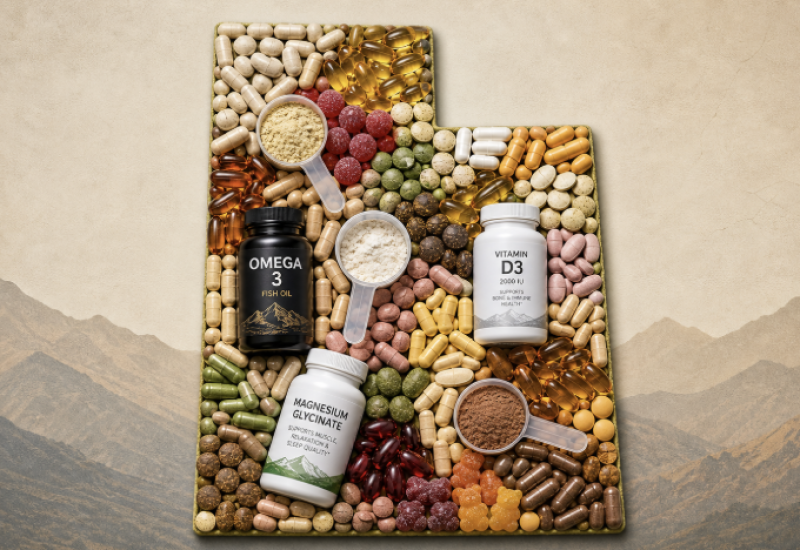
In 2002, the entire U.S. dietary supplement industry generated about $18.7 billion in sales. In 2024, Utah’s dietary supplement industry alone was valued at over $16 billion, making it the state’s third-largest industry, behind only tech and tourism.
Suffice to say, dietary supplement use across the country has been rising dramatically, and Utah, with over 300 nutraceutical companies, has been pegged as the heart of supplement industry and even the “supplement capital” of the U.S. ….
[newslettter] [S]upplements are addressed in the Dietary Supplement Health and Education Act of 1994 that prohibits distributors from marketing adulterated or misbranded products. Though it allows the FDA to act against infractions, it does say that the testing and safety evaluations of dietary supplements fall on the firms that make the them, not the government.…
And that vague wording makes all the difference. Granted, supplements can’t legally make disease-treatment claims. In the bone health example, a supplement can’t legally claim to treat osteoporosis — but they can legally claim to “support bones.”

…
Because there’s no legal requirement to test anything, most supplements are simply untested.