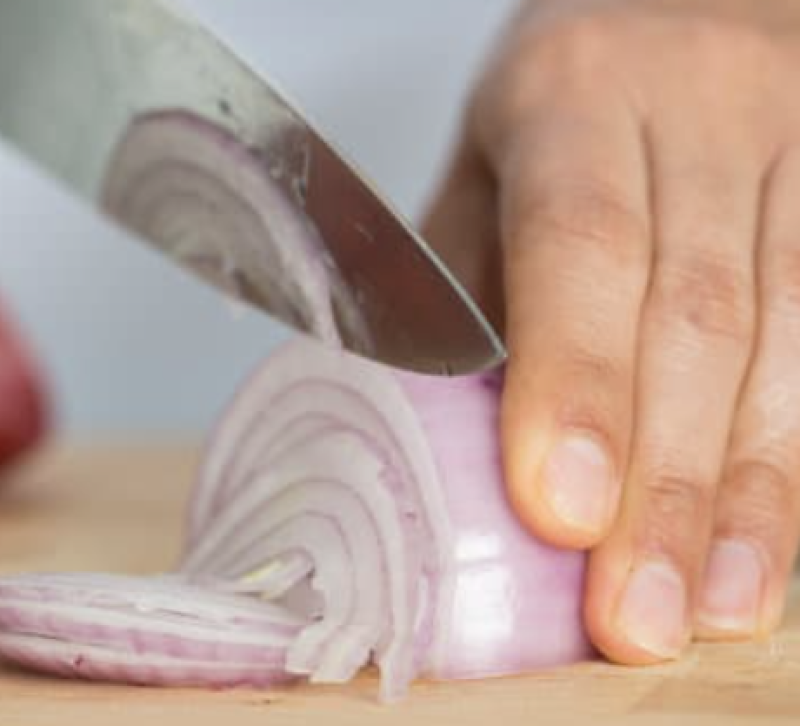

Chopping onions may one day be a dry-eyed affair. Researchers at Japan’s Chiba University and food company House Foods have used CRISPR-Cas9 gene editing to knock out the gene behind onion-induced tears, as Global Agriculture reports.
The target is lachrymatory factor synthase (LFS), an enzyme that springs into action when an onion’s cells are cut, converting sulfur compounds into the volatile gas that stings your eyes. Disable LFS, the thinking goes, and the waterworks stop.
The team, including Shoya Tamaru and Takahiro Kamoi of House Foods Group and Tomoko Igawa of Chiba University, edited onion calli (clumps of lab-grown plant tissue), using Agrobacterium to deliver the CRISPR machinery. Of 483 lines screened, 19 proved to be true mutants. In the four mutant lines tested, LFS activity in leaves fell to less than 40% of that in unedited plants.
Don’t expect tear-free onions in the produce aisle just yet. Many of the edited plants grew abnormally, none produced seed, and several died after being moved into soil. The researchers mainly blame somaclonal variation, the genetic glitches that build up during long stretches in tissue culture, rather than the edit itself.
That makes the work, first posted as a bioRxiv preprint in July and since published in Frontiers in Plant Science, an early proof of concept. Turning it into a usable variety would require a shorter culture process or conventional breeding, and House Foods hasn’t announced a release timeline.

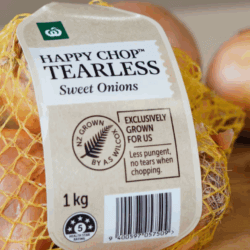

The stakes go beyond home kitchens. Global Agriculture notes that onion processing workers in India, the world’s second-largest onion producer, face the same irritant day in and day out. Earlier work used gene silencing to tame onion tears, and how gene-edited crops like this one are regulated still varies from country to country.