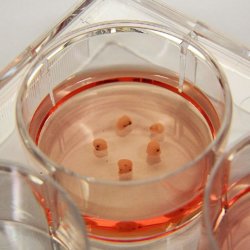
Cerebral organoids: How can we know if cells collected as ‘mini-brains’ are conscious?

organoidx
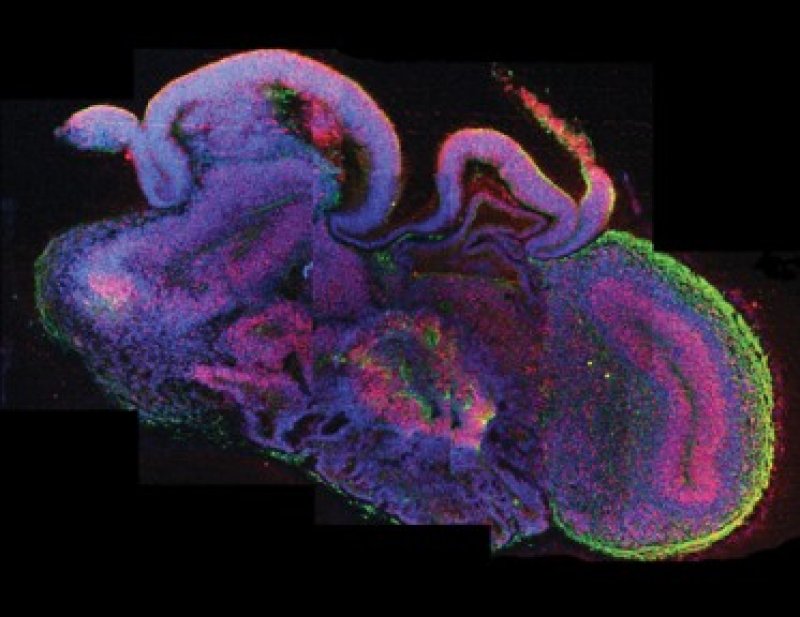
A stained section of an organoid is seen in close-up.

[Editor’s note: Mike Klymkowsky is a Professor of Molecular, Cellular & Developmental Biology at the University of Colorado Boulder.]

The fact that experiments on people are severely constrained is a major obstacle in understanding human development and disease. Some of these constraints are moral and ethical and clearly appropriate and necessary given the depressing history of medical atrocities. Others are technical, associated with the slow pace of human development.

…

Madeline Lancaster, Jurgen Knōblich, and colleagues devised an approach by which [differentiated human cells] could be induced to form what they termed “cerebral organoids”…

The production of cerebral organoids from reprogrammed human somatic cells has […] attracted the attention of the media.  While “mini-brain” is certainly a catchier name, it is a less accurate description of a cerebral organoid, itself possibly a bit of an overstatement, since it is not clear exactly how “cerebral” such organoids are.

…
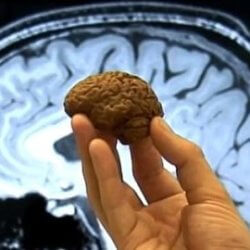
The reasonable question, then, must be whether a  cerebral organoid, which is a relatively simple system of cells (although itself complex), is conscious. It becomes more reasonable as increasingly complex systems are developed, and such work is proceeding apace.

…

While a future concern, in a world full of more immediate and pressing issues, it will be interesting to listen to the academic, social, and political debate on what to do with mini-brains as they grow in complexity and perhaps inevitably, towards consciousness.

The GLP aggregated and excerpted this blog/article to reflect the diversity of news, opinion, and analysis. Read full, original post: Is it time to start worrying about conscious human ‘mini-brains’?

Related Articles

Infographic: Global regulatory and health research agencies on whether glyphosate causes cancer

Infographic: Global regulatory and health research agencies on whether glyphosate causes cancer

Does glyphosate—the world's most heavily-used herbicide—pose serious harm to humans? Is it carcinogenic? Those issues are of both legal and ...

Most Popular

Screenshot-2026-11-17-at-12.18.09-PM
Challenging glyphosate fear-mongering: Statewide Nebraska study finds no link between weedkiller use and non-Hodgkin lymphoma
PFAS Molecules and Hazard Icons
Viewpoint: $$$ Billions of reasons why environmental activists are trying to slap a ‘killer PFAS’ label on many safe and essential ‘forever chemicals’
Wholewheat Bread and Yogurt Ingredients
Viewpoint: RFK Jr.’s reckless good intentions: Do we really want to ban whole-wheat bread and yogurt?
ChatGPT-Image-Mar-10-2026-01_39_01-PM
Viewpoint—“Miracle molecule” debunked: Why acemannan supplements don’t work
Screenshot 2026-11-23 at 11.51
Calley Means’ demonization of glyphosate is ‘just craziness’. Farmers are responding with science.
Facebook Icons with No Syringe and Thumbs-Up
RFK Jr.’s science-twisting anti-vaccine group Children’s Health Defense is back on Facebook and Instagram after Meta inexplicably lifts its ban
Screenshot-2026-11-18-at-12.42.18-PM
Viewpoint: MAHA/MAGA/RFK Jr. health disinformation crackup is coming. Beware as Bhattacharya, Makary, Prasad, and Oz seek lucrative second acts
Pastel Breakfast Pedestals with Yogurt Bowl
RFK Jr. is about to issue an edict defining ultra-processed foods. What could go wrong?
Grayscale Collage of Protest and Choice
Viewpoint: Medical Freedom movement? A sobering look at RFK Jr.’s disastrous two years as our health and food czar 
Screenshot-2026-11-16-at-2.37.32-PM
30 years of GMO farming: Is the boom in glyphosate and glufosinate use harming the environment? Data show they’re the most sustainable choice
Screenshot 2026-11-23 at 11.11
Sweat lodges and canoe journeys: Native American healing gains Medicaid coverage as Trump cuts funding and restricts eligibility nationwide
Soybean Harvest in Cupped Hands
30 years of GMO farming: Defying cynics, we’ve had larger harvests, lower costs, and $385 billion in added global farmer income
Screenshot-2026-11-19-at-7.54.57-PM
European General Court sides with scientists, dismisses activist claims that glyphosate is toxically dangerous
Neon-AI-Globe-Network
Viewpoint: The three biggest threats posed by AI hyper-intelligence
glp menu logo outlined

Get news on human & agricultural genetics and biotechnology delivered to your inbox.