Artificial Intelligence may offer early Alzheimer’s diagnosis

algor

Canadian researchers at McGill University believe they can predict Alzheimer’s disease up to two years before its onset using big data and artificial intelligence. They developed an algorithm capable of recognizing the signatures of dementia using a single amyloid PET scan of the brain of patients at risk of developing the disease.

…

The algorithm, trained on a population with amnestic mild cognitive impairment observed over 24 months, proved accurate 84.5 percent of the time. [Lead author Sulantha] Mathotaarachchi says the algorithm can be trained on different populations for different observational periods, meaning the system can grow more comprehensive with more data.

“The more biomarkers we incorporate, the more accurate the prediction could be,” Mathotaarachchi adds. “However, right now, acquiring [the] required amount of training data is the biggest challenge. … In Alzheimer’s disease, it is known that the amyloid protein deposition occurs decades before symptoms onset.”
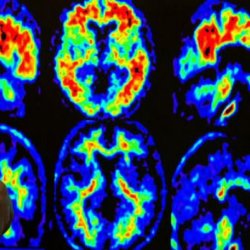

…

One of the key goals of the project is to improve the research in Alzheimer’s disease by ensuring those patients with the highest probability to develop dementia are enrolled in clinical trials. That will increase the efficiency of clinical programs, according to Mathotaarachchi.

The GLP aggregated and excerpted this blog/article to reflect the diversity of news, opinion, and analysis. Read full, original post: Researchers Develop New Tech to Predict Alzheimer’s Disease Earlier Than Ever


Related Articles

Infographic: Global regulatory and health research agencies on whether glyphosate causes cancer

Infographic: Global regulatory and health research agencies on whether glyphosate causes cancer

Does glyphosate—the world's most heavily-used herbicide—pose serious harm to humans? Is it carcinogenic? Those issues are of both legal and ...

Most Popular

Screenshot-2026-11-17-at-12.18.09-PM
Challenging glyphosate fear-mongering: Statewide Nebraska study finds no link between weedkiller use and non-Hodgkin lymphoma
Screenshot-2026-11-16-at-2.37.32-PM
30 years of GMO farming: Is the boom in glyphosate and glufosinate use harming the environment? Data show they’re the most sustainable choice
Soybean Harvest in Cupped Hands
30 years of GMO farming: Defying cynics, we’ve had larger harvests, lower costs, and $385 billion in added global farmer income
ChatGPT-Image-Mar-10-2026-01_39_01-PM
Viewpoint—“Miracle molecule” debunked: Why acemannan supplements don’t work
Stormlit Portrait Over Golden Mountains
Searching for life where no one thought to look: A renowned astrophysicist’s seemingly quixotic quest to explore Venus’s clouds
Screenshot-2026-11-19-at-7.54.57-PM
European General Court sides with scientists, dismisses activist claims that glyphosate is toxically dangerous
Screenshot-2026-11-13-at-10.02.02-AM
Viewpoint: Why it’s such a big deal that under Trump-RFK Jr., the U.S. has lost its ‘measles-free’ status  
BEMT Lotion for Freckled Skin
Burned by FDA bureaucracy: Why Americans waited decades for cancer-preventing sunscreen
Screenshot-2026-11-09-at-3.01.19-PM
Are Texas data centers killing calves? Debunking viral AI claims
glp menu logo outlined

Get news on human & agricultural genetics and biotechnology delivered to your inbox.