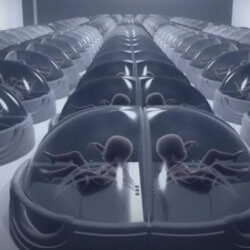
Why the quest for artificial intelligence almost died in infancy

ai e

It feels as if we’re riding the wave of a novel technological era, but the current rise in neural networks is actually a renaissance of sorts.

It may be hard to believe, but artificial intelligence researchers were already beginning to see the promise in neural networks during World War II in their mathematical models. But by the 1970s, the field was ready to give up on them entirely.

…

[I]n 1959, ADALINE arrived via researchers at Stanford University, and was at the time the biggest artificial brain. But it, too, could only handle a few processes at a time and was meant as a demonstration of machine learning rather than being set to a specific task.

…

“Unfortunately, these earlier successes caused people to exaggerate the potential of neural networks, particularly in light of the limitation in the electronics then available,” [professor Eyal Reingold] wrote in a history of artificial intelligence.

…

ADALINE and its primitive cousins may have faded from public perception as machine learning has come into its own over the past decade. But this revolution, decades in the making, wasn’t hampered by these neural networks. Instead, they were somehow both too primitive and too advanced for their time, but their time has certainly come.

The GLP aggregated and excerpted this blog/article to reflect the diversity of news, opinion, and analysis. Read full, original post: We Almost Gave Up On Building Artificial Brains

Related Articles

Infographic: Global regulatory and health research agencies on whether glyphosate causes cancer

Infographic: Global regulatory and health research agencies on whether glyphosate causes cancer

Does glyphosate—the world's most heavily-used herbicide—pose serious harm to humans? Is it carcinogenic? Those issues are of both legal and ...

Most Popular

Contrasting Portraits and Family Story
Congressional investigation targets RFK Jr.: Documents show HHS chief lied multiple times during his confirmation hearings
Screenshot-2026-11-06-at-12.33.30-PM
Freaked out: Is it ethically okay to create animals with human tissue–including from the brain to help save lives?
ChatGPT-Image-Mar-10-2026-01_39_01-PM
Viewpoint—“Miracle molecule” debunked: Why acemannan supplements don’t work
Glossy Chocolate in Glass Petri Dish
Chocolate-making cocoa beans are increasingly in short supply. There may be a biotech fix
Screenshot-2026-11-13-at-11.57.01-AM
JAMA survey: Who’s most likely to embrace the RFK Jr.-fueled lie that vaccines cause autism? Men, adults 35–44, blacks and Republicans
Screenshot-2026-11-13-at-10.02.02-AM
Viewpoint: Why it’s such a big deal that under Trump-RFK Jr., the U.S. has lost its ‘measles-free’ status  
Screenshot-2026-11-13-at-2.44.51-PM
Viewpoint: How will the Democratic sweep impact abortion rights 
eden green vertical farm facility
Why vertical farming is not the panacea for our food production crisis that its proponents claim
Children’s Health Defense Press Conference
As measles deaths among the unvaccinated hit a 35-year high, Kennedy-founded Children’s Health Defense bizarrely blames doctors for slow-walking a cure
Watercolor U.S
Cataloging the science-denying road to America losing its global measles-free status
Professional Portrait Earth Backdrop
Viewpoint: November 13 is the long-predicted global doomsday. How a respected scientist got population growth catastrophe predictions so spectacularly wrong—fueling decades of junk science
Energetic Speaker on Stage
Viewpoint: Why are the stars of the MAHA revolution standing by convicted rapist — and conservative firebrand — Russell Brand?
glp menu logo outlined

Get news on human & agricultural genetics and biotechnology delivered to your inbox.