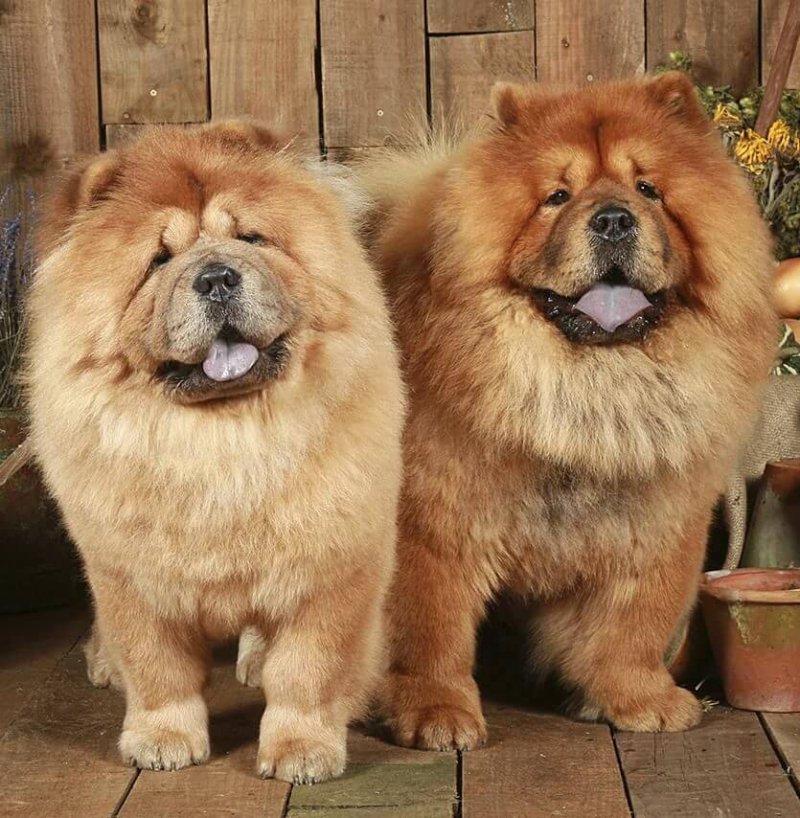
Dog genome project: How your breed originated

chow chow resized a ac df cf e

From the 80-kilogram Great Dane to the 1-kilogram tiny teacup poodle, there seems to be a dog for everyone. Now, the largest genetic analysis to date has figured out how those breeds came to be, which ones are really closely related, and what makes some dogs more susceptible to certain diseases.

…

[Researchers] Elaine Ostrander and Heidi Parker […] weren’t interested in determining how and when dogs were domesticated, but how all the breeds developed. Their sample now includes 1346 dogs representing 161 breeds, or not quite half of all kinds of dogs.

…

Almost all the breeds fell into 23 larger groupings called clades, the team details [April 25] in Cell Reports. Although genetically defined, the clades also tended to bring together dogs with similar traits: Thus boxers, bulldogs, and Boston terriers—all bred for strength—fall into one clade; whereas herders like sheepdogs, corgis, and collies fall into another.
…

[B]efore vets couldn’t really understand why a genetic disease called collie eye anomaly, which can distort different parts of the eye, and shows up in collies, border collies, and Australian shepherds, also occurs in Nova Scotia duck tolling retrievers. But the genetic analysis shows that this retriever has either collie or Australian shepherd ancestors that may have passed on the defective gene.
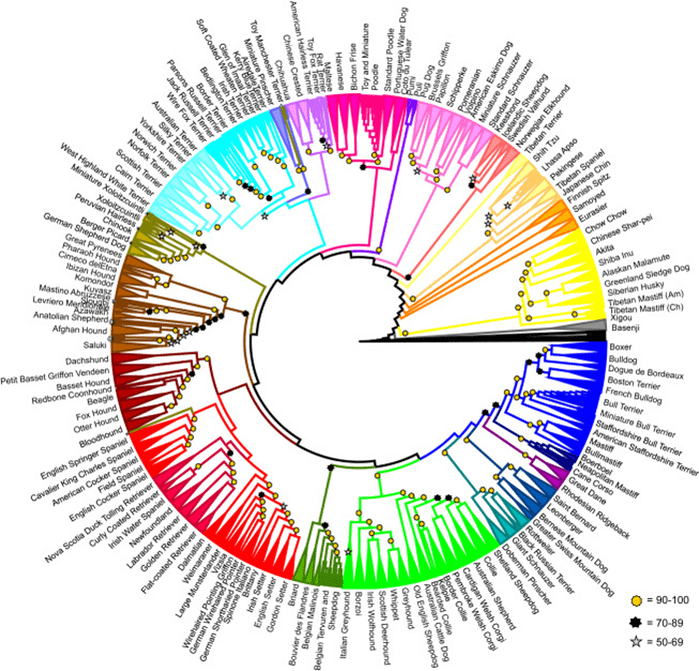
breeds

The GLP aggregated and excerpted this blog/article to reflect the diversity of news, opinion, and analysis. Read full, original post: Where did your dog come from? New tree of breeds may hold the answer

Related Articles

Infographic: Global regulatory and health research agencies on whether glyphosate causes cancer

Infographic: Global regulatory and health research agencies on whether glyphosate causes cancer

Does glyphosate—the world's most heavily-used herbicide—pose serious harm to humans? Is it carcinogenic? Those issues are of both legal and ...

Most Popular

Screenshot-2026-11-16-at-2.37.32-PM
30 years of GMO farming: Is the boom in glyphosate and glufosinate use harming the environment? Data show they’re the most sustainable choice
ChatGPT-Image-Mar-10-2026-01_39_01-PM
Viewpoint—“Miracle molecule” debunked: Why acemannan supplements don’t work
Soybean Harvest in Cupped Hands
30 years of GMO farming: Defying cynics, we’ve had larger harvests, lower costs, and $385 billion in added global farmer income
Stormlit Portrait Over Golden Mountains
Searching for life where no one thought to look: A renowned astrophysicist’s seemingly quixotic quest to explore Venus’s clouds
Screenshot-2026-11-19-at-7.23.23-PM
Viewpoint: After a yearlong hiatus, the U.S. Preventive Services Task Force is back in business—gutted by RFK Jr. and promoting junk science
Screenshot-2026-11-19-at-7.54.57-PM
European General Court sides with scientists, dismisses activist claims that glyphosate is toxically dangerous
Nurturing Care Beneath the Crunchy Moms Logo
Crunchy Moms disinformation flood: Zuckerberg's Facebook has opened floodgates on measles and vaccines
Screenshot-2026-11-17-at-12.18.09-PM
Challenging glyphosate fear-mongering: Statewide Nebraska study finds no link between weedkiller use and non-Hodgkin lymphoma
glp menu logo outlined

Get news on human & agricultural genetics and biotechnology delivered to your inbox.