Have ‘bio-citizens’ pushed us to a regulatory turning point?

bio
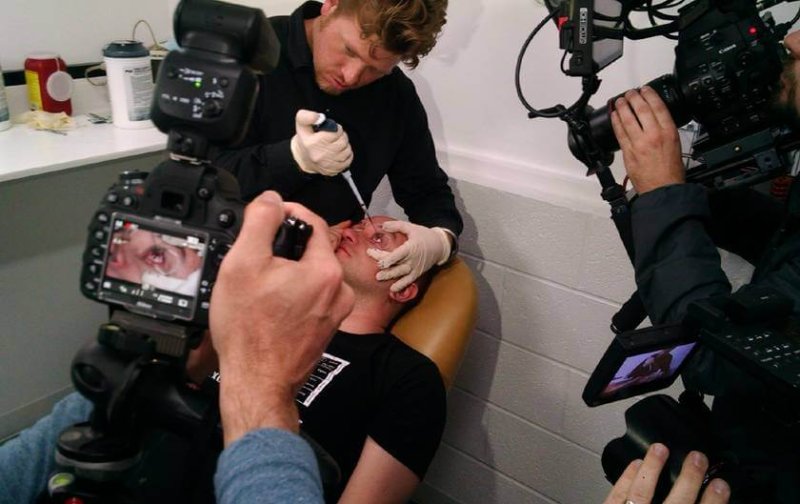
[We are at the beginning of] an upstart revolution where citizens are deciding not to wait around for a cure or even a diagnosis. From analyzing their own genetics and mastering genome editing on simple bacterial and viral cells to prototyping surgical devices, these “bio-citizens” are using newly available biotechnologies and resources to better understand and improve their health. Last September, with hundreds of them from the U.S., Mexico, India and China, we met at the renowned MIT Media Lab to discuss governance models for a “biotech without borders” movement.

We as a society are at a turning point.  We could build adaptive regulatory support that ensures safe and responsible citizen participation in health research, or we could drive these emerging communities of innovators underground or out of existence.

Is self-experimentation with gene editing techniques something we should herald as a new form of “permissionless” innovation? Or will self-proclaimed biohackers, by testing the regulatory framework, harm the emerging ecosystem of citizens who contribute to biomedical innovation? Could they induce federal regulators to shut down all types of self-experimentation or severely restrain different forms of citizen-driven biomedical research?

The path forward is not to promote radical, unregulated science, but to develop engagement channels that force citizens, patients, ethicists and regulators to rethink and design an adaptive oversight system—one that fosters empowerment and responsibility rather than just adherence to the status quo.

Read full, original post: The Rise of Citizen Bioscience

{{ reviewsTotal }}{{ options.labels.singularReviewCountLabel }}
{{ reviewsTotal }}{{ options.labels.pluralReviewCountLabel }}
{{ options.labels.newReviewButton }}
{{ userData.canReview.message }}

Related Articles

Infographic: Global regulatory and health research agencies on whether glyphosate causes cancer

Infographic: Global regulatory and health research agencies on whether glyphosate causes cancer

Does glyphosate—the world's most heavily-used herbicide—pose serious harm to humans? Is it carcinogenic? Those issues are of both legal and ...

Most Popular

ChatGPT Image Jun 3, 2026, 03_54_37 PM
Viewpoint: “Turn on, tune in, drop out”—Kennedy embraces the Timothy Leary psychedelic revolution
ChatGPT Image Jun 3, 2026, 03_14_43 PM
Viewpoint: How Earthjustice became the poster child for the abuse of special interest activist funding
ChatGPT-Image-Jun-11-2026-01_15_03-PM
Selective Pressure, Selective Silence
Screenshot-2026-06-05-at-2.12.30-PM
Some plants can poison you. So how did humans figure out what is safe to eat?
ChatGPT Image May 26, 2026, 08_42_17 AM (1)
Viewpoint: Greenpeace and poison: How environmental advocacy groups rely on compliant (and often ignorant) journalists to spread disinformation and spark litigation
artificial intelligence brain think illustration md
Viewpoint — Digital gods and human extinction: Will we be the first species ever to design our own descendants?
ChatGPT Image Jun 1, 2026, 11_39_17 AM
Viewpoint: When food myths go viral, farmers pay the price
Screenshot-2026-06-03-at-1.24.46-PM
Challenging anti-GMO disinformation: Why genetically-tweaked crops offer bushels of benefits

Sorry. No data so far.

glp menu logo outlined

Get news on human & agricultural genetics and biotechnology delivered to your inbox.