New Zealand garden centers continue selling neonicotinoid insecticides, won’t follow Bunnings’ lead

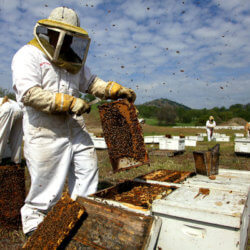
Kiwi garden centres will not immediately follow hardware giant Bunnings’ lead and stop selling controversial pesticides said to harm bees.

Palmers Garden Centres, Kings Plant Barns and Oderings Garden Centres will not pull products containing neonicotinoids, but will continue to re-evaluate the situation and listen to customer feedback on the matter.

Neonicotinoids are found in pesticides such as Yates Confidor and Kiwicare Plant Health Insect Hit, and are used mainly to control sucking pests such as aphids, thrips and white fly on vegetables such as brassicas, cucurbits, onions and stone fruit. They are also commonly used on lawns, shrubs and ornamentals.

Neonicotinoids have been linked with declining bee numbers and are banned in EU, even though the science on it is still controversial. Some studies suggest  they affect bees’ navigation and immune systems, resulting in colony death.

A spokesperson from Palmers Garden Centre said they frequently re-evaluate their decision to sell products containing the potentially harmful neonicotinoids, but have decided to keep them on the shelves for the time being.

“Part of the reason we have continued to stock these products is because there are very few alternative pesticides that are as effective as Yates Confidor is for controlling pests like aphids and white flies,” Palmers Category Manager Ron van Zuilen said.

Read full, original post: Other retailers not following Bunnings in banning pesticide linked to bee deaths

Related Articles

Infographic: Global regulatory and health research agencies on whether glyphosate causes cancer

Infographic: Global regulatory and health research agencies on whether glyphosate causes cancer

Does glyphosate—the world's most heavily-used herbicide—pose serious harm to humans? Is it carcinogenic? Those issues are of both legal and ...

Most Popular

Strawberry Clamshell with Warning Sticker
Viewpoint: Activists hype ‘dangerous level’ of pesticide residues in Driscoll berries: Separating health concerns from fear-mongering
ChatGPT-Image-Mar-10-2026-01_39_01-PM
Viewpoint—“Miracle molecule” debunked: Why acemannan supplements don’t work
Nutrition and Supplements Infinity Collage
Drugs and supplements can extend life and five other longevity myths
Generations United for Immunization
Police raid Guinea-Bissau offices of RFK Jr.-backed vaccine researchers, seize hepatitis B doses
Screenshot-2026-10-20-at-2.25.49-PM
RFK Jr.’s anti-vaccine obsession and fear of MAHA derailed bird flu containment plan
Rustic Skillet of Raw Brains
‘Weird food’? Testicle- and brain-eating, supplement-gulping MAHA health food enthusiasts defend their ‘natural’ diets
Magnifying Glass Highlights NIH Logo
Latest Trump administration proposal to change NIH research grant system draws scientists’ ire
png_cheese_Raw_milk
100% raw milk, 100% misguided: As MAHA-fueled demand for unpasteurized milk soars, American Academy of Pediatrics renews call for a ban on its sale and distribution
Golden-GM-Emblem-with-EU-Stars
As Europe inches forward in its embrace of gene-edited crops, hopes abound that opposition to GMOs might fade
Screenshot 2026-10-16 at 5.38
PFAS in Agriculture: Science, Uncertainty, and Risk Communication
Serene Mature Woman in Abstract Waves
Testosterone’s growing appeal to women: It anecdotally mildly improves sex life, but are there any other potential benefits—or red flags?
psychedelics ptsd neurosciencnews public
Chaos or at peace with the world: The complex ways psychedelics transform the brain
Government Briefing on Autism Trends
Viewpoint: ‘Statistical murder’: Kennedy’s expanding record of “duplicity and mendacity”
Screenshot-2026-10-20-at-10.53.36-AM
World Health Organization calls Kennedy- and CDC-backed Guinea-Bissau hepatitis B vaccine study designed to ‘prove’ the danger of vaccines “unethical”
glp menu logo outlined

Get news on human & agricultural genetics and biotechnology delivered to your inbox.