Employing gene drives to protect rare species comes with risks

tristan

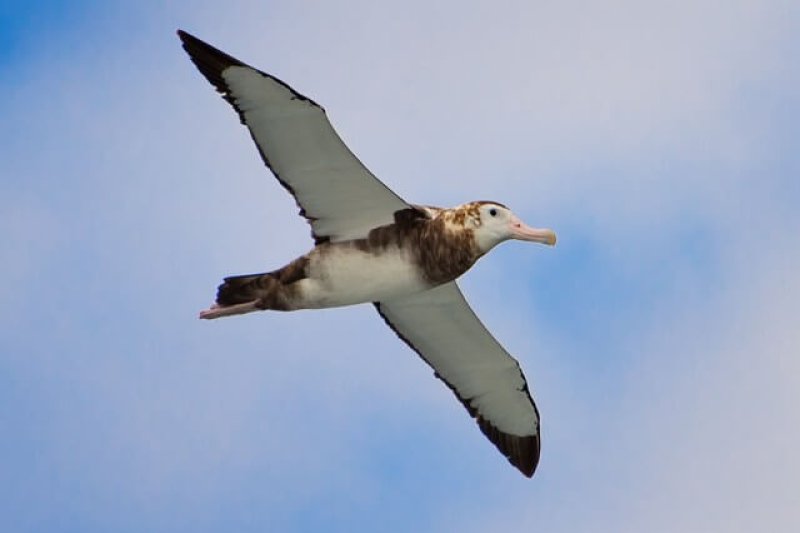
There is an ambitious poison baiting campaign currently being planned for Gough [island] in an attempt to control rodent numbers and give [rare] birds a chance to recover.

[A]ttention is now turning to new technologies that could offer more targeted solutions [to pest problems].

One derivative system, synthetic RNA guided gene drives (gene drive), which is based on CRISPR/Cas9, has provided new hope of delivering much needed solutions for threatened species conservation.

Gene drives occur in nature, and so the potential for these naturally occurring gene drives to be used to introduce engineered genes to a genome have been studied for quite some time by molecular biologists.

For example, researchers have successfully used this artificial gene drive technology in the lab to disperse a trait through a group of mosquitoes that made them no longer able to carry the malaria parasite.

While the possibilities for such applications seem endless, the excitement generated by these technologies is tempered by the need to consider the associated risks.

One thing is clear, we will never get closer to answering the questions raised by gene drive without undertaking fundamental research in this area of science. Without developing our understanding of gene drive technologies in the lab, we won’t know if they are a viable solution or not.

Read full, original post: Taking a responsible approach to new genetic technologies for conservation

{{ reviewsTotal }}{{ options.labels.singularReviewCountLabel }}
{{ reviewsTotal }}{{ options.labels.pluralReviewCountLabel }}
{{ options.labels.newReviewButton }}
{{ userData.canReview.message }}

Related Articles

Infographic: Global regulatory and health research agencies on whether glyphosate causes cancer

Infographic: Global regulatory and health research agencies on whether glyphosate causes cancer

Does glyphosate—the world's most heavily-used herbicide—pose serious harm to humans? Is it carcinogenic? Those issues are of both legal and ...

Most Popular

Screenshot 2026-05-26 at 10.15
Viewpoint: Double standard—Why does the wellness industry get a free pass while Big Healthcare is treated as morally suspect?
global warming
‘Implausible’: Top climate scientists reject worst-case scenario—soaring temperatures and fast-rising sea levels
Screenshot 2025-08-25 203032
Mazzenga’s 20-year old muscles: How a still-going-strong 92-year old sprinter wins every race she enters
Screenshot-2026-06-03-at-3.33.44-PM
Viewpoint: Vaccine deniers are attacking a life-saving Vitamin K shot for newborns that isn’t even a vaccine
Screenshot-2026-06-05-at-1.44.09-PM
Viewpoint: Scientists have scrapped the worst-case climate scenario. Is that proof that climate change is a hoax, as Trump claims?
Screenshot-2026-06-08-at-1.35.30-PM
Viewpoint: Social media and fake natural health propaganda fuel surge in use of mostly useless supplements
px extra strength tylenol and tylenol pm
Why ‘null-findings’ on Tylenol’s safety for pregnant women barely move the needle on countering misinformation
Screenshot-2026-06-08-at-10.19.30-AM
‘Natural’ wellness supplements linked to liver injury
Screen Shot at AM
Facts & Fallacies Podcast: Right-wing politics bad for your health? Separating speculation from science
ChatGPT-Image-May-28-2026-12_56_54-PM
Viewpoint: Vaccines' non-specific effects? The ‘shoddy’ Danish couple whose 'research’ inspires RFK, Jr.’s health delusion

ChatGPT-Image-Jun-10-2026-12_57_24-PM
Viewpoint: Why gene-editing babies is moral and certain to happen
Credit: ACSH
Viewpoint: Who and what’s to blame for the surge in vaccine-preventable diseases?
Screenshot-2026-06-05-at-2.12.30-PM
Some plants can poison you. So how did humans figure out what is safe to eat?
glp menu logo outlined

Get news on human & agricultural genetics and biotechnology delivered to your inbox.