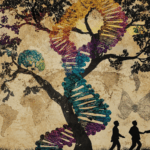
Adding 24 new mutations to breast cancer risk calculations

Peripheral Neuropathy is Common After Breast Cancer Treatment x

Twenty-four previously unknown mutations that raise a woman’s risk of developing breast cancer have been identified by scientists. The ‘ground-breaking’ findings [February 28] provide an answer to thousands of victims of whom the disease runs in their family.

Cancer Research UK states that fewer than three per cent of cancers are caused by an inherited faulty gene. It says there are four known genes that can raise the risk of breast cancer, including the BRCA gene – famously carried by by Angelina Jolie.

But the new discovery, led by Professor Melissa Southey, could potentially extend that to 28, if further research confirms the findings. She said: ‘For the majority of women who undergo genetic testing, there is no explanation for their breast cancer predisposition.

‘This ground-breaking work is not only helpful for women from families with many cases of breast cancer. ‘It will improve breast cancer risk prediction for all women, and pave the way for the development of epigenetic therapeutics for breast cancer.’

They discovered the epigenetic changes can be passed down through generations without changing the DNA that makes the genes.

The study is one of the first to scan the genome for places where DNA methylation is heritable, and is the first to apply this to familial breast cancer.

Editor’s note: Read the full study

Read full, original post: Twenty-four previously unknown mutations that raise a woman’s risk of breast cancer have been identified following ground-breaking research


{{ reviewsTotal }}{{ options.labels.singularReviewCountLabel }}
{{ reviewsTotal }}{{ options.labels.pluralReviewCountLabel }}
{{ options.labels.newReviewButton }}
{{ userData.canReview.message }}

Related Articles

Infographic: Global regulatory and health research agencies on whether glyphosate causes cancer

Infographic: Global regulatory and health research agencies on whether glyphosate causes cancer

Does glyphosate—the world's most heavily-used herbicide—pose serious harm to humans? Is it carcinogenic? Those issues are of both legal and ...

Most Popular

ChatGPT-Image-Jun-11-2026-01_15_03-PM
Selective Pressure, Selective Silence
Screenshot 2026-05-26 at 10.15
Viewpoint: Double standard—Why does the wellness industry get a free pass while Big Healthcare is treated as morally suspect?
ChatGPT Image Jun 3, 2026, 03_54_37 PM
Viewpoint: “Turn on, tune in, drop out”—Kennedy embraces the Timothy Leary psychedelic revolution
Screenshot-2026-06-05-at-1.44.09-PM
Viewpoint: Scientists have scrapped the worst-case climate scenario. Is that proof that climate change is a hoax, as Trump claims?
Screenshot-2026-06-03-at-3.33.44-PM
Viewpoint: Vaccine deniers are attacking a life-saving Vitamin K shot for newborns that isn’t even a vaccine
Screenshot-2026-06-11-at-3.40.06-PM
'Toxin' detox: A gastroenterologist weighs in on $71 billion health trend
Screenshot-2026-06-05-at-2.12.30-PM
Some plants can poison you. So how did humans figure out what is safe to eat?
Screenshot-2026-06-08-at-1.35.30-PM
Viewpoint: Social media and fake natural health propaganda fuel surge in use of mostly useless supplements
Screenshot-2026-06-11-at-4.00.17-PM
Gen Z burned by sunscreen misinformation and tanning myths
Credit: ACSH
Viewpoint: Who and what’s to blame for the surge in vaccine-preventable diseases?
ChatGPT-Image-Jun-10-2026-12_57_24-PM
Viewpoint: Why gene-editing babies is moral and certain to happen
Screenshot 2025-08-25 203032
Mazzenga’s 20-year old muscles: How a still-going-strong 92-year old sprinter wins every race she enters
ChatGPT-Image-May-28-2026-12_56_54-PM
Viewpoint: Vaccines' non-specific effects? The ‘shoddy’ Danish couple whose 'research’ inspires RFK, Jr.’s health delusion
glp menu logo outlined

Get news on human & agricultural genetics and biotechnology delivered to your inbox.