3 explanations for why we haven’t found aliens yet

aliens
Image credit: Shutterstock
[Enrico] Fermi wasn’t the first person to ask a variant of this question about alien intelligence. But he owns it. The query is known around the world as the Fermi paradox. It’s typically summarized like this: If the universe is unfathomably large, the probability of intelligent alien life seems almost certain. But since the universe is also 14 billion years old, it would seem to afford plenty of time for these beings to make themselves known to humanity. So, well, where is everybody?

In the seventh episode of Crazy/Genius, a new podcast from The Atlantic on tech, science, and culture, we put the question to several experts.

https://cms.megaphone.fm/channel/crazygenius?selected=ATL5131228474

…

Proposed solutions to Fermi’s Paradox fit into three broad categories.

One: They’re nowhere—and no-when. Aliens don’t exist, and they never have.
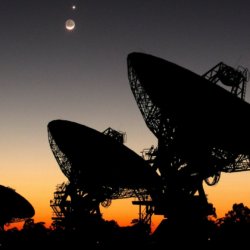
…

Two: Life is out there—but intelligence isn’t. [NASA scientist] Ellen Stofan predicts that we’ll find evidence of simple life on Mars or a faraway moon within the next 10 to 30 years. But she’s imagining something more like microbes or algae, not underwater cities in the liquid-methane lakes of Titan.

…

Three: Intelligent life is abundant—but quiet. This possibility, known as the zoo hypothesis, invites some of the strangest speculation. Maybe humanity is still so basic and primitive that advanced civilizations don’t think we’re worth talking to.

Read full, original post: But, Seriously, Where Are the Aliens?

Related Articles

Infographic: Global regulatory and health research agencies on whether glyphosate causes cancer

Infographic: Global regulatory and health research agencies on whether glyphosate causes cancer

Does glyphosate—the world's most heavily-used herbicide—pose serious harm to humans? Is it carcinogenic? Those issues are of both legal and ...

Most Popular

Nurturing Care Beneath the Crunchy Moms Logo
Crunchy Moms disinformation flood: Zuckerberg's Facebook has opened floodgates on measles and vaccines
Screenshot-2026-11-16-at-2.37.32-PM
30 years of GMO farming: Is the boom in glyphosate and glufosinate use harming the environment? Data show they’re the most sustainable choice
Screenshot-2026-11-19-at-7.54.57-PM
European General Court sides with scientists, dismisses activist claims that glyphosate is toxically dangerous
Stormlit Portrait Over Golden Mountains
Searching for life where no one thought to look: A renowned astrophysicist’s seemingly quixotic quest to explore Venus’s clouds
Soybean Harvest in Cupped Hands
30 years of GMO farming: Defying cynics, we’ve had larger harvests, lower costs, and $385 billion in added global farmer income
ChatGPT-Image-Mar-10-2026-01_39_01-PM
Viewpoint—“Miracle molecule” debunked: Why acemannan supplements don’t work
Screenshot-2026-11-19-at-7.23.23-PM
Viewpoint: After a yearlong hiatus, the U.S. Preventive Services Task Force is back in business—gutted by RFK Jr. and promoting junk science
Screenshot-2026-11-17-at-12.18.09-PM
Challenging glyphosate fear-mongering: Statewide Nebraska study finds no link between weedkiller use and non-Hodgkin lymphoma
Screenshot-2026-11-18-at-2.44.24-PM
Why should thousands of Americans die every year waiting for a kidney transplant? There’s an easy fix to this morbid reality
glp menu logo outlined

Get news on human & agricultural genetics and biotechnology delivered to your inbox.